Get Full Government Meeting Transcripts, Videos, & Alerts Forever!
Get email alerts on the Education Workforce Coordination topic
No spam. Unsubscribe anytime.
Senate budget subcommittees debate proposal to create California Education Interagency Council
Summary
GovOps requested $5 million to establish an office to coordinate K–12, higher education and workforce agencies; LAO recommended three‑year limited-term funding and several senators pressed for measurable goals and clearer design before committing ongoing dollars.
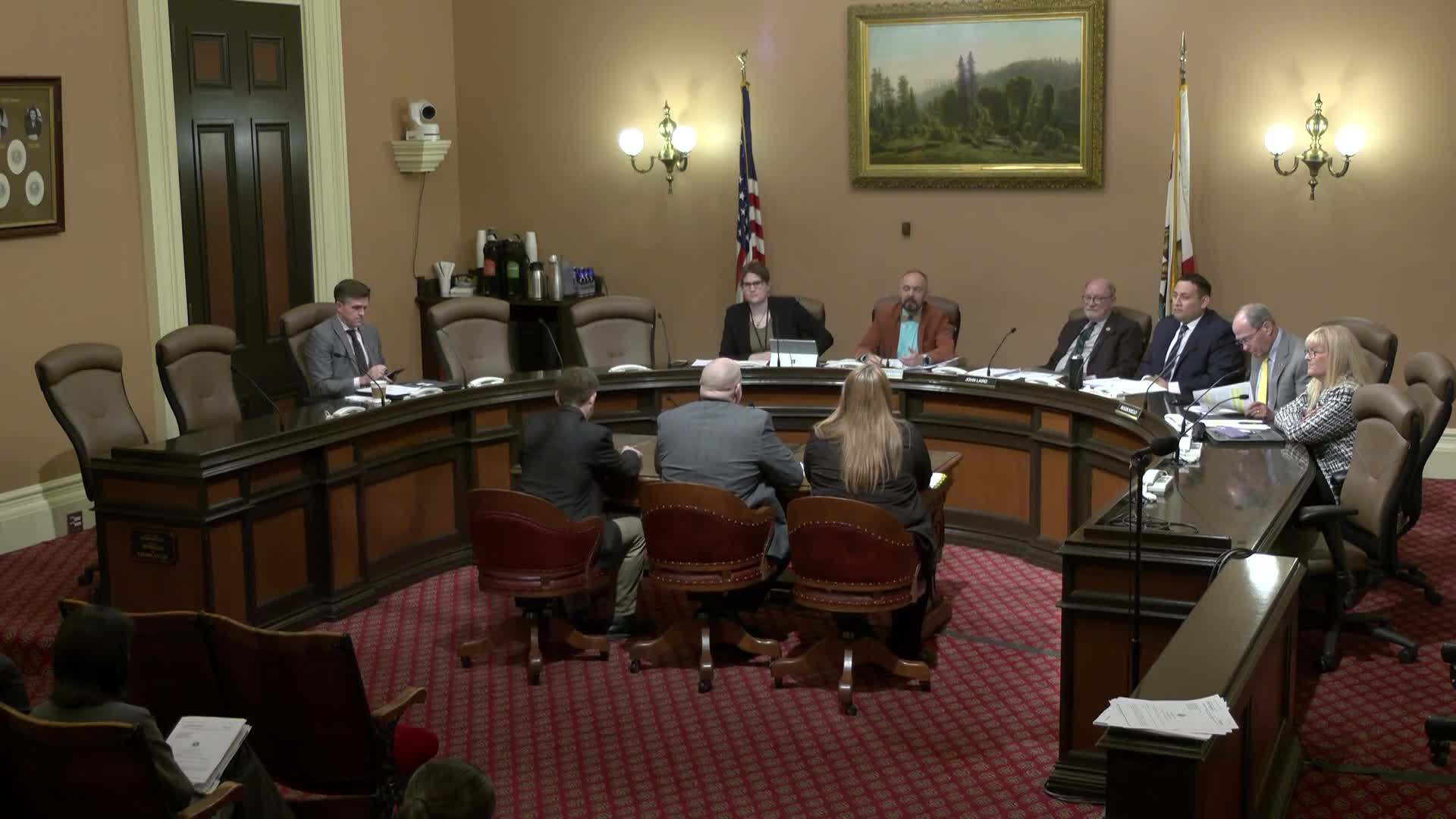
The Senate Budget Subcommittees 1 and 4 held a joint, discussion‑only hearing in State Capitol Room 113 on a proposal to establish the California Education Interagency Council and a staffed office to coordinate K–12, higher education and state workforce and economic development agencies. Justin Howard, Deputy Secretary for Fiscal Policy and Administration at the California Government Operations Agency, told the committees the administration is requesting $5,000,000 in general fund in 2025–26 and ongoing to establish the council’s office.
The proposal responds to the governor’s career education master plan development process, which the presentation said included written public comments, more than 30 interviews and eight regional design sessions. Howard said the Government Operations Agency (GovOps) was selected to host the council because it is “seen as a neutral third party entity,” has experience standing up state entities and can help cut through interagency red tape.
Supporters and some committee members described the proposal as an initial step to address longstanding coordination gaps between education systems and workforce partners. The Legislative Analyst’s Office recommended the Legislature prioritize the initiative only with limited‑term funding: “If the legislature would like to prioritize this initiative, that they approve it with limited term funding of 3 years,” said Alexander Bentz of the LAO, explaining the limited‑term approach would give the council time to lay out a vision and show whether its work leads to improved outcomes.
Committee members pressed the administration and GovOps on how the council would define measurable goals and demonstrate value before the Legislature commits ongoing funding. Senator John Laird asked how the council would “refine [goals] to measure outcomes, get to outcomes, and convince us” the proposal is worthy when the budget is revisited. Howard replied that the trailer bill and the office’s required reporting to the Legislature would produce a strategic plan and regular deliverables once staff and an executive director are in place.
Other senators raised timing and design concerns. Senator Nilo said the proposal is a “starting point” but noted the governor has less than two years remaining in the current term, questioning whether a significant reorganization launched late in an administration could be shepherded to completion. Another senator on the record as a former chair of the Intersegmental Coordinating Council described historical attempts at statewide coordination, including the California Postsecondary Education Commission, and warned that prior coordinating bodies sometimes lacked the authority or political leverage to change institutional behavior.
Several senators questioned whether the council would duplicate existing statewide or regional entities. Committee members and the LAO noted that functions similar to those proposed already exist across the California Workforce Development Board, the Intersegmental Coordinating Committee and multiple regional partnerships, and asked whether creating a new statewide venue would solve the core barriers to collaboration.
The subcommittees did not take action. Committee members asked GovOps and legislative staff to refine the proposal’s design and accountability provisions and to return with additional details. The item was left open in Budget Subcommittee 4 for possible revision and further consideration in the budget process.
The discussion laid out three persistent uncertainties for legislators: whether a new coordinating office will produce measurable improvements in student‑to‑job outcomes, whether it will duplicate or displace existing statewide and regional efforts, and whether time and funding should instead be directed to institutional priorities such as UC and CSU funding or housing and homelessness supports that senators said also affect workforce outcomes.
The administration and the LAO agreed to continue working with committee staff on specifics, including options for limited‑term versus ongoing funding, reporting requirements, and measurable deliverables that the council would be expected to produce.