Get Full Government Meeting Transcripts, Videos, & Alerts Forever!
Get email alerts on the Pace Fees Sanctions topic
No spam. Unsubscribe anytime.
Providers, counties and PACE operators oppose new DHCS fee and sanction proposals; committee hears concerns
Summary
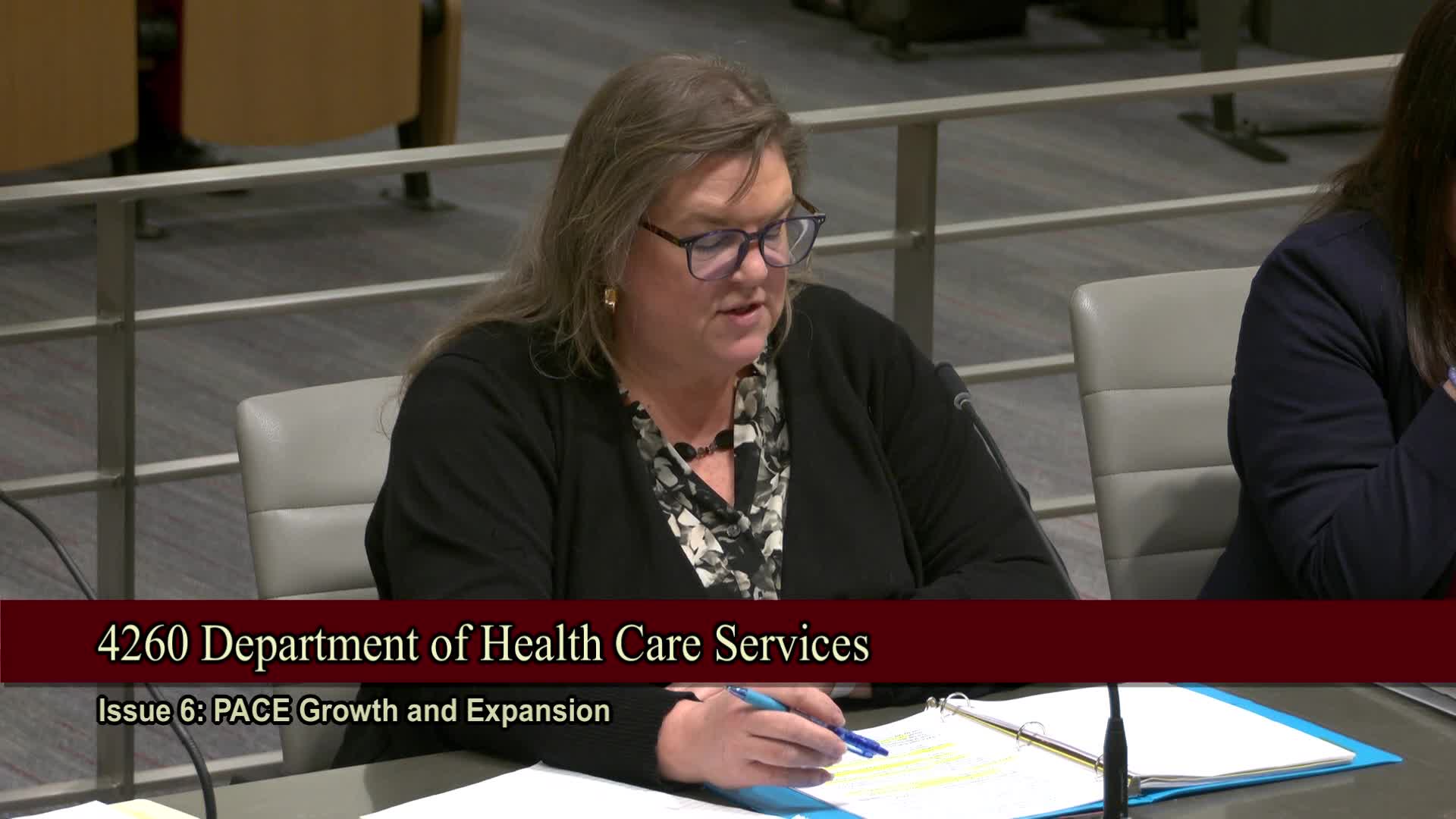
Department of Health Care Services presented a PACE workload and fee proposal that would fund new DHCS positions with a fee on PACE capitation; dozens of PACE organizations and counties testified in opposition, saying the fee is excessive, unclear and could destabilize fragile programs for frail elderly Californians.
The Department of Health Care Services asked the Senate subcommittee for authority to charge PACE organizations a fee — capped at 1 percent of capitation — to fund program oversight and staff positions it says are needed to process applications, perform readiness reviews and maintain ongoing oversight of a growing PACE sector. DHCS proposed 33 permanent positions to handle increased workload from new and expanding PACE organizations and said the fee would be collected into a PACE Oversight Fund and reflected as part of annual capitation rates.
PACE organizations and county partners strongly objected. Val Sheehan, CEO of the California PACE Association, told the subcommittee the proposal "was not developed at all with stakeholder engagement" and warned that, because the 1% cap is measured against a modest industry margin, the fee could represent a large share of provider profits. "Up to 1% of 5% is 20%," Sheehan said, illustrating the potential impact on programs that already operate on thin margins.
Multiple PACE operators, including Center for Elders' Independence, OnLok, Central Valley PACE, Scene Health and others, filed oral testimony opposing both the fee BCP and related trailer bill language that would expand DHCS sanction authority over PACE programs. Speakers said sanctions modeled on managed-care enforcement are a poor fit for PACE’s integrated, interdisciplinary model and that the department has not finalized audit or enforcement protocols before proposing new penalties. "It is irresponsible to increase penalties before addressing their gaps in oversight," OnLok's Catherine Kelly said.
Why it matters: PACE (Program of All-Inclusive Care for the Elderly) serves medically complex older adults who otherwise require a nursing-level level of care; programs rely on narrow capitation margins and a mix of Medicare and Medi-Cal funding. Testimony argued that replacing current funding with a fee-based oversight structure risks destabilizing care for frail seniors and could force program cutbacks.
Key points from hearing: - DHCS request and rationale: DHCS requested 33 positions and $6.3 million in total funds to handle a growth trend (roughly 8–12 new or expanded PACE organizations per year). The department said fees would be structured to cover department workload and would be accounted for in capitation rates. - Provider objections: CalPace and dozens of individual PACE programs said the proposal lacked stakeholder input, contained inconsistent descriptions of how funds would be used (marketing/readiness vs. audits/legal/admin), and could be applied unevenly. Several operators warned that thin margins make PACE vulnerable to even small new costs. - Sanctions concerns: PACE operators opposed newly proposed monetary sanctions and potential state-appointed temporary management, which they said CMS intentionally excluded from federal PACE rules because external management undermines PACE’s team-based care model.
Public comments and system stakes: More than a dozen PACE leaders and county representatives spoke during public comment, asking the subcommittee to reject both the fee proposal and the sanctions trailer bill and to require DHCS to continue stakeholder negotiations and publish finalized audit protocols before expanding enforcement powers.
Follow-up: LAO recommended as an option setting a temporary fee before establishing an ongoing fee while DHCS and stakeholders firm up scope and costing. Senators indicated willingness to consider a measured approach but emphasized transparency, an audit guide, and assurances that fees would not be repurposed away from PACE oversight.
Ending: The subcommittee heard clear and consistent objections from PACE providers, counties and advocacy groups; members instructed DHCS to continue discussions with stakeholders and to provide more precise cost and scope information before the Legislature considers permanent fee authority or new sanction mechanisms.