Get Full Government Meeting Transcripts, Videos, & Alerts Forever!
Get email alerts on the Clean California Grant topic
No spam. Unsubscribe anytime.
Caltrans seeks $25 million to create Clean California community cleanup and employment pathways grants; LAO recommends rejection
Summary
Caltrans requested a one‑year, $25 million general fund appropriation to create a competitive Clean California community cleanup and employment pathways grant program focused on litter and graffiti abatement and workforce development.
Caltrans asked the Senate Budget Subcommittee No. 5 for a one‑year, $25,000,000 general fund augmentation to create a competitive Clean California community cleanup and employment pathways grant program intended to fund local litter and graffiti abatement while prioritizing workforce development for vulnerable populations.
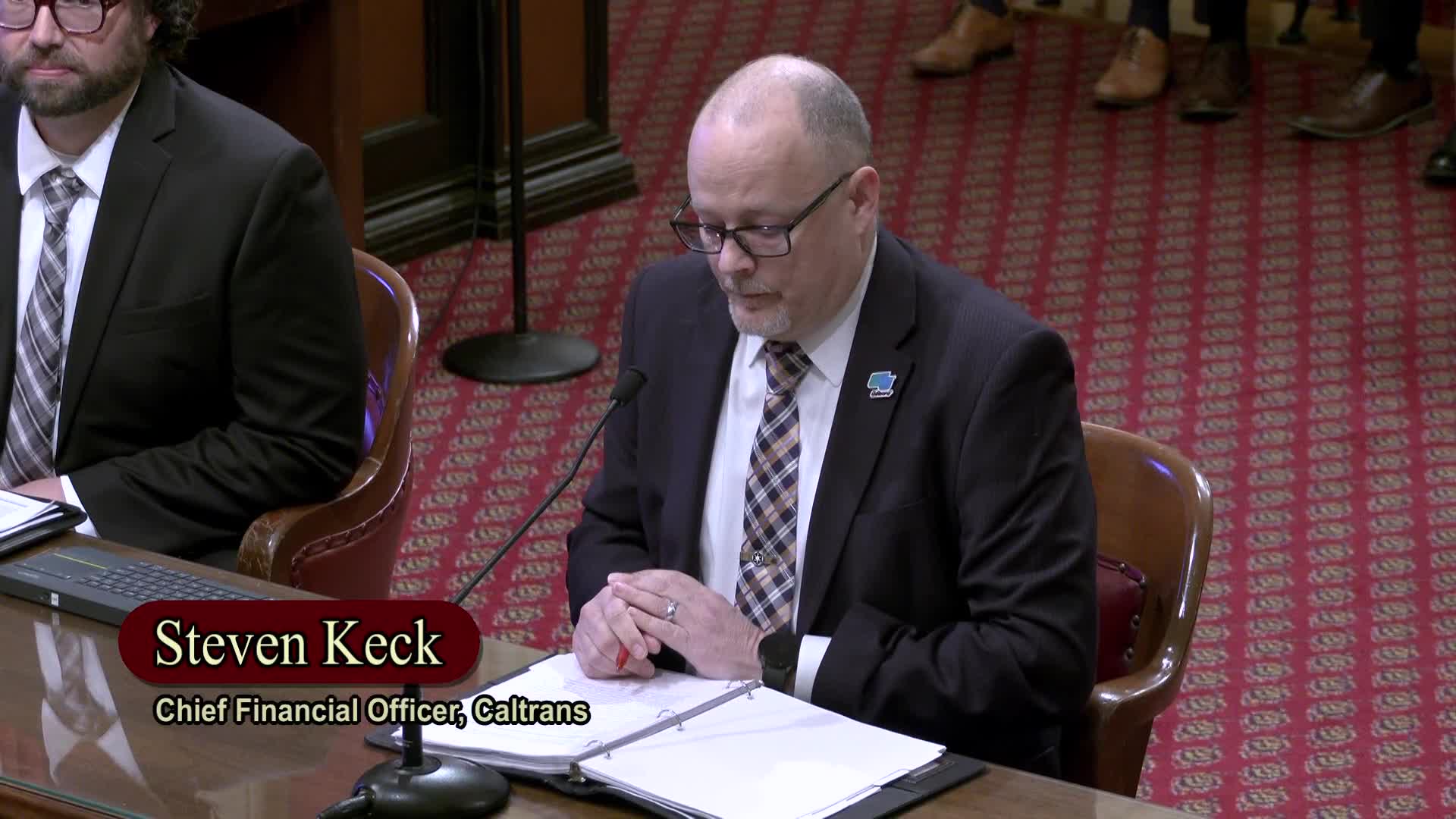
Stephen Keck, Caltrans, said the proposal builds on the one‑time Clean California program and would provide competitive grants to local entities to leverage local funding, foster community engagement and create career pathways through partnerships with organizations such as the Butte County Office of Education (BCOE) and local subcontractors. Caltrans officials said existing Clean California efforts showed local communities made long‑term pledges to maintain cleanliness and that the grant program could create sustained workforce pathways from entry‑level work to permanent positions.
The Legislative Analyst’s Office recommended the Legislature reject the proposal, arguing that litter abatement in local public spaces is not a core state responsibility in a year of constrained general fund resources and that one‑time funding is unlikely to address persistent local litter problems. The LAO also noted the administration’s larger budget tradeoffs and that funding could be shifted from other climate or bond‑funded programs.
Caltrans and Department of Finance witnesses said the administration values the program and highlighted lessons from prior Clean California activities, including district‑level engagement, technical and community advisory committees, and partnerships with regional workforce bodies. Walter Yoo, Caltrans program director for Clean California, said the proposed grant guidelines were still under development but that workforce development would be a major component, and that partners such as BCOE had produced transitions into longer‑term employment for many participants.
Committee members split along fiscal lines. Senator Sciardo and LAO emphasized local capacity to run cleanups and cautioned about diverting limited general fund dollars from other priorities and nonprofit services. Several members, including Senator Rousser and Senator Wahab, supported continued state involvement where jurisdictional lines between state and local property are unclear and advocated for strong workforce training components and better prioritization of state highway litter pickup. Caltrans agreed to provide more details on guidelines and on how the state highway account currently supports litter abatement.
Caltrans also confirmed that $50,000,000 in federal funds earmarked for high‑road construction careers (tied to SB 150) remain expected to begin flowing to regional workforce centers in July after executing an interagency agreement with the California Workforce Development Board.
Public commenters and workforce advocates urged sustaining or redirecting funding to proven back‑to‑work programs that have placed participants in Caltrans jobs and transition pathways, and asked the committee to preserve funding that avoids harming other community services.