Get Full Government Meeting Transcripts, Videos, & Alerts Forever!
Get email alerts on the Rwanda Monusco Drc topic
No spam. Unsubscribe anytime.
Rwanda tells United Nations MONUSCO has failed its mandate, denies troop presence in eastern DRC
Summary
Rwanda’s foreign minister told a United Nations Security Council briefing that MONUSCO has failed to remove armed groups in eastern Democratic Republic of Congo, accused Kinshasa-backed FDLR militias of repeated attacks on Rwandan territory, and denied claims that Rwandan forces are operating in the DRC.
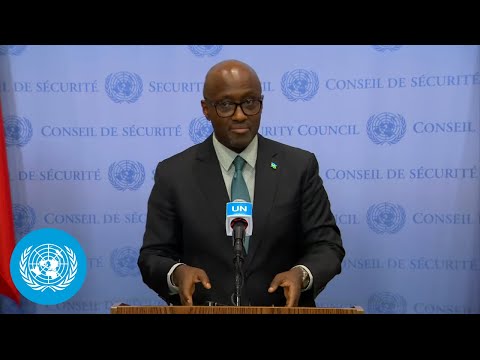
Rwanda’s Foreign Minister Olivier Nduhungirehe told a United Nations Security Council press briefing that the U.N. peacekeeping mission in the Democratic Republic of Congo has failed to deliver on its mandate and that Rwanda does not have troops operating in the DRC.
“We remain deeply concerned in particular by sustained presence of the Kinshasa backed FDLR genocidal militia,” Nduhungirehe said, adding that MONUSCO — the U.N. Organization Stabilization Mission in the DRC — “has failed to deliver on its mandate.”
Nduhungirehe called for support of an African-led political process, saying the “merged Rwanda, Nairobi process mandated by the joint EAC SADEC summit and endorsed by the African Union offers a credible, inclusive, and regionally owned path forward.” He said Rwanda wants “a political solution” and supports dialogue to “stabilize and develop our region.”
Journalists at the stakeout asked directly about allegations of Rwandan forces inside the DRC. Nduhungirehe repeatedly denied that Rwanda has troops inside the country, saying Rwanda has “deployed defensive measures along our border to defend ourselves” against what he described as attacks and threats coming from the eastern DRC, principally from the Democratic Forces for the Liberation of Rwanda (FDLR).
Responding to a question referencing a U.N. statement that “you have up to 7,000 troops in DRC,” Nduhungirehe said, “We don't have troops in Rwanda. We have defensive measures to deal with the threat in this, coming from Eastern DRC,” and reiterated that statements equating M23 with Rwanda were incorrect. He said M23 is “a Congolese movement that took territories” and that Rwanda “doesn't take territory in Eastern DRC.”
Nduhungirehe gave several incident counts as part of his account of threats to Rwanda: he said Rwanda has recorded “more than 20 attacks” since 2018, cited an attack on Jan. 26 that he said affected about 200 homes in Rubavu district, and referenced multiple earlier incidents in 2018 and 2019 that he described as causing civilian deaths. He also said a person handed over two weeks earlier was an FDLR general involved in the 1994 genocide against the Tutsi.
Reporters pressed for concrete troop numbers; Nduhungirehe declined to give a figure and instead described Rwandan measures as “targeted, dynamic, and proportionate to the threat.” The briefing also included a question noting that the U.K. ambassador had called for all Rwandan defense forces to leave the DRC; Nduhungirehe said the regional EAC-SADC-led process should determine the way forward rather than outside states.
The minister closed by noting that Rwanda will soon mark the 1994 genocide against the Tutsi and framed that commemoration as a reminder of “the importance of protecting all communities from hate, violence, and division.”