Get Full Government Meeting Transcripts, Videos, & Alerts Forever!
Get email alerts on the Education School Board Districting topic
No spam. Unsubscribe anytime.
Bill would preserve seven-member elected school board districts in Baltimore County despite county council expansion
Summary
Sen. Sidnor asked the Ways and Means Committee to report favorably on Senate Bill 656, which would create seven school board districts in Baltimore County using the county's current seven council districts and set a process for reapportionment after the 2030 census.
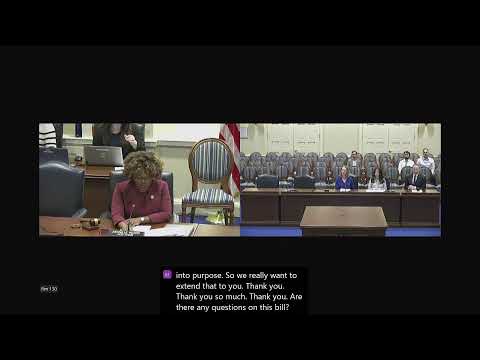
Senator Sidnor asked the Ways and Means Committee on March 27 to report favorably on Senate Bill 656, a local bill that would preserve a seven-member elected component of the Baltimore County Board of Education by creating school board districts separate from the county council districts.
Sidnor told the panel that Baltimore County currently elects seven board members from the county's seven councilmatic districts and that a recent county charter amendment expanded the county council from seven to nine seats beginning with the next election. He said the county council's change does not itself grant authority to increase the number of elected school board members and that the General Assembly retains that authority. "We no longer in Baltimore County will have seven councilmatic districts starting in 2026. We're gonna have nine council people," Sidnor said, adding the bill was designed to keep the board's current hybrid structure intact.
Under SB 656 as explained by Sidnor, the seven current county council districts would be converted into seven school board districts for elections through the 2030 census. Beginning after the 2030 U.S. Census, the bill would require the Baltimore County Board of Education to submit proposed reapportioned maps to the Baltimore County Delegation by Dec. 1 of the calendar year immediately following the census; the delegation could then introduce legislation in the next session and would not be required to accept the board's proposal. "The reapportioned districts will be substantially equal in population," Sidnor said.
Sidnor said the proposal aims to avoid increasing the number of elected school board members and to avoid decreasing the four gubernatorial appointments on the county's 12-member hybrid board. He told the committee he had spoken with stakeholders and looked to Montgomery County's approach as a model for reapportionment mechanics.
In committee questions, Delegate Long asked whether the county council had finalized the map establishing nine council districts; Sidnor replied the county's redistricting commission was still meeting and that a proposed map was expected by June but not yet final. Long asked whether the map had to be approved by a judge; Sidnor said only litigation alleging discriminatory maps would require judicial review. The senator also noted interaction with the Baltimore County Board of Elections and emphasized the timing: the board begins preparing ballot specimens in the fall, so he said the bill needs to move this year to provide certainty for prospective candidates.
The hearing concluded with Sidnor asking for a favorable report and noting the Baltimore County Delegation planned to consider the bill the following day. The committee did not record a final vote during this hearing.
SB 656 text and the reapportionment process described in testimony tie the schedule for new school-board districts to the federal census cycle and to a delegation review step; the delegation retains discretion to alter the board-proposed maps.