Get Full Government Meeting Transcripts, Videos, & Alerts Forever!
Get email alerts on the Fruit Veg Ebt Pilot topic
No spam. Unsubscribe anytime.
CalFresh fruit-and-vegetable EBT pilot credited with increasing produce purchases; advocates seek extension and expansion
Summary
A state pilot that rebated CalFresh purchases of fresh produce at participating grocery stores drew strong uptake in early cycles; advocates and program staff told the Assembly committees the pilot reduced barriers to healthy purchases and showed measurable increases in produce consumption.
Advocates and program administrators described early results from California's CalFresh fruit-and-vegetable EBT pilot, which rebated purchases of eligible fresh produce at participating grocery stores and one farmers market. Panelists said households responded quickly and that the pilot can both improve diets and increase market demand for California-grown produce.
"In January alone... 3,300,000 in benefits were earned by CalFresh households," Eli Zigas of FullWell said, reporting figures from the program's two short cycles. He said roughly 67,000 households used the benefit in the largest month and the average benefit redeemed per household was about $49 for that month. Zigas added that survey results show 95% of respondents want to see the program expand and 92% said it supported family health.
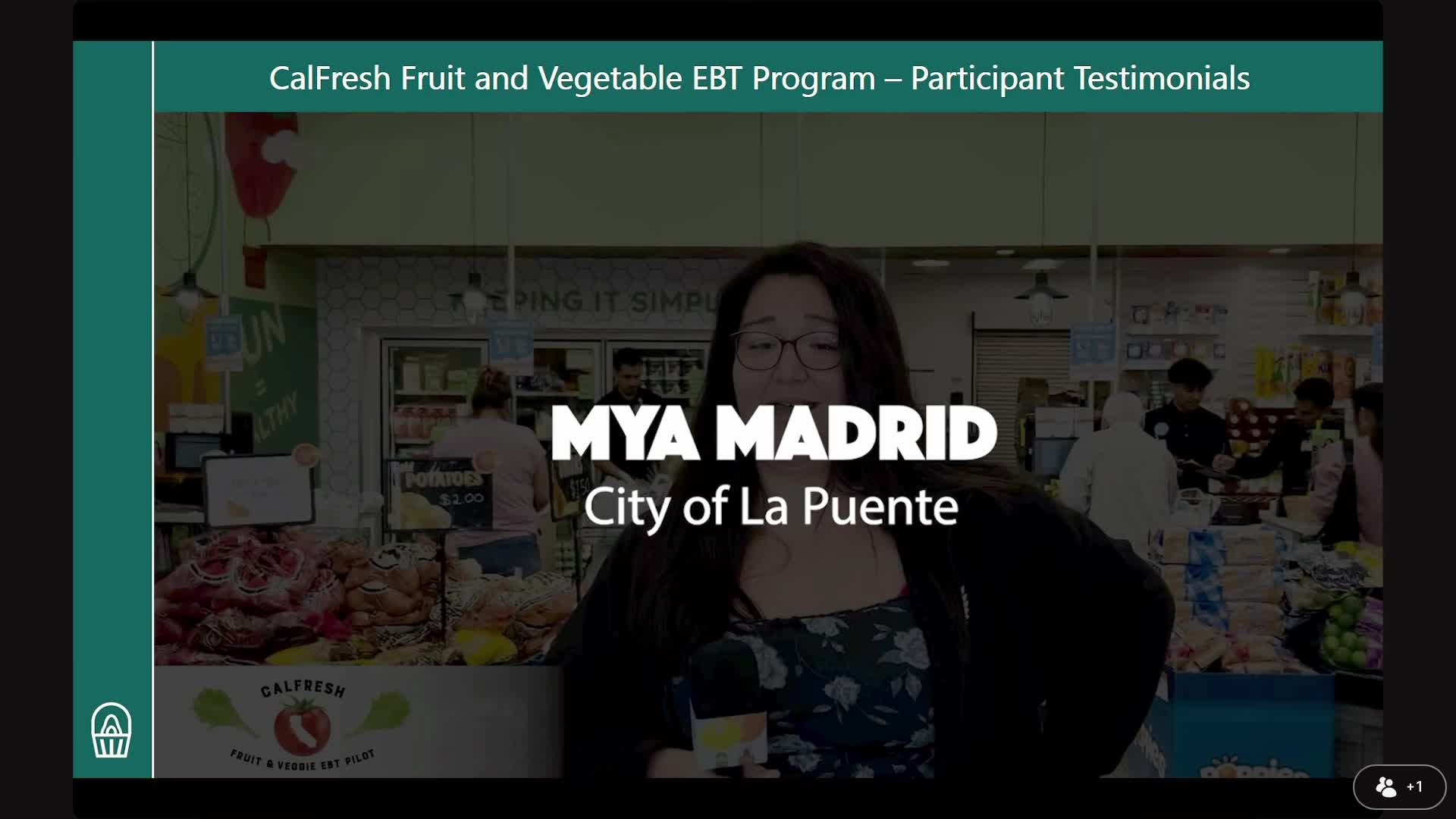
Participants quoted in program outreach told lawmakers they switched to more fruits and vegetables and in some cases saw health changes. "The pilot program helped me reverse my type 2 diabetes," a participant said in a recorded testimonial presented at the hearing. FullWell and Department of Social Services officials said the program also increased retailer ordering frequency and volume: distributors reported moving from weekly deliveries to two or three times per week to meet demand at participating stores.
Program administrators said the pilot has been limited by funding cycles and stressed that a year‑round program with modest expansion would continue benefits and increase reach. "The near term goal is to extend this program so it doesn't turn on and off, that it runs year long," Zigas said, and urged lawmakers to consider budget requests and legislation to set the program on a long-term footing.
Committee members and agency staff praised the rapid implementation and requested further data collection on nutrition outcomes, program equity and retailer impacts to inform any expansion.