Get Full Government Meeting Transcripts, Videos, & Alerts Forever!
Get email alerts on the Treatment Facility Oversight topic
No spam. Unsubscribe anytime.
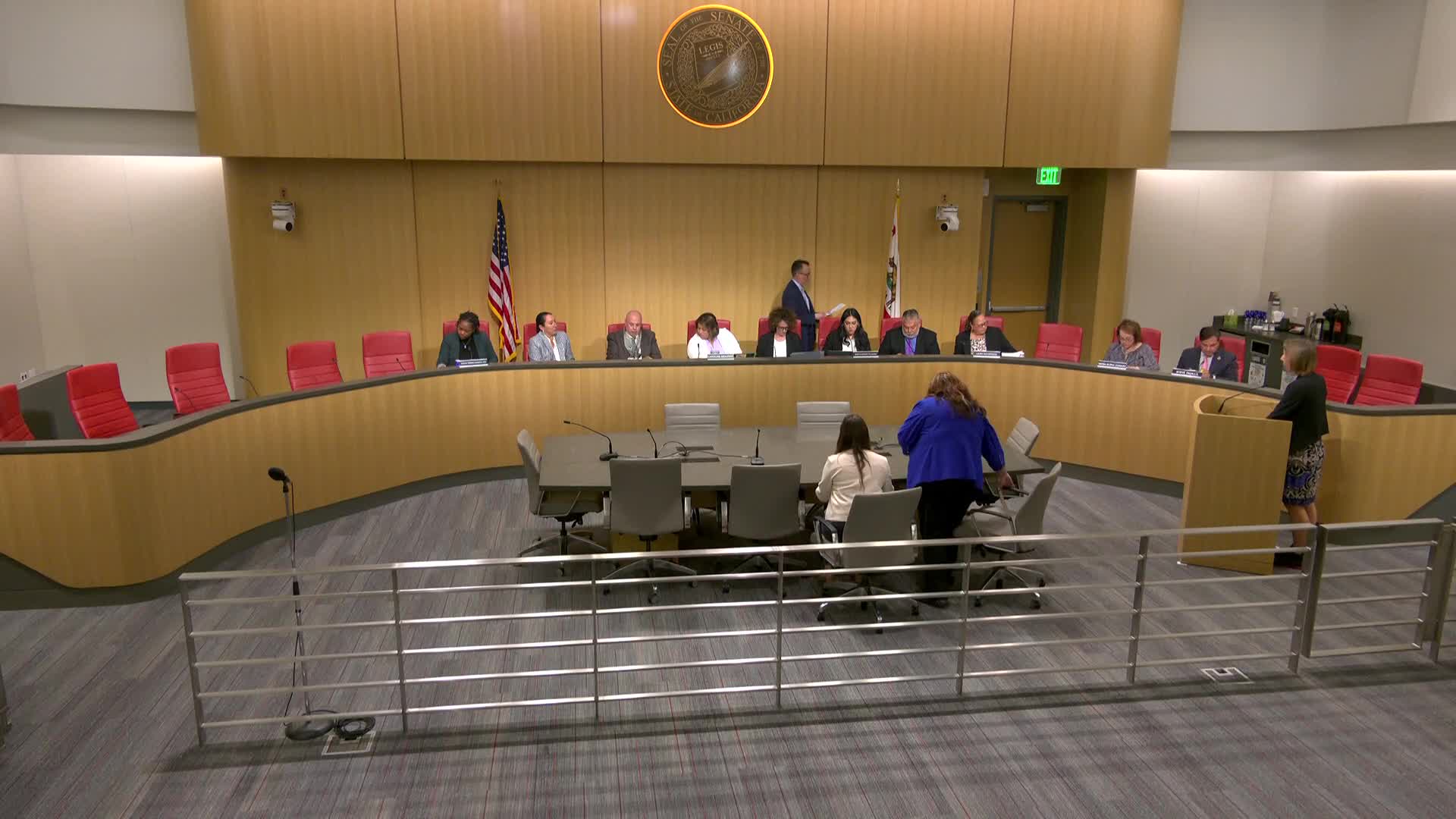
Senate Health Committee passes bill requiring faster DHCS probes of treatment facility complaints
Summary
The California Senate Committee on Health voted to pass SB 329 as amended, requiring the Department of Health Care Services to assign complaints about drug and alcohol recovery treatment facilities to an analyst within 10 days and complete investigations within 60 days; the bill was referred to the Appropriations Committee.
The Senate Committee on Health voted to pass SB 329 as amended and referred the bill to the Committee on Appropriations after testimony from city officials and behavioral health advocates.
SB 329 would require the Department of Health Care Services (DHCS) to assign a complaint about a drug or alcohol recovery treatment facility to an analyst within 10 days of receipt and to complete the investigation within 60 days. The author and supporters said the timelines match DHCS’s internal guidelines but would add statutory accountability.
Senator Blake Spear, who filed the measure, told the committee, "I'm happy for the opportunity to present SB 329 today. I will be accepting the committee amendments." Spear said a recent state audit and local data show DHCS misses its internal timelines and that statutory deadlines are needed to ensure responsiveness.
Valerie Amezcua, mayor of the city of Santa Ana, testified in support and described concentrations of sober living homes in residential neighborhoods. "Residential recovery housing provides a range of benefits to some of California's most vulnerable residents, and it is critical their needs are prioritized over profits," Amezcua said, adding that Santa Ana has roughly 30 licensed facilities and that oversight failures have local consequences.
Caroline Grinder, legislative advocate for the League of California Cities, which sponsors the bill, cited a state audit and told the committee the auditor "found that the department does not always respond promptly or thoroughly to investigate complaints and recommended that the department improve the timeliness of their investigations." Grinder said the committee amendments require DHCS to notify complainants when a complaint is outside the department’s jurisdiction or when the department needs more time.
Support "me too" statements on the record included testimony from Dylan Elliott on behalf of the California State Association of Psychiatrists and Nicole Wortleman on behalf of the Orange County Board of Supervisors.
During questions, Sen. Weber Pearson asked for clarification of the assignment timeline; committee discussion established that the 10-day assignment clock begins on the day the department receives the complaint. Senator Durazo and the measure’s author said placing the timelines in statute is intended to increase accountability while acknowledging more work will be needed for DHCS to meet the deadlines.
Committee staff moved the consent calendar earlier in the hearing; SB 329 was held on call while the committee awaited members to return for a final roll call. After multiple roll openings and brief recesses the committee closed the roll with a 10-0 vote in favor and sent the bill to Appropriations. The committee accepted amendments requiring written notice to complainants if DHCS lacks jurisdiction or needs more time to complete an investigation.
The bill’s supporters pointed to statewide oversight concerns: the author said there are more than 2,000 DHCS-licensed drug and alcohol treatment centers in California and that an audit showed DHCS took on average 183 days to assign complaints and about an additional year to complete investigations for low- and medium-priority complaints. Supporters also cited local data from Orange County showing emergency-service calls and other incidents tied to licensed addiction treatment homes in Mission Viejo over a three-year period.
SB 329 now goes to the Senate Appropriations Committee. Committee members and supporters noted the measure is intended to increase transparency and timeliness of investigations, but they also said DHCS capacity and resources will affect implementation.