Get Full Government Meeting Transcripts, Videos, & Alerts Forever!
Get email alerts on the Public Safety topic
No spam. Unsubscribe anytime.
Council approves ordinance language to bar active deferred adjudication from door-to-door solicitation permits
Summary
The council approved an amendment allowing staff to deny door-to-door solicitation permits for applicants currently on deferred adjudication for certain offenses, with staff to refine language for second reading to narrow scope and allow permits for completed deferred adjudications.
The Abilene City Council approved an amendment to the city’s solicitation-permit rules that allows staff to deny a permit if the applicant is currently on deferred adjudication for certain offenses. Council and legal staff debated whether the ordinance should bar applicants who previously completed deferred adjudication and how staff would verify records.
City legal staff said the intent is a public-safety-driven, narrowly focused denial authority—targeting instances of violent or deceptive conduct rather than punishing nonconvictions. “If someone pleads or takes deferred adjudication for a felony that felony never comes on their record,” a city attorney said, describing the legal complexity of treating deferred adjudication differently from convictions. Staff recommended refining the language before second reading to mirror state examples that narrow which deferred adjudications should bar a permit.
Council members asked whether an applicant who completed deferred adjudication and obtained dismissal would be permanently barred. Staff and legal advisors said council could draft the ordinance either to bar only those currently on active deferred adjudication or to bar anyone with a history of deferred adjudication; staff recommended a limited approach tied to active supervision and urged an application process that allows applicants to provide evidence they completed terms.
Police and city staff discussed record visibility: background checks may show recent deferred adjudication, but sealed records and timing complicate staff enforcement. Staff suggested the permit application could contain truthful disclosure questions; applicants could produce documentation of completion to resolve eligibility questions.
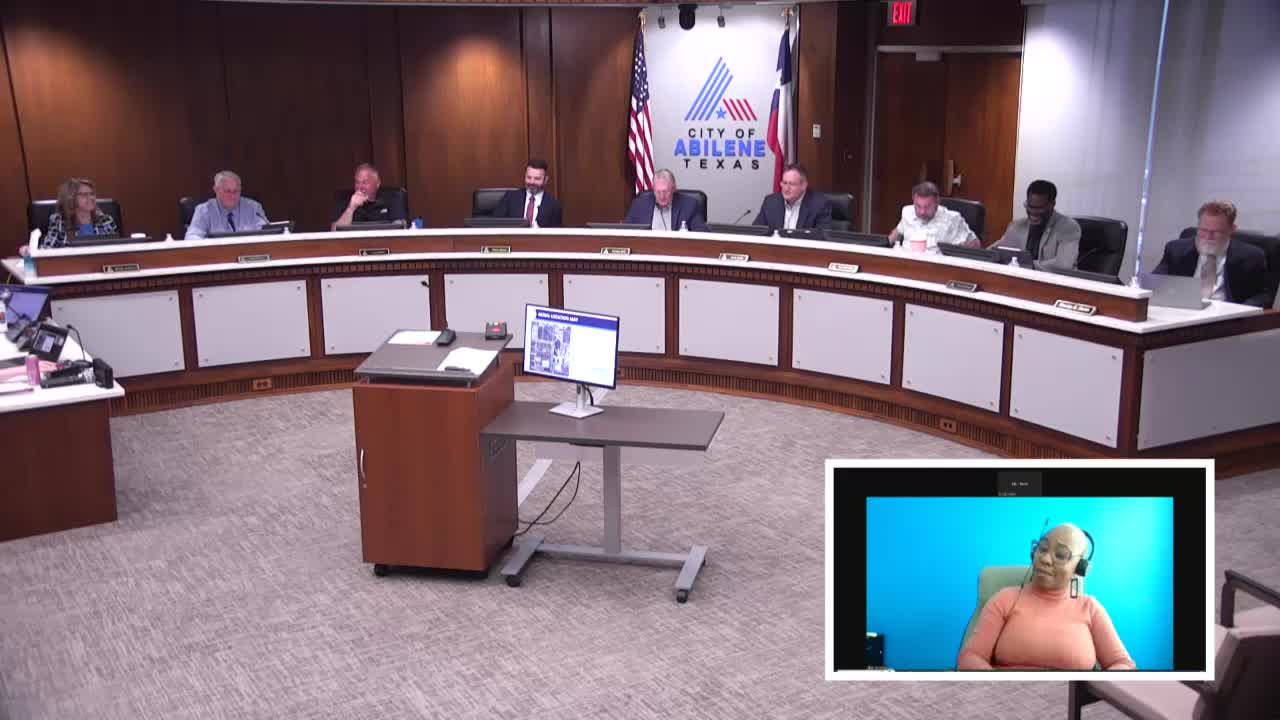
The mayor opened and closed a public hearing with no public speakers. Councilman Craver moved to approve the ordinance change; Councilman McAllister seconded. The mayor announced “all yeses, motion carries.” Staff said they would bring clarified language for second reading that could tie any temporal limit to state practice.
Votes: Motion to approve ordinance language (Councilman Craver), second (Councilman McAllister). Outcome: approved on the record; language to be refined before second reading.