Get Full Government Meeting Transcripts, Videos, & Alerts Forever!
Get email alerts on the Accessory Dwelling Units topic
No spam. Unsubscribe anytime.
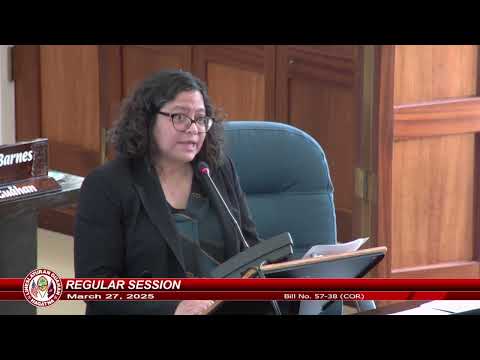
Guam Legislature advances ADU bill after floor amendments, agency concerns remain
Summary
The Guam Legislature voted to move Bill 57-38 COR, which would allow accessory dwelling units (ADUs) in residential and some agricultural zones, into the third-reading file after a day of debate and multiple failed amendments. Proponents say ADUs will increase housing options; GWA and Guam EPA warned of infrastructure and groundwater risks.
The Guam Legislature voted to move Bill 57-38 COR, a measure to allow accessory dwelling units (ADUs) in residential and certain agricultural zones, into the third-reading voting file after a day of floor debate and several contested amendments.
Supporters said the bill provides a legal pathway for small secondary homes that can help families, elderly residents and veterans stay on island. Opponents and some agency witnesses, including comments from or about the Guam Environmental Protection Agency (Guam EPA) and Guam Water Works Authority (GWA), warned the measure could increase strain on water, sewer and power infrastructure and risk further contamination of groundwater in unsewered areas.
Bill details and what changed on the floor
Bill 57-38 COR as amended on the floor allows ADUs under a set of size and technical limits and keeps in place permit reviews but rejected multiple proposed safeguards championed by some members and agency witnesses during the session. Floor action that changed the bill included:
- Approved amendment (floor vote): An amendment adopted on the floor permits ADUs on half-acre lots to be up to 900 square feet and allows them to be served by a Type 4 nitrogen-reduction wastewater system where sewer is not available; properties located within specified proximity to an existing sewer still require sewer hookup before an ADU may be built. The motion to accept that amendment was put to a rising-hand vote and carried.
- Approved amendment (floor vote): Lawmakers replaced the word "and" with "or" in a provision limiting ADUs on lots zoned A or R-2, making clear those lots may be limited to a single ADU (i.e., one detached or one attached), which the floor adopted without objection.
- Defeated/amendments failed by objection or vote: Multiple proposed changes failed to pass, including: - A proposal to require that ADU occupants be "legal residents of Guam" (failed). - An amendment to require the Department of Public Works (DPW) to confirm adequate street parking and to add the Guam Power Authority (GPA) to agency sign-offs for water, wastewater and power infrastructure at application time (failed). - A proposal to require mayors be notified at the time of application rather than at completion of construction (failed). - An amendment to change an automatic, ministerial approval provision by requiring agencies to review for compliance with law and extend certain agency review timelines from 60 days to 120 days (failed).
Floor debate and agency concerns
Sponsor and supporters argued ADUs are a practical, incremental response to Guam's housing shortage that lets families add small units on existing lots, keep multigenerational households intact, and provide lower-cost rental opportunities. Senator Chris Duenas, identified on the floor as the bill—s author, closed by urging colleagues to move the bill forward and said the measure included provisions requiring advanced septic technology (Type 4 systems) in non-sewered areas and other guardrails intended to protect public health.
Steven Hollister, whose written comments were read into the record, identified himself as a long-time resident and a Guam EPA board member who submitted testimony as a private citizen. Hollister told the Legislature he opposed the bill as written, citing risks to the Northern Guam aquifer, the potential for ADUs to be used to bypass zoning protections, and concerns about existing sewage spills and insufficient public infrastructure. He urged a more cautious approach and more funding and planning before expanding density in unsewered areas.
Members who urged additional safeguards highlighted several operational concerns observed in the permitting process: lengthy building-permit timelines (testimony reported current permit waits of six to twelve months in some cases), variability in agency reviews, and greater cumulative strain on utilities if ADU density increases island-wide without a funding mechanism for upgrades.
What the Legislature decided and next steps
After debate and several failed amendment attempts, the Senate adopted the floor amendments that limit some ADU configurations and allow the specified ADU sizes and Type 4 systems in non-sewered areas. The Legislature then voted to move Bill 57-38 COR, as amended on the floor and by committee, into the third-reading file. The bill will return for a formal third-reading vote at a later date.
Votes at a glance
- Adopted: Floor amendment permitting ADUs up to 900 sq. ft. on half-acre lots served by Type 4 nitrogen-reduction wastewater systems where sewer is not required; required sewer hookup if within specified proximity of existing sewer (motion carried by rising-hand vote). (floor debate) - Adopted: Change replacing "and" with "or" for A and R-2 lot ADU limits (motion carried without objection). - Failed: Amendment to require ADU occupants be "legal residents of Guam." (motion failed) - Failed: Amendment to require DPW parking assessment and add GPA to agency sign-offs for power infrastructure and parking. (motion failed) - Failed: Amendment to require mayoral notification at time of application (instead of completion). (motion failed) - Failed: Amendment to extend agency review timelines from 60 to 120 days and to remove default ministerial approval language. (motion failed) - Motion passed to move Bill 57-38 COR, as amended, into the third-reading voting file.
Clarifying details recorded on the floor
- ADU sizes referenced on the floor included 400 sq. ft. and 900 sq. ft.; the 900 sq. ft. cap for half-acre lots was discussed and reflected in the amendment adopted on the floor. - The floor discussion referred to a "Type 4" nitrogen-reduction wastewater system as the technology permitted for ADUs in specified non-sewered areas; the bill as debated links ADUs and wastewater controls differently depending on proximity to existing sewer. - Agency-review timing discussed: current practice described on the floor includes permit delays of six to twelve months; several amendments sought a statutory agency-review deadline of 120 days (up from a 60-day period in the committee text), but that extension was not adopted. - Multiple witnesses and senators referenced the Northern Guam Groundwater Protection Zone (GPZ) and the aquifer as areas of particular concern for septic-system impacts.
Who spoke (selected)
- Senator Chris Duenas, sponsor/author (Guam Legislature) - Steven Hollister, Guam EPA board member (testimony submitted as private citizen) - John Duenas (named in floor discussion as a professional involved in past work on related measures) - Senator Perez (member; proffered amendments on ADU definitions and application requirements) - Senator July (member; objected to some amendments) - Senator Masi (member; spoke supporting stricter agency review) - Senator Gumitatao (cosponsor; member) - Multiple other senators and floor members spoke for and against specific amendments and the bill.
Community relevance and practical impact
If enacted, the bill would change how many single-family properties may add small secondary units and could increase housing supply incrementally. Supporters said ADUs could help multigenerational families and provide lower-cost rental options; opponents cautioned the bill could shift infrastructure costs to ratepayers and exacerbate nitrate and other contamination risks in areas without sewers. Agencies including GWA and Guam EPA were cited during the debate as urging caution or additional safeguards.
What to watch next
Bill 57-38 COR will appear on a third-reading calendar for a final passage vote. Key issues to monitor in further action are whether final floor amendments remain, whether the bill is reconciled with any companion measures addressing sewer expansion or utility funding, and whether the Guam EPA or GWA submit additional technical recommendations or legal opinions before final passage.