Get Full Government Meeting Transcripts, Videos, & Alerts Forever!
Get email alerts on the Beach Maintenance topic
No spam. Unsubscribe anytime.
Parks staff outline beach grooming program, wildlife protections and seasonal schedule
Summary
City staff presented the Parks Division’s beach grooming program: 2.9 miles of groomed shoreline, a seasonal schedule, equipment and wildlife‑monitoring protocols intended to balance recreation and habitat protection for species such as the western snowy plover and tidewater goby.
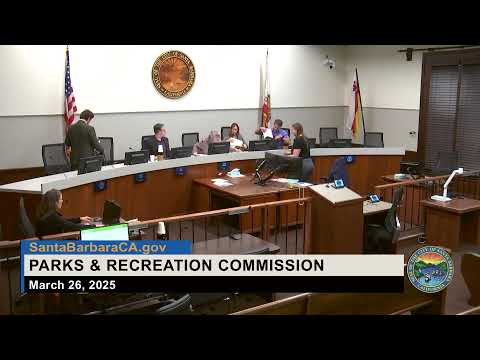
Steve Biddle, a parks supervisor who oversees Santa Barbara’s beach maintenance program, briefed the Parks and Recreation Commission on March 26 on the city’s beach‑grooming operations, equipment and wildlife protections.
Biddle told commissioners the city grooms approximately 2.9 miles of beaches (East Beach, West Beach and Leadbetter) and limits grooming to dry sand above the mean high‑tide line; staff and trained wildlife monitors avoid sensitive zones (buffers typically 250 feet from lagoons and creek outfalls). The program runs twice per month during peak season (May–September) and once per month in the off season (October–April). Biddle said a single peak‑season grooming cycle can total about 320 operator man‑hours; off‑season cycles total about 224 hours.
Why it matters: grooming supports public safety and recreation while the division follows a sediment‑management plan and monitors for protected species such as the western snowy plover, California least tern, tidewater goby and California grunion. When monitors detect protected species, staff said they avoid mechanized grooming in those areas.
Key details from the briefing - Equipment and capacity: The Parks Division uses an agricultural tractor towing a “surf rake”; the rake’s hopper holds about 3.5 cubic yards and can collect material ranging from small rocks to cigarette debris. Annual debris removal varies widely (staff estimated roughly 250–550 cubic yards per year depending on storms and events). - Wildlife and buffers: Staff conduct bird surveys during each grooming cycle and avoid grooved or vegetated habitat; snowy plovers are easily disturbed and staff avoid operating where they are observed. - Events and restoration: Biddle described the city’s event management and post‑event cleanup efforts (including a large Independence Day operation) and noted recent dune restoration work and shoreline repairs (projects led by Public Works and other divisions). The department coordinates with the Beach Ecology Coalition and other local partners for monitoring and education.
Ending: Commissioners thanked staff and asked follow‑up questions about debris volumes and the dune restoration project. Staff said they would continue outreach and coordination with partner agencies and volunteers.