Get Full Government Meeting Transcripts, Videos, & Alerts Forever!
Get email alerts on the Immigration Enforcement topic
No spam. Unsubscribe anytime.
Truth Act forum draws large turnout; sheriff details ICE notifications and public urges zero cooperation
Summary
County officials held a Truth Act forum after sheriff’s staff reported 14 ICE notification‑eligible cases in 2024; the sheriff described the notification process and county policies limiting cooperation while members of the public demanded a clear pledge of zero cooperation with ICE.
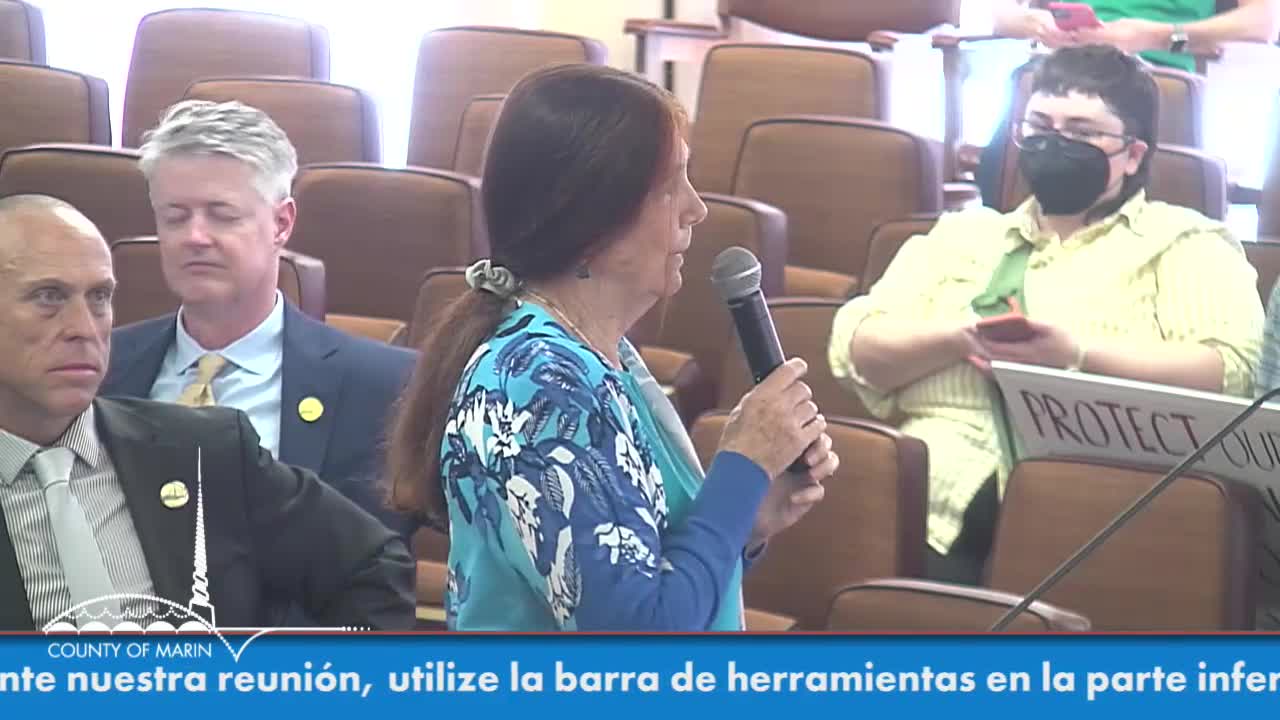
The Marin County Board of Supervisors convened a Truth Act community forum on March 25 after the county sheriff reported 14 notifications to federal immigration authorities (ICE) in calendar year 2024, one more than in 2023. The forum drew a large and often emotional public turnout: residents, faith leaders, health providers, community organizations and immigrant advocates pressed the sheriff and the board to commit to refusing any cooperation with ICE beyond what state law requires.
Sheriff Jamie Scardina and Captain Scott Harrington explained the county’s process for handling ICE inquiries and the limits on local cooperation under state law. Under state law and departmental policy, the sheriff said, deputies do not inquire about an individual’s immigration status for enforcement purposes, do not accept complaints alleging immigration violations, and will not hold a person past their lawful release date except under a signed federal judicial order. Scardina described the usual ICE notification process: ICE receives fingerprint data from state fingerprint channels, sends the county an I‑247 notification form that lists charges and asks to be notified of release; staff check whether the charges meet the SB‑54 criteria and whether the individual remains in custody before a notification is sent.
Scardina said that of the 104 I‑247 forms received in 2024, 14 met SB‑54 criteria and were conveyed to ICE. He said most of those individuals were booked on serious or violent felony charges, listing offenses such as burglary, robbery, sexual and violent offenses, felony DUI with injury, and firearms offenses. He also said most of the 14 were male and identified as Hispanic; eight were Marin County residents. Scardina reiterated that the sheriff’s office does not deport anyone and that ICE is not permitted in the secure booking area of the county jail.
Public comments ran long and often intense. Speakers pressed for a firm, public guarantee of zero cooperation with ICE; several asked for more visible, plain‑language clarification of departmental policy, practical assistance for immigrant families, and a rapid‑response hotline and legal assistance funding. The board had earlier allocated funds to a legal assistance program for immigrants; commenters urged the board to expand legal and social supports and to publish clear written guidance for immigrant families and for sheriff’s deputies.
Several speakers raised specific national concerns — high‑profile ICE operations and transfers to detention in El Salvador — and asked the county to take a clear local stance by refusing all voluntary cooperation. Law enforcement representatives at the meeting said that, while the county enforces local laws, it does not have jurisdiction over federal immigration policy and that federal agencies may act independently.
After public comment, supervisors thanked commenters and the sheriff for the report and asked for continued transparency. Several supervisors recommended proactive outreach: publish the sheriff’s immigration interaction policies in plain language, make “know your rights” materials widely available in multiple languages, and monitor any uptick in federal requests for access to county data. The board did not take a formal vote at the forum — the event is informational — but directed staff and the sheriff’s office to follow up on transparency, community outreach and legal support for residents.