Get Full Government Meeting Transcripts, Videos, & Alerts Forever!
Get email alerts on the Automotive Repair Shops topic
No spam. Unsubscribe anytime.
Houston police outline limits of enforcement against auto repair shops operating in neighborhoods
Summary
Houston Police Department Auto Dealers Detail described enforcement tools and regulatory gaps for automotive repair facilities in residential areas, citing recurring unlicensed operations and recommending a multi-agency task force and code revisions.
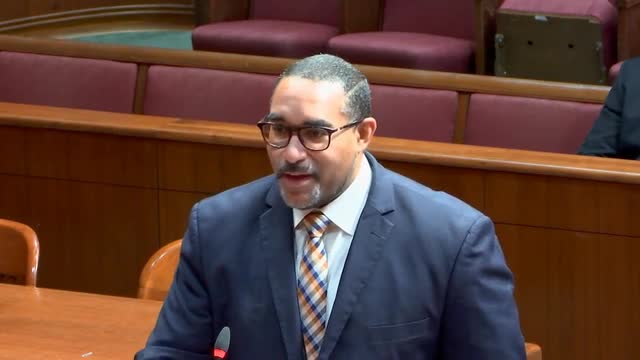
Lieutenant Lewis Parker of the Houston Police Department’s Auto Dealers Detail told the Service Delivery Committee on April 1 that the division has stepped up “hot spot” inspections of automotive repair facilities after repeated citizen complaints about vehicles and debris in residential streets.
Parker said the Auto Dealers Detail, which enforces parts of Chapter 8 of the City of Houston Code of Ordinances and inspects businesses tied to the automotive industry, began focused enforcement in November 2024 in areas including the Janetta-Schumacher vicinity. “Since then, we identified 25 new businesses and also 77 licenses which need to come into compliance,” Parker said.
The Auto Dealers Detail can issue citations for violations such as operating without an ARF license (the local term for an automotive repair facility license), failure to keep required records, parts or oil on the ground and failing to install a solid fence if cars are kept on site over 30 days. Parker said citations may be written “every single day that they are in violation,” and noted that licensed businesses with repeated violations can be referred to the Automotive Board, whose members are appointed by the mayor.
But the department and council members spent most of the hearing describing enforcement limits. Parker said businesses that never obtained a license cannot be brought before the Automotive Board because the board’s authority applies to licensed businesses. “Businesses with no license are unable to be brought before the board,” he said. He and Sergeant Michael Provost, who leads the Janetta-Schumacher initiative, described a pattern in which businesses relocate vehicles or otherwise alter behavior when officers arrive: “Usually, when we go out and the car’s on the street, we’ll go to the business and the business will move the cars,” Provost said.
Council members and staff pressed the department on towing policy, penalties and options for shutting down repeat offenders. Mayor Pro Tem Peck and others described cases where cars blocked neighborhood streets and raised emergency-access concerns; Council Member Martinez said she could not get through a residential street because of parked cars. Parker said towing is used when legal criteria are met, but in many instances vehicles are moved before officers can take action: “By the time I got out there, I think a lot of these vehicles was cleared.”
On penalties, Parker said municipal-court outcomes determine fine amounts. He told the committee that citations typically result in fines “no more than $200,” though tickets can go as high as $500. Multiple committee members argued for stronger monetary penalties and for municipal-court policies that would escalate fines for repeat violations.
Committee members proposed several non-enforcement remedies and next steps discussed during the meeting: convene a multi-agency task force that would include HPD, the Planning Department/Planning Commission, the Administration and Regulatory Affairs (ARA) office, ParkHouston, City Legal and regional partners such as the Texas Commission on Environmental Quality and the Harris County Attorney’s Office; review Chapter 8 of the City of Houston Code of Ordinances for potential new language restricting street storage of vehicles and better tools for shutting down noncompliant operations; and consider state-level statutory changes if necessary.
Parker and Provost said the division is willing to participate in any committee that drafts recommendations on code changes and enforcement coordination. Parker urged a “comprehensive approach” that goes beyond issuing citations as a short-term fix. He added that some businesses appear to treat citations as an operating cost, which hampers deterrence: “Some businesses seem to include citation as part of their operating expenses,” he said.
Committee members also raised environmental and public‑health concerns. A council office relayed a constituent report of paint fumes and alleged outdoor painting activity; Parker said auto dealers do not perform environmental testing and recommended referring air‑quality or paint‑spraying complaints to the Texas Commission on Environmental Quality or the city’s major offenders/environmental units, and noted that painting without a booth or proper permits may prompt enforcement by the fire department and other agencies.
No formal motions or votes were taken during the presentation. The committee requested follow‑up coordination with City Legal and other departments to explore code changes and multi-agency enforcement options.
The committee adjourned after public commenters and office representatives discussed next steps for revising Chapter 8 and for convening stakeholders. The Auto Dealers Detail said it would continue hotspot inspections and participate in any planning or regulatory review the committee directs.