Get Full Government Meeting Transcripts, Videos, & Alerts Forever!
Get email alerts on the Campaign Finance Complaint topic
No spam. Unsubscribe anytime.
Austin ethics commission finds reasonable grounds in complaint against Councilmember Mike Siegel
Summary
The Austin Ethics Review Commission voted unanimously to proceed to a final hearing on a complaint by Adam Haines alleging multiple campaign-finance reporting violations by Councilmember Mike Siegel.
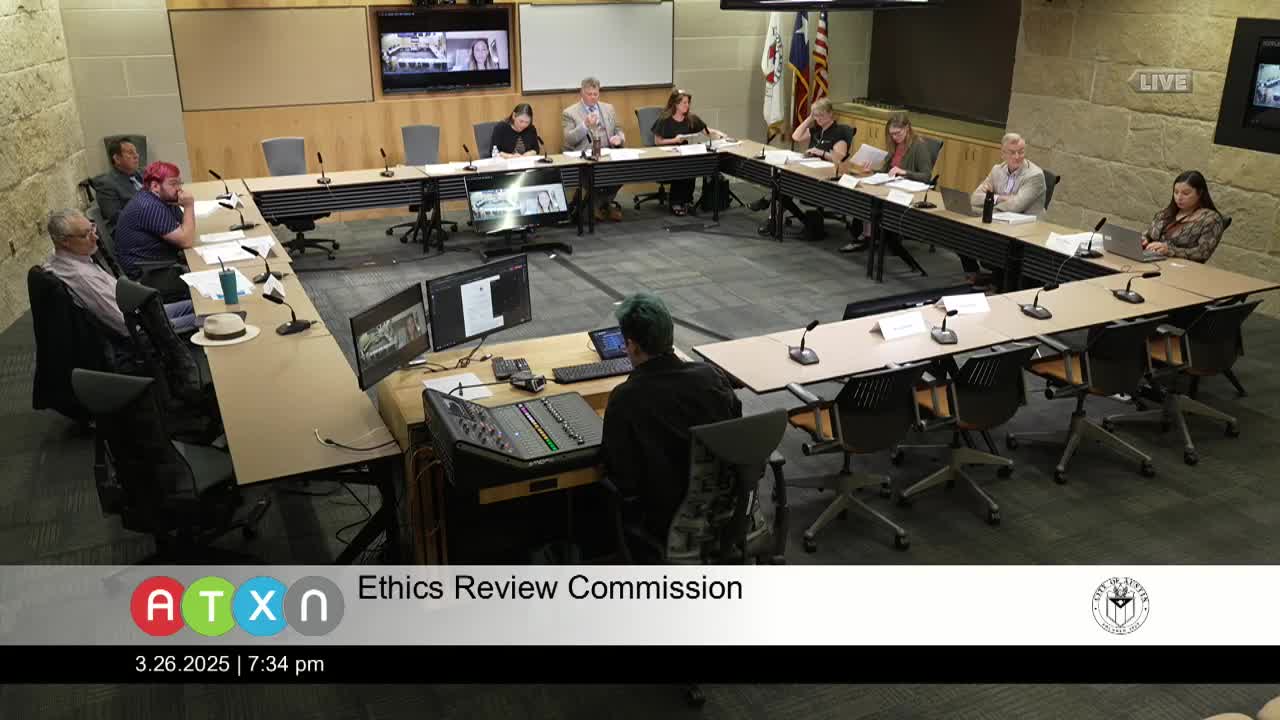
The Austin Ethics Review Commission on March 26 voted unanimously that there are reasonable grounds to believe a violation of the city—s campaign finance rules may have occurred in a complaint filed by Adam Haines against Councilmember Mike Siegel, and the matter will proceed to a final hearing.
Acting Chair Wynn Stanton Adams opened the preliminary hearing, describing the issue as whether "reasonable grounds exist to believe that a violation of a city code provision within the jurisdiction of the ethics review commission has occurred." Complainant Adam Haines presented his 10-minute statement and alleged multiple reporting errors and unreported contributions in Siegel's campaign filings, saying the filings showed "at least 6 instances where Mr. Siegel...has violated various parts of the campaign finance laws." Haines said corrected reports were later filed but argued those corrections did not comply with the city code's requirements for returning contributions.
Haines told the commission he originally filed the complaint in December and refiled after an administrative notice issue. He described specific items in Siegel's corrected filings — including name changes and a reduction of a total contribution figure — and said the corrected reports did not check the code-required boxes showing a returned contribution. "He just magically erases $450 on his corrected report," Haines said, arguing that omission kept the required reporting trail from appearing in the record.
Commission staff and outside counsel described the hearing process (10 minutes per party at preliminary stage, statements under oath, no cross-examination) and confirmed there were no recusals. Siegel was not present for the preliminary hearing; Haines provided a signed oath for his testimony. Assistant City Attorney Caroline Webster and outside counsel Alan Bohorkas were available for procedural and legal advice.
After commissioners asked clarifying questions about the filings and the nature of the alleged reporting errors, Commissioner Ross Pumphrey moved that the commission find reasonable grounds to proceed to a final hearing; the motion was seconded (second not specified on the record). Chair Stanton Adams conducted a roll-call vote. Commissioners Patrick Kiel, Jordan Pretti, Mary Kale, Ross Pumphrey, Adam Matern, Luis Figueroa, Britney Sharkey (participating virtually), and Chair Wynn Stanton Adams voted yes. The motion passed 8-0 with three commissioners absent, and the commission announced the complaint will be scheduled for a final hearing.
The commission's preliminary decision determines only that reasonable grounds exist to hold a final hearing; it does not determine any violation or sanction. The commission read the contested authorities on the record as part of the hearing: Austin City Code sections 2-2-13 (candidate contribution limits) and 2-2-21 (additional information required on campaign finance reports), and City Charter Article 3, Section 8 (limits on contributions and expenditures). The commission may return to closed session for legal advice before scheduling the final hearing.
Procedurally, commissioners followed their stated practice of giving each party up to 10 minutes for the preliminary hearing. Haines' submission and the commission—s recording of the vote will be included in the case file when the final hearing is scheduled. The commission did not make any findings about intent or sanctions at this meeting; it only authorized progression to a final hearing based on "reasonable grounds to believe" a violation may have occurred.
Next steps: the Ethics Review Commission will set a date for a final hearing, provide notice to the respondent, and may reconvene in executive session for legal consultation before taking any final action.