Get Full Government Meeting Transcripts, Videos, & Alerts Forever!
Get email alerts on the Occupational Health Safety topic
No spam. Unsubscribe anytime.
Committee advances SB 20 to require certification, training and tracking for engineered‑stone fabricators
Summary
Sen. Menjivar's SB 20 passed out of committee as amended to the Senate Committee on Health. The bill would create a certification, training and registration system for engineered‑stone fabricators and manufacturers to prevent silicosis and enable enforcement of exposure controls, supporters said.
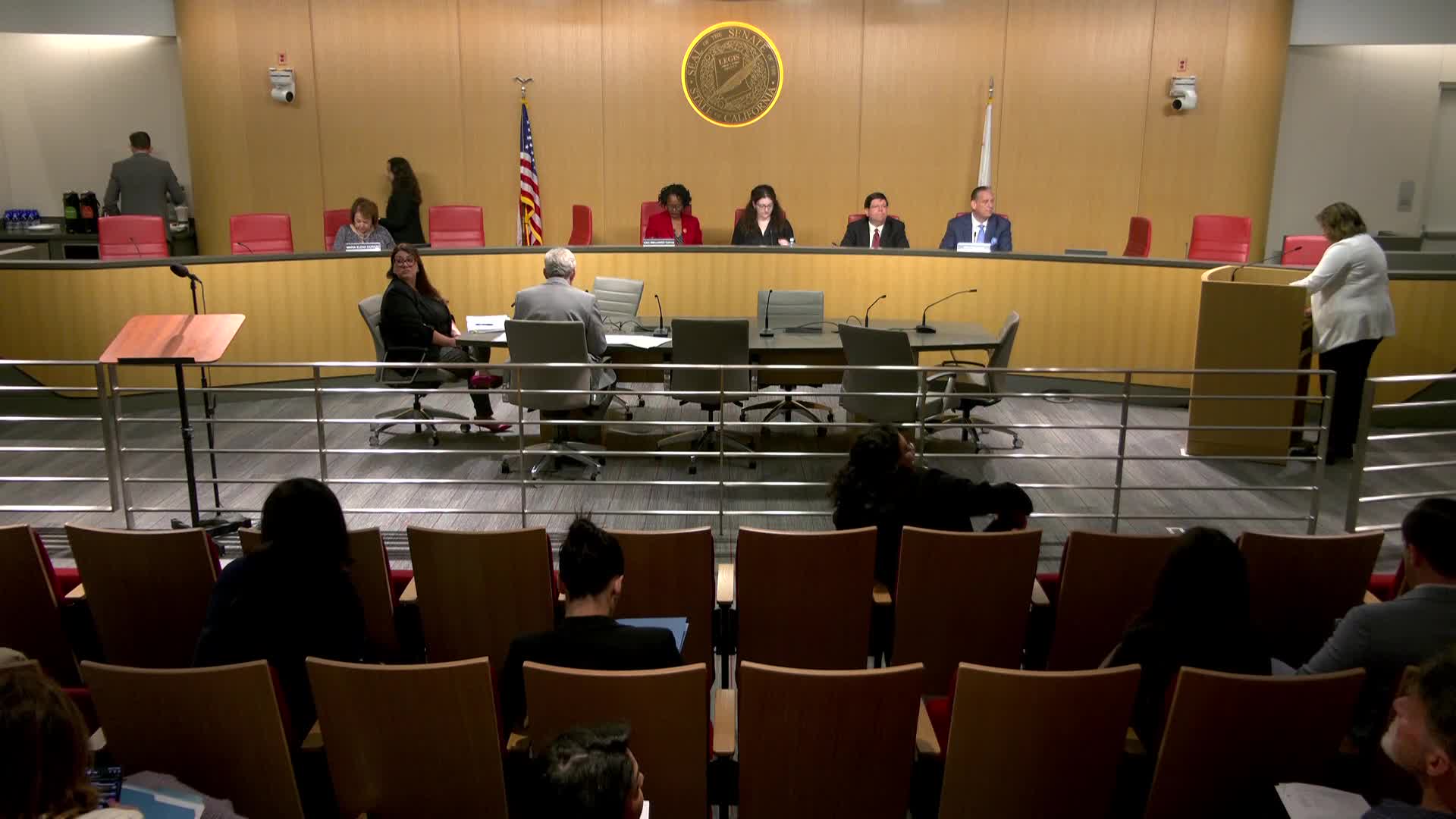
Senate Bill 20, authored by Sen. María Menjivar, passed out of the Senate Labor Committee as amended and was referred to the Committee on Health after a unanimous recorded vote in committee.
The bill, described by Menjivar as the "Stop the Silicosis Training, Outreach and Prevention Act," would complement Cal/OSHA and Department of Public Health efforts by establishing a statewide registration and certification system for entities that buy, sell or fabricate engineered stone. It would require the Department of Industrial Relations (DIR) to adopt a training curriculum on best practices, require inspections and create a tracking database to identify concentrations of potentially unregulated fabricators.
Why it matters: Supporters said engineered stone fabrication has produced a cluster of silicosis cases — an irreversible, often fatal lung disease — concentrated in the San Fernando Valley and other California communities. Testimony cited roughly 259 confirmed cases statewide, a high share in Los Angeles County, and noted workers are often Latino men, sometimes undocumented, who may work in small, mobile, unregulated shops that are difficult for regulators to locate.
Udi Yi of the State Building and Construction Trades Council told the committee the industry is highly mobile and unregulated, arguing Cal/OSHA and the Department of Public Health’s current complaint‑driven approach is insufficient to prevent disease. Industry witnesses including representatives of stone manufacturers said they support the bill and want to continue negotiations with the author to strengthen safety and administration provisions.
The author told the committee she accepts committee amendments. The motion to pass as amended was made by Sen. Strickland and carried; the clerk recorded the committee vote as aye by Smallwood Cuevas, Strickland, Durazo (3–0 on call) and the bill was advanced to the Senate Committee on Health.
Supporters included labor unions, the Silica Safety Coalition, stone manufacturers and public‑health advocates; no organized opposition testified in committee. The bill’s fiscal effects, implementation timeline, and precise certification fees or administrative structures were not detailed in the hearing record; the bill requires DIR rulemaking and coordination with public‑health surveillance efforts.