Get Full Government Meeting Transcripts, Videos, & Alerts Forever!
Get email alerts on the Pact For The Future topic
No spam. Unsubscribe anytime.
UN secretary-general reports early implementation steps on Pact for the Future, urges action on AI, finance and peace operations
Summary
Secretary-General António Guterres told the General Assembly a principal-level steering committee and multiple working groups are now in place to implement the Pact for the Future, and he urged member states to establish an independent scientific panel on AI and to support steps on debt, peace operations and financing for development.
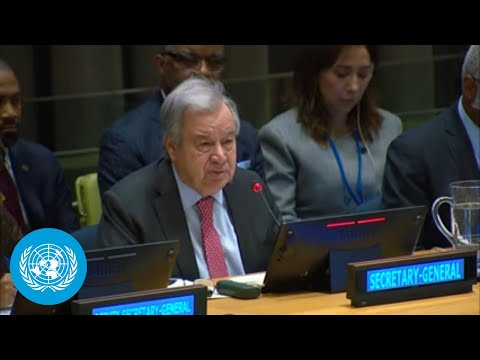
Secretary-General António Guterres told the United Nations General Assembly on Wednesday that the organization has moved from adoption to implementation of the Pact for the Future, outlining concrete internal steps and pressing member states to support external reforms.
"Adopting the pact was the beginning of the process, not the end," Guterres said, and reported that he has established a principal-level steering committee, which he chairs, to oversee six working groups and two task teams set up to carry forward Pact priorities.
The announcement outlined four priority areas for the coming year: peace and security; finance for development; future generations; and technology. Guterres described operational changes inside the UN intended to improve efficiency — including the UN80 initiative he announced earlier this month — and said the Secretariat is building an internal tracking system to monitor Pact implementation.
Why it matters: The Pact for the Future is intended to re-energize multilateral action on climate, security, development and governance at a time Guterres said member-state trust and funding are under strain. The secretary-general framed the internal restructuring as preparatory work that still requires decisions and resources from member states and other multilateral institutions.
On peace and security, Guterres said the Secretariat is reviewing all forms of UN peace operations and seeking clearer, more sequenced mandates with realistic exit strategies. He pointed to a November report on peacebuilding and an ongoing second independent progress study on young people’s contributions to peace processes. "The review will be an opportunity to help adapt peace operations to today's realities and ensure they're guided by clear and sequenced mandates that are realistic and achievable with viable exit strategies and transition plans," he said.
On financing, Guterres said resident coordinators and UN country teams are mapping how to accelerate national progress on the Sustainable Development Goals. He said the Secretariat is analyzing the impact of military expenditure on SDG attainment and expects a final report in September. He also said an expert group convened to recommend practical steps on debt will propose achievable outcomes in the coming weeks and release a full report in June ahead of the financing for development conference in Spain.
Guterres urged reforms in the international financial architecture so developing countries are "represented fairly in the governance of the very institutions they depend on," and said the Secretariat will press to increase multilateral development banks' lending capacity, including recapitalization and concessional finance targeted to need.
On younger generations, Guterres said the Pact commits the UN to listen to and include young people in decision-making. He said work is under way to establish a youth investment platform to align national funding mechanisms with young people's needs, to broaden representation of younger colleagues within UN structures and to appoint, later this year, a special envoy for future generations.
On technology, Guterres highlighted the global digital compact’s call to close digital divides, and he urged the General Assembly to swiftly establish an International Independent Scientific Panel on Artificial Intelligence. He said a draft resolution to establish the panel and convene a global dialogue on AI governance was circulated last week and told the Assembly, "I urge the General Assembly to act swiftly to establish this panel and ensure that AI expertise and knowledge are available to all countries."
Guterres acknowledged limits to UN authority in some areas, saying the Secretariat's proposals often depend on member states and other multilateral institutions. "Many of these actions depend on decisions of other multilateral institutions and of member states, but we will not relent in our constant advocacy for what the pact of the future has clearly indicated as the way to pursue," he said.
The secretary-general closed by reiterating the need for sustained political will and resources from member states to turn the Pact's commitments into results.