Get Full Government Meeting Transcripts, Videos, & Alerts Forever!
Get email alerts on the School Transportation Pilots topic
No spam. Unsubscribe anytime.
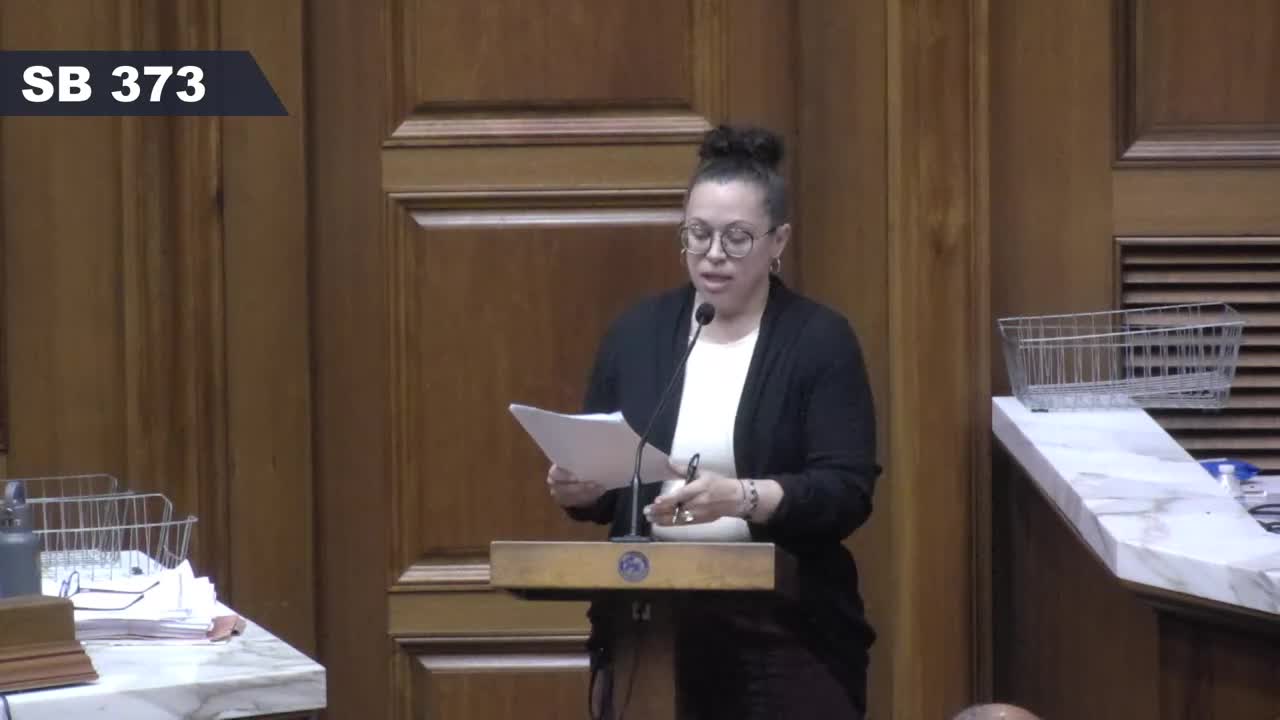
Committee delays votes on school transportation pilot and Indianapolis Local Education Alliance after extensive testimony
Summary
After hours of testimony, the House Education Committee postponed action on amendments to Senate Bill 373 that would create a statewide transportation and facilities pilot and establish an Indianapolis Local Education Alliance; witnesses sharply divided over local control, taxation and charter participation.
The House Education Committee heard hours of public testimony on proposed amendments to Senate Bill 373 before the chair said the measures would not be voted on this week and would be taken up again next week.
The proposed changes include two voluntary pilot programs — one to allow districts, charters and other schools to collaborate on transportation and facilities planning, and a separate pilot to test mastery‑based education models — and a provision to create an Indianapolis Local Education Alliance (ILEA) to study facilities, transportation and referendum issues inside the city.
Supporters — including charter leaders, parents and some business groups — urged the committee to approve the pilots and the alliance as tools to expand access to choices and to coordinate scarce resources. Taylor Hughes, chief strategy officer at the Indy Chamber, said the alliance would allow local stakeholders to “work on some of those issues at the local level” and help plan in advance for potential referendum conversations.
“Participation is voluntary, it’s time‑bound, and there’s clear oversight and accountability through data reporting,” said Kim Reiter of the Indiana Charter Innovation Center, urging the committee to permit local experimentation on transport and facility use.
But representatives of Indianapolis Public Schools (IPS), teachers’ unions and school boards warned the measure would transfer decision‑making and taxing authority away from locally elected officials to a board that would include appointed members and nonpublic school representatives. Gail Cosby, speaking for IPS, said the district supported collaborative planning but objected to language she said would make ILEA a quasi‑governing entity rather than an advisory body.
“Students must remain at the center of decision making. We are the elected governing body for the city public school system,” Cosby said, adding a plea for local accountability: “Nothing about us without us.”
Teacher and school leader groups also criticized parts of the mastery‑based pilot. Joel Hand of the American Federation of Teachers‑Indiana said one section would make collective bargaining optional in schools that participate in the pilot, a change he said was unnecessary and likely to undermine teacher buy‑in. “This is just another way to twist the knife into the backs of teachers,” Hand said.
School finance and management associations raised separate concerns about the authority in the facility and transportation pilots to approve or deny property tax levies for capital expenses. Terry Spradlin of the Indiana School Boards Association called the proposal “taxation without representation” and warned it would create “a duplicative layer of school governance and remove authority from a locally elected school board.”
Parents, students and local providers gave personal examples of transportation gaps. Several parents and students from Indianapolis testified that lack of reliable school transport had forced families to choose schools based on travel ability rather than academic fit, and that centralized or coordinated transportation could reduce absenteeism and open access to specialized programs.
The committee’s chair, Representative Benning Behning, said he opened the amendments to public comment and would solicit written input; he did not call for a vote Wednesday. “I would like to get public comment on them and then we’ll have an opportunity to amend and vote next week,” Behning said.
For now, the measure is delayed; the committee scheduled further consideration for the next hearing day.
Votes or formal actions were not taken on the amendments; the committee instead accepted public testimony and postponed decisions for further consideration next week.