Get Full Government Meeting Transcripts, Videos, & Alerts Forever!
Get email alerts on the Legal Workforce topic
No spam. Unsubscribe anytime.
Panel hears bill to fund scholarships for law students who commit to public defender or deputy prosecutor service
Summary
A bill to create scholarships for law students who commit to five years of public‑service work as deputy prosecutors or public defenders drew support from state court officials, prosecutors and public‑defender representatives in a March 26 Senate committee hearing.
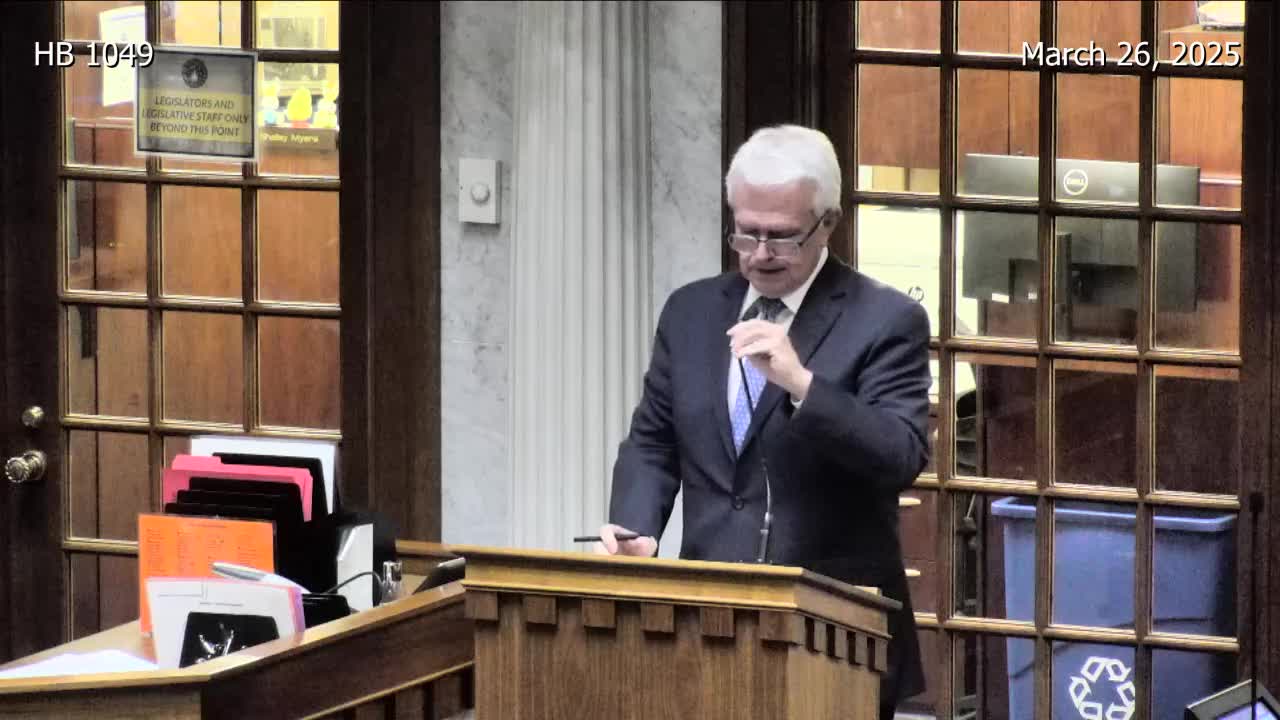
House Bill 1049, heard March 26 before the Senate Education, Career and Development Committee, would create a scholarship program to recruit law students into public-service legal work as deputy prosecutors or public defenders. The bill requires recipients to pledge five years of full‑time service in the designated roles and tasks the Commission for Higher Education with administering the scholarship fund.
Representative Stuart Wald, the bill’s author, described the proposal as a targeted, state-level approach to address geographically uneven attorney supply and shortages in criminal-justice positions. Under the program described in committee testimony, a full‑time eligible law student would receive $20,000 per year; a part‑time student would receive $15,000 per year. The sponsor said those awards are intended to cover roughly 70% of typical in‑state law school tuition over the course of the program and that the 5‑year service commitment would trigger repayment if a recipient does not fulfill the agreement.
Justin Foraker, chief administrative officer of the Indiana Supreme Court and co‑chair of the Supreme Court’s Commission on Indiana’s Legal Future, said Indiana ranks in the bottom 10 nationally for attorneys per capita (about 2.3 attorneys per 1,000 people) and that more than half of Indiana counties qualify as a "legal desert" under a one‑attorney‑per‑1,000 threshold. Foraker said the shortage is both geographic and field‑specific, and that targeted scholarships are one tool to steer newly minted lawyers into high‑need public‑service roles.
Representatives of the Indiana Public Defender Council, the Indiana Prosecuting Attorneys Council and the Indiana State Bar Association supported the bill at the hearing. Michael Moore of the Public Defender Council described high student‑loan balances and lower pay in public service positions as impediments to recruiting and retaining defenders. Courtney Curtis of the Prosecuting Attorneys Council said government must provide certain core services — including public safety — and that many graduates opt for higher‑paying private practice instead of public prosecution work.
Angela Smith Jones from Indiana University testified the university supports the bill, has collaborated with the bill author on curriculum design, and would align course work — including Indiana‑focused training in evidence, procedure and constitutional law — to prepare graduates who accept these scholarships. The sponsor said the Commission on Higher Education will set application and repayment protocols; committee members were told the budget includes a proposed $1 million appropriation to start the program.
Why it matters: Prosecutors and public defenders are essential to court operations. Committee members heard testimony that shortages slow case processing, limit access to counsel, and strain local legal systems in both rural and urban counties. The bill is a targeted, workforce-development approach that ties financial aid to public commitments of service.
Questions and concerns: Senators asked whether the scholarship would duplicate federal loan‑forgiveness programs and whether state dollars would mainly subsidize students who would have practiced in Indiana anyway. Witnesses said federal programs (including Public Service Loan Forgiveness) exist but are unstable or limited and that a state program could focus incentives to fields and places with the most acute shortages. Committee members also raised long‑term pipeline issues — including law‑school capacity — and discussed complementary approaches such as regional legal education sites or licensing alternatives.
Next steps: HB1049 received testimony and is positioned for further committee consideration. Lawmakers requested implementation details, including administrative rules from the Commission on Higher Education and clearer estimates of how many scholarships the $1 million appropriation would fund.