Get Full Government Meeting Transcripts, Videos, & Alerts Forever!
Get email alerts on the Utility Shutoff Protections topic
No spam. Unsubscribe anytime.
Committee releases bill to limit utility shutoffs during extreme heat and cold
Summary
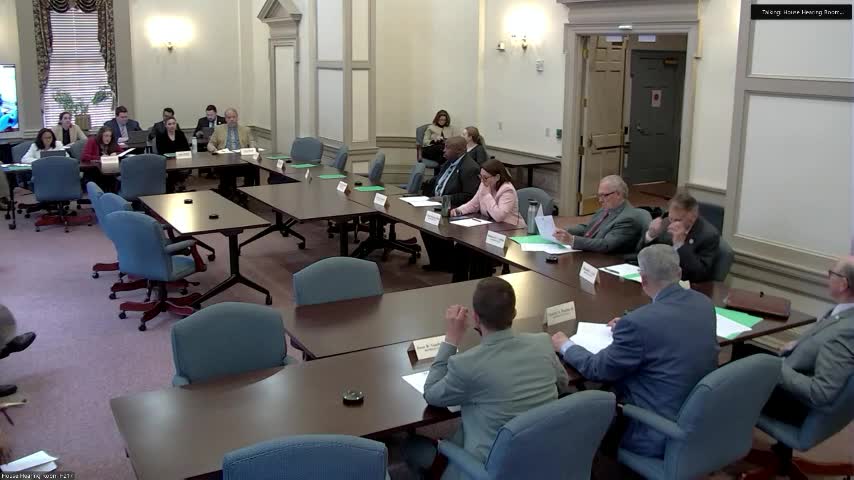
The House Natural Resources and Energy Committee voted to release HS1, House Substitute 1 for HB 62, a bill that would restrict utility disconnections during certain hours and extreme temperatures and require expanded notice and contact attempts to customers, sponsor Representative Melanie Ross Levin said.
The House Natural Resources and Energy Committee voted to release HS1, House Substitute 1 for HB 62, a bill that would restrict utility disconnections during certain hours and extreme temperatures and require expanded notice and contact attempts to customers, sponsor Representative Melanie Ross Levin said.
Representative Melanie Ross Levin, the bill sponsor, told the committee "Delawareans are seeing skyrocketing energy costs. Many are in danger of not being able to pay." She said the measure codifies and updates Public Service Commission regulations written in the early 2000s and makes eight principal changes intended to reduce health and safety risks from disconnections.
The bill's principal provisions, as described by the sponsor, include prohibiting utility terminations outside 8 a.m. to 4 p.m. Monday through Thursday; banning termination of heating service when the temperature is at or below 35 degrees Fahrenheit; banning termination of cooling service when the heat index is at or above 90 degrees; requiring a 14-day written notice before termination during heating or cooling seasons; requiring utilities to attempt contact at least three times (including one attempt after 5 p.m.) and to use a customer’s preferred contact method; requiring the 14-day notice to include information about payment plans and government assistance programs; prohibiting disconnections between Dec. 21 and Jan. 1; and extending the protections to municipal electric companies.
Ross Levin said the bill originally included a provision preventing shutoffs for customers receiving certain social-welfare benefits (she cited LIHEAP, TANF and SSI among programs discussed) but "after many conversations with stakeholders, it would be challenging to implement in Delaware" and that provision was removed pending further work with the Department of Health and Social Services.
Public-service witnesses answered operational questions about reconnection and billing. Matt Hartigan, executive director of the Delaware Public Service Commission, said that "in the case of Delmarva ... they can turn it on without someone going out to turn the meter back on," but acknowledged there is a fee to restore service. Committee members noted that reconnection capability does not remove the customer’s obligation to pay any past-due amounts or reconnection charges.
Representatives and utility representatives described technical and implementation questions the sponsor plans to address by amendment. The sponsor said she will bring a friendly amendment to move the bill’s effective date from 60 days to 90 days to give utilities more time to implement required changes; she also said she would work on narrowing the temperature-monitoring language after members called a provision tying temperature to a location "within 50 miles" operationally infeasible.
Utility and stakeholder testimony: Jamie Nutter of Parkowski, Burke, and Swayze, representing Delaware Electric Cooperative, said the cooperative serves about 120,000 member meters in Kent and Sussex counties and asked that notices be targeted to account holders rather than to "adult occupants," because the cooperative’s relationship is with the account holder. Pam Farley (listed in the record as representing DPL) said her company requested more time to make infrastructure changes but will meet the sponsor’s 90-day effective-date proposal; she described existing efforts such as suspended disconnects and extended payment plans and said utilities use disconnection as a last resort. Lisa Oberdorf, state affairs manager for Delmarva Power, told the committee that increased January bills many residents experienced were driven largely by weather-driven usage and by charges tied to kilowatt-hour consumption (for example, green energy charges that are percentage-based), not by company rate increases.
Public comment: Marissa McClinton, environmental justice associate organizer for the Sierra Club Delaware chapter, testified in support, saying shutoffs are a health and equity issue that disproportionally affect households with children and elderly residents and endorsing the bill’s heat-index and cold-temperature protections. Joe Walls, an advocate for incarcerated veterans, raised concerns about large commercial loads such as data centers and asked whether residential customers were subsidizing those users. Dora Williams, a member of the public, urged additional protections and more detail on how long customers would have before disconnection and whether all relief avenues had been exhausted.
Committee action and vote: A committee member moved to release HS1, and the committee held a roll-call vote. The record shows the following recorded responses: Representative Frank Burns — yes; Representative Rich Collins — yes; Representative Ron Gray — yes; Chair Deborah Heffernan — yes; Representative Jeff Halovsky — yes; Representative Larry Lambert — yes; Vice Chair Sophie Phillips — yes; Representative Charles Postles Jr. — yes; Representative Claire Snyder Hall — yes. Representatives Bill Bush and Bill Carson were recorded as absent; Representatives Krista Griffith and Carrie Evelyn Harris were also noted absent. The clerk counted the affirmative votes and determined the bill had received the required number of votes and was released to be reported on the legislative website and announced on the House floor.
What the bill does not do: The sponsor and witnesses said the bill does not forgive past-due balances or eliminate customers’ obligation to pay. The removed means-tested provision for recipients of programs such as LIHEAP, TANF and SSI means the bill applies generally rather than providing automatic shutoff protection based on program enrollment; the sponsor said she will continue working with DHSS and other stakeholders on that issue.
Next steps: The sponsor said she will file technical amendments addressing account-holder language, the 50-mile temperature-monitoring language, and extend the effective date to 90 days. The committee released the bill; it will be posted on the legislative website and may be scheduled for a House floor announcement and further action.
Ending: Supporters framed the bill as an update to decades-old rules intended to reduce immediate health and safety risks during extreme temperatures and to improve customer communication; utilities and representatives asked for clarifications on account-holder notice, weather monitoring and implementation timing, items the sponsor said she will address before further consideration.