Get Full Government Meeting Transcripts, Videos, & Alerts Forever!
Get email alerts on the Public Meeting Recordings topic
No spam. Unsubscribe anytime.
Sponsor will amend recordings bill to exclude executive sessions after privacy concerns
Summary
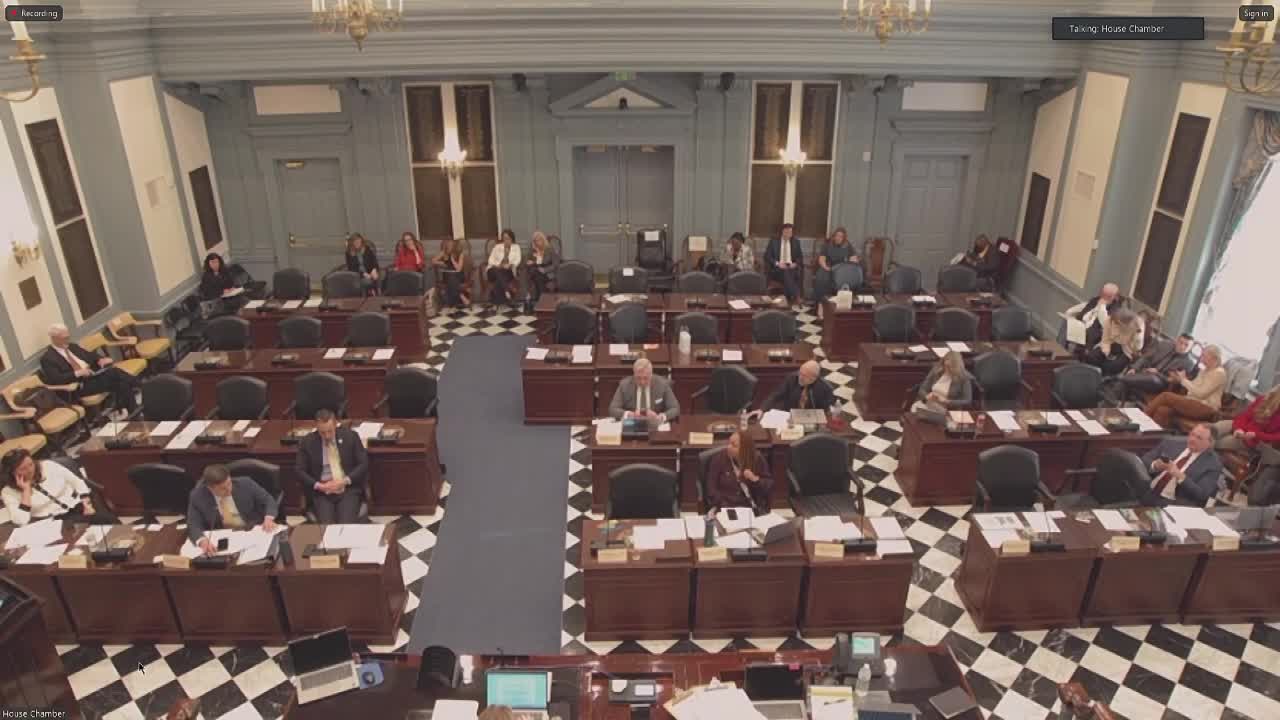
House Bill 78 would require public bodies to record public meetings and post audio/video within seven days; after testimony from school administrators and attorneys about FERPA, attorney-client privilege and personnel confidentiality, the sponsor said he would amend the bill to exclude executive sessions from required recordings.
Representative Morrison told the committee House Bill 78 ‘‘requires public bodies to make video or audio recordings of all public meetings, and to post them to their websites within 7 [days],’’ and said the policy aims to increase transparency and public access.
Multiple witnesses urged caution. Tammy Croce, executive director of the Delaware Association of School Administrators, said DASA ‘‘cannot support House Bill 78 in its current form’’ because of ‘‘the sensitive nature of discussions or topics, including personnel issues, contents of documents excluded from the definition of public records, and student hearings.’’ Joseph Jones, superintendent of New Castle County Vocational Technical School District, told the committee ‘‘executive sessions are not recorded’’ in his experience and said recording them could threaten student privacy under FERPA, employee confidentiality and attorney-client privilege.
House Attorney Debbie Gottschalk and other counsel explained that current FOIA requirements already require minutes of executive sessions but that those executive-session minutes are treated differently and not generally public; several statutes and exemptions apply. The sponsor responded that he would withdraw executive sessions from the recording requirement and amend the bill accordingly.
DSBA opposed the bill in its current form; some supporters said recordings of public sessions (not executive session) would improve transparency. After the sponsor committed to amend the bill to exclude executive sessions, the committee recorded its intent to move the bill and the sponsor said he would walk the bill for signatures.
Why it matters: The proposal would create a new, consistent expectation that public bodies post meeting recordings, improving access to public deliberations. Questions about student privacy, personnel confidentiality and attorney-client privilege prompted the sponsor to commit to an amendment excluding executive sessions from the recording requirement.
What’s next: Representative Morrison said he will file an amendment to remove executive sessions from the recording requirement and will circulate the bill for signatures; stakeholders may continue to work with the sponsor on technical language and FERPA/privilege protections.