Get Full Government Meeting Transcripts, Videos, & Alerts Forever!
Get email alerts on the Agricultural Vehicle Liability topic
No spam. Unsubscribe anytime.
Senate committee declines to concur on bill limiting liability for agricultural vehicles
Summary
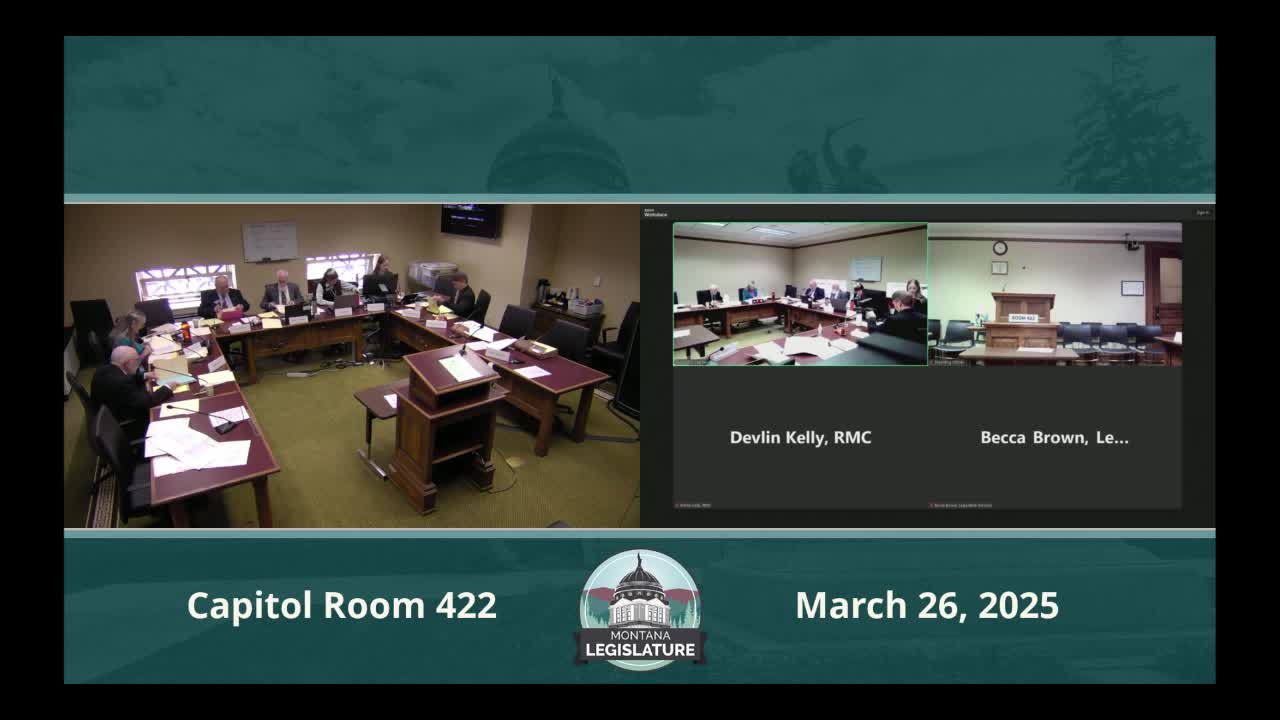
A Montana Senate committee voted down a motion to concur in House Bill 212, which would have limited liability for agricultural vehicles on public roads after amendments. Committee members and witnesses debated whether caps on non-economic damages could conflict with recent court rulings.
A Montana Senate committee voted that House Bill 212, which would limit liability for agricultural vehicles on public roads, should not be concurred in after two amendments and a roll-call vote.
The bill and its amendments were debated across multiple committee members and outside commenters, with supporters saying the changes would protect farmers from large economic losses when equipment is struck and opponents — including a trial attorney — warning that caps on non-economic damages may be unconstitutional in light of recent court decisions.
Supporters and opponents Proponents told the committee the bill would give “a little bit of a protection” to farm and ranch operators when expensive implements such as combines are struck, and that caps could prevent what they described as opportunistic claims. An opponent described a recent Cascade County District Court ruling that found caps on non-economic damages unconstitutional in a medical-malpractice context and said the ruling raised concerns about constitutionality in this bill’s approach.
Senators’ discussion Senator Hunter said the opponent was referring to a medical-malpractice case and argued the bill’s intent was to protect farmers from economic losses when large equipment is damaged. "What he was referring all this stuff to was a medical malpractice case and was not a particular non economic non economic road," Hunter said in committee discussion.
Other senators expressed reservations. One committee member recounted a long-ago crash with multiple deaths and serious injury and said the measure strays into judiciary territory; that senator said he would vote against the bill at this stage.
Amendments and procedural steps Committee members moved two sponsor-requested amendments during the hearing; members described both amendments as intended to improve or coordinate the bill with another measure. After the amendments were adopted, a motion to concur in House Bill 212 "as twice amended" was placed on a roll-call vote.
Vote and outcome The roll-call recorded votes from committee members and proxies. Recorded votes were: Vice Chair Logie — no; Vice Chair Noelle — no; Senator Esp — no; Senator Fern — no (by proxy); Senator Hunter — yes; Senator McBeier — yes (by proxy); Senator Olson — no (by proxy); Chair Temple — yes. The recorded tally was 3 ayes and 5 nays, so the committee did not concur in the bill as amended.
What happens next Because the committee did not concur in the motion to advance the bill, House Bill 212 will not move forward from this committee in its current form. The committee discussion repeatedly framed the measure as carrying potential constitutional risk and noted its overlap with judiciary considerations.
Votes at the committee hearing were recorded on the transcript; members and proxies accounted for the roll-call shown above.