Get Full Government Meeting Transcripts, Videos, & Alerts Forever!
Get email alerts on the Health Care topic
No spam. Unsubscribe anytime.
House concurs with Senate to let presumptive Medicaid eligibility cover home and community-based services
Summary
The House concurred in Senate Bill 72 to allow presumptive eligibility for certain Medicaid home and community-based services, advancing faster access to in-home care for elderly and physically disabled Montanans; the floor later re-referred the bill to Appropriations for fiscal review.
The Montana House concurred in Senate Bill 72 on March 26, a bill that would allow presumptive eligibility under Medicaid for certain in-home and community-based services for elderly persons and persons with physical disabilities.
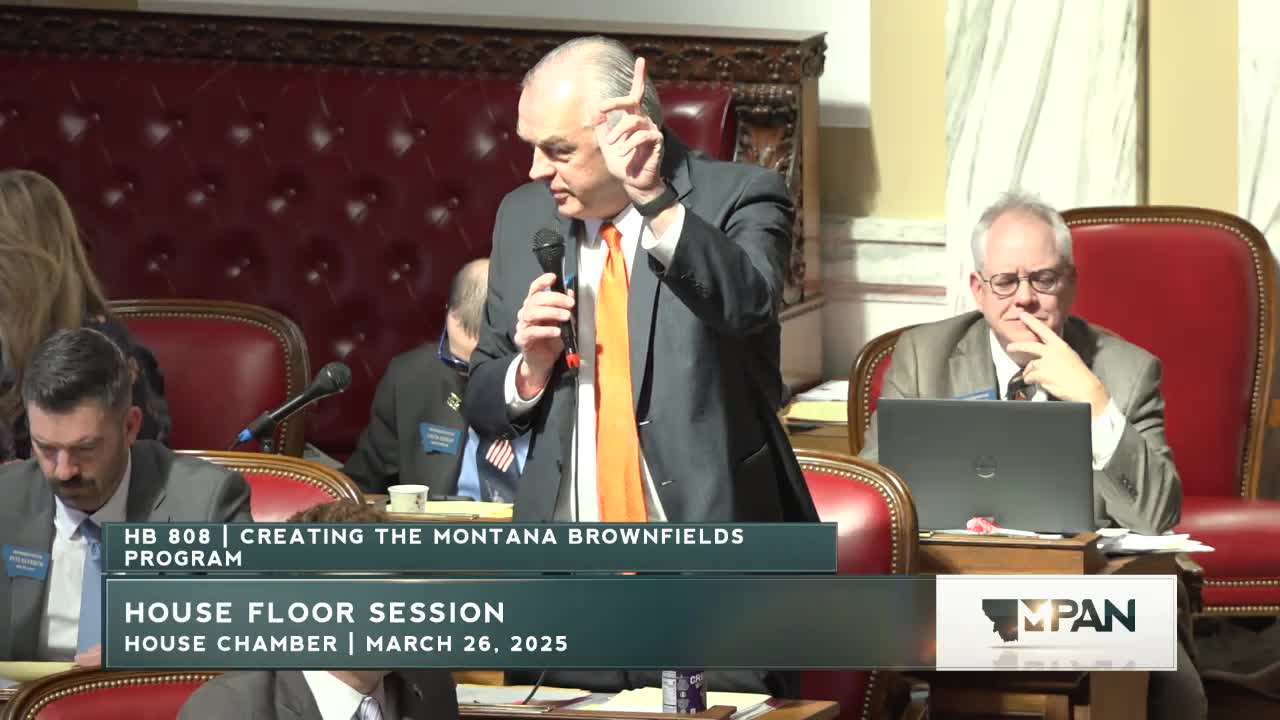
Representative Butchery, speaking as floor sponsor, said the bill would permit a presumptive eligibility screening that enables access to services quickly while the full application is processed; the approach is intended to prevent health decline and avoid institutionalization. "Getting services within days and not months allows these parties to stay at home and not to have to enter nursing home care," Butchery said. He emphasized the bill requires the Department of Public Health and Human Services to submit a Medicaid waiver and state plan amendment to CMS; so some provisions are contingent on federal approval.
Representative Eva Gillette questioned whether presumptive eligibility already existed in practice in some settings such as hospitals or federally qualified health centers and noted providers can time coverage to when an application is submitted. Butchery and other proponents said application and approval timelines differ for home-and-community waiver services and that presumptive eligibility would fill a gap to provide care within days rather than months.
On the floor the House voted 71 to 29 to concur in the Senate bill. Later the Majority Leader moved to re-refer Senate Bill 72 to the Appropriations Committee for fiscal analysis and that referral was taken without objection.
Next steps: SB 72 was concurred in by the House and referred to Appropriations for fiscal review. The bill requires federal approvals (CMS waiver/state plan amendment) before some provisions take effect.