Get Full Government Meeting Transcripts, Videos, & Alerts Forever!
Get email alerts on the Motorcycle Safety topic
No spam. Unsubscribe anytime.
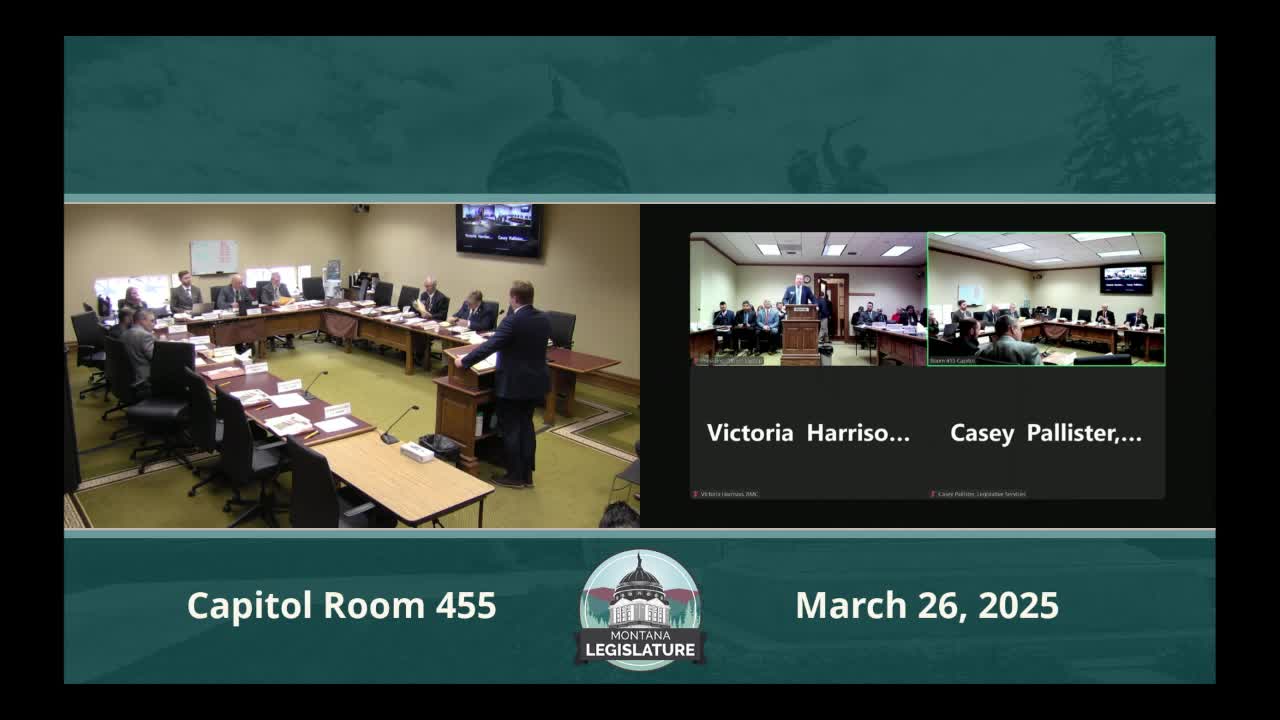
House panel hears proposal for motorcycle specialty plate to fund rider safety
Summary
Representative Josh Seckinger urged the Montana House Transportation Committee to advance House Bill 849, a proposal to create an optional motorcycle specialty license plate that would collect a $5 administrative fee and a $20 donation to fund rider training and public-awareness programs.
Representative Josh Seckinger, sponsor of House Bill 849, told the House Transportation Committee that HB 849 would create a specialty motorcycle license plate and dedicate small fees to motorcycle safety education and public awareness. “This bill is straightforward and common sense,” Seckinger said in opening remarks, noting motorcycle riders face higher risks on Montana roads.
The bill would let motorcyclists opt for a specialty plate; the fiscal note cited an initial design fee and the plate would collect a $5 administrative fee plus a $20 donation. Seckinger said the $20 donation would be directed to nonprofits offering rider training, advanced rider courses and public outreach campaigns to improve visibility and defensive riding.
Why it matters: Supporters said targeted funding for rider education could reduce crashes and fatalities. Tom Jacobson, representing the Montana Motorcycle Safety Foundation, described the plate as an option beyond the current two motorcycle plate choices and said the group modeled its approach on other states’ specialty-plate programs. “We put that in statute black because black is by far the most popular plate out there,” Jacobson said, describing a preferred plate design and noting any final plate design would require approval by law enforcement and the Department of Justice for reflectivity and visibility standards.
Blue Cross Blue Shield of Montana’s government relations director, Drew Czciok (pronounced “Chuck”), testified in support and described personal experience with nonprofit motorcycle education: “I learned how to ride defensively. Frankly, that training is probably what kept me alive on 2 wheels,” he said, and indicated he would switch to the proposed plate if it became available.
Committee members asked how the donated dollars would be used and whether training programs already exist. Seckinger and witnesses said basic and advanced rider courses already operate in Montana — for example, Helena College runs instruction in the Helena area — and the voluntary plate donations would fund nonprofits that host those classes. On the question of reflectivity, Jacobson said plate specifications have not been finalized and that any new plate must be approved by the Department of Justice and the Highway Patrol for visibility.
Members also pressed for fiscal detail. Seckinger and proponents referred to the fiscal note and said projected revenue ramps up over several years; a committee member asked where other motorcycle safety funding currently comes from and whether the state could instead direct existing funds to safety programs. Proponents argued the specialty plate is a voluntary, self-funded way to raise money and raise public awareness.
No formal action was taken during the hearing. Seckinger said he expected typical committee amendments to the bill and closed hoping the committee would provide a do-pass recommendation.
Ending: The committee closed the HB 849 hearing after questioning; witnesses present included the Montana Motorcycle Safety Foundation, Blue Cross Blue Shield of Montana and the Montana Department of Transportation’s rail and transit planning staff who offered technical answers about safety programs and training funding.