Get Full Government Meeting Transcripts, Videos, & Alerts Forever!
Get email alerts on the Air Quality topic
No spam. Unsubscribe anytime.
Bill would bar state/local air rules stricter than federal standards; debate centers on local control and public health
Summary
House Bill 291 would prohibit DEQ and local air programs from adopting air‑quality standards stricter than federal requirements, while preserving existing local standards established before the bill takes effect and excluding federal nonattainment obligations.
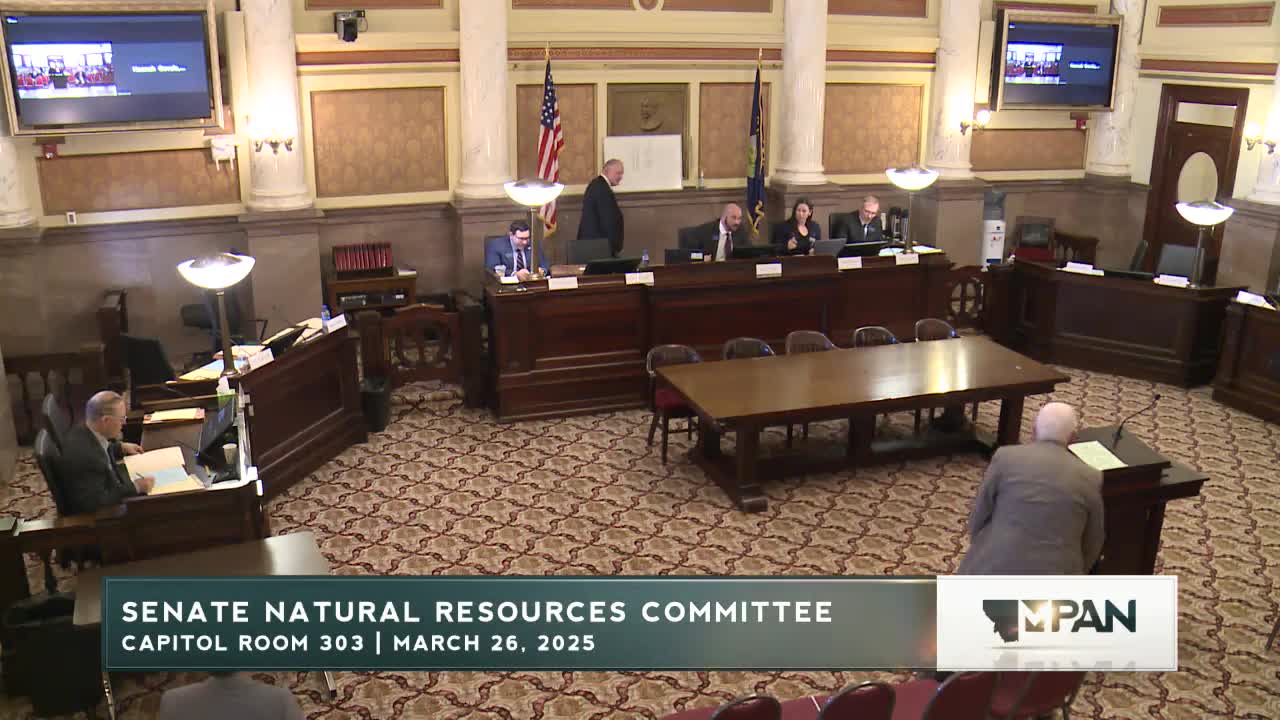
Representative Greg Oblander opened the hearing on House Bill 291 by saying the bill would remove authority for DEQ and local air pollution control programs to adopt air‑quality standards more stringent than federal Clean Air Act requirements. He said the proposal includes a grandfather clause that preserves existing standards established before the bill’s effective date and that it would not affect areas designated nonattainment or maintenance to comply with national ambient air quality standards.
Proponents included trade and industry groups such as the Montana Coal Council, the Montana Petroleum Association and the Montana State Building and Construction Trades Council. Proponents argued HB 291 provides regulatory certainty, avoids a patchwork of state and local standards that could impose disproportionate burdens on Montana businesses, and prevents inconsistent requirements across jurisdictions. Several proponents said Montana industries have modern environmental controls and that the bill prevents “self‑imposed” regulatory burdens that would have limited competitiveness.
Opponents testified at length. Public‑health professionals, conservation groups, local civic organizations and numerous citizens said the bill would strip Montana’s ability to respond to local air quality problems, prevent the state from regulating greenhouse gases (noting the federal government currently lacks comprehensive GHG standards for some pollutants), and remove established state tools used to address local pollution episodes — including wood‑stove smoke inversions in valley communities. Witnesses cited historical contamination (Anaconda, Berkeley Pit) and recent wildfire‑smoke episodes as reasons to keep the state and local regulatory authority intact. The Montana Department of Environmental Quality served as an informational witness and agreed to provide technical documents showing how local programs operate; DEQ said on a cursory review it found no obvious examples of current rules that are stricter than federal levels but referred to program-specific implementation steps and grandfather protections.
Committee members questioned how the bill would interact with local nonattainment programs and asked DEQ for examples of how counties use local programs; DEQ said local programs typically implement national ambient air quality standards but have programmatic approaches tailored to local conditions and that the bill’s grandfather clause protects existing program elements in place prior to the act. Opponents urged the committee to reject HB 291 to preserve Montana’s ability to set stricter standards when federal rules lag and to protect public health.