Get Full Government Meeting Transcripts, Videos, & Alerts Forever!
Get email alerts on the Environmental Review topic
No spam. Unsubscribe anytime.
Long, contested hearing on HB 285: sponsors say MEPA is procedural; opponents warn of weakened protections
Summary
House Bill 285 would amend the Montana Environmental Policy Act to emphasize that MEPA is a procedural disclosure law, not a substantive permitting statute; proponents said the change restores legislative intent, while opponents warned the language would weaken environmental review and public protections.
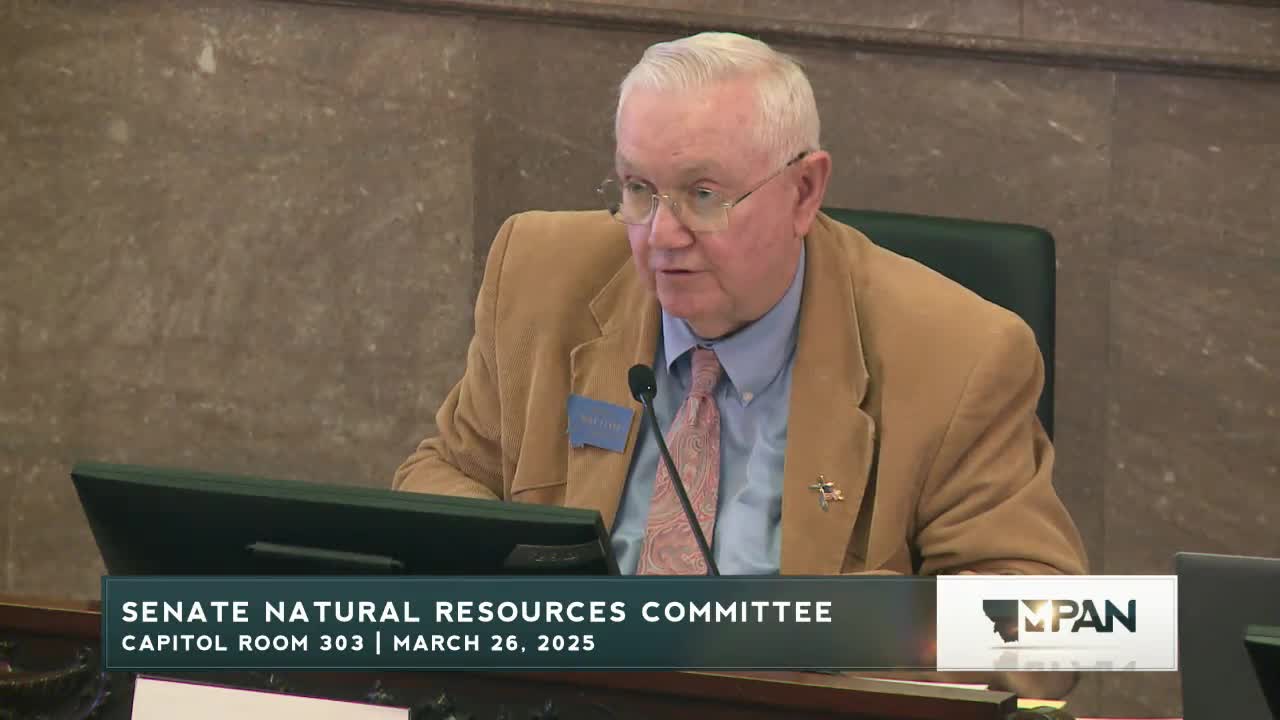
Speaker Laird opened testimony on House Bill 285 by describing the bill as a reorganization and clarification of the Montana Environmental Policy Act (MEPA) intended to emphasize MEPA’s procedural, informational role rather than a substantive permitting statute.
Proponents — including consulting practitioners, the Montana Coal Council, Treasure State Resources Association, the Montana Petroleum Association, Montana Chamber of Commerce, and electric cooperatives — said HB 285 would provide regulatory certainty, prevent courts from using MEPA to deny permits beyond the scope of underlying substantive statutes, and align MEPA with interim work‑group recommendations. Testimony from Daryl James (consultant) and trade groups emphasized that MEPA should inform decisions but not substitute for the substantive permitting standards found in separate statutes.
Opponents testified at length. Conservation and hunting groups, the Montana Environmental Information Center (MEIC), Montana Audubon, Northern Plains Resource Council, Greater Yellowstone Coalition, physicians’ and public‑health organizations, and dozens of private citizens and local leaders said the bill weakens long‑standing public‑engagement and cumulative‑impact provisions, could bar agencies from denying permits where MEPA findings indicate significant harm, and conflicts with other pending bills (noted in testimony). Witnesses described specific concerns: risks to water quality, wildlife habitat and public health, cumulative impacts analysis, and the constitutional obligation to maintain a “clean and healthful environment.” Several witnesses cited historical contamination incidents (Anaconda/Silver Bow) and Superfund costs as reasons to preserve strong environmental review.
DEQ officials attended as informational witnesses and answered committee questions about where cumulative and long‑term impact analysis remains in code and administrative rules. Committee members asked whether language in HB 285 removed statutory requirements; DEQ staff said statutory obligations to consider cumulative impacts remain in code (citing 75‑1‑1208) even where the bill removes some duplicative or formulaic language from MEPA text.
The hearing record shows extensive public testimony both pro and con; proponents framed HB 285 as clarifying the act’s procedural purpose and opponents argued it would limit the state’s ability to protect air, water and public health. The transcript records no final committee action in the hearing itself.