Get Full Government Meeting Transcripts, Videos, & Alerts Forever!
Get email alerts on the Water Rights Transparency topic
No spam. Unsubscribe anytime.
House committee hears bill to require Land Board review before state lawyers assert private water rights
Summary
Lawmakers and ranchers debated Senate Bill 263, which would require the Montana Land Board — not state attorneys alone — to approve any state assertion of ownership in privately developed water rights used on state trust land and would add notice and an opportunity to be heard for private water-rights owners.
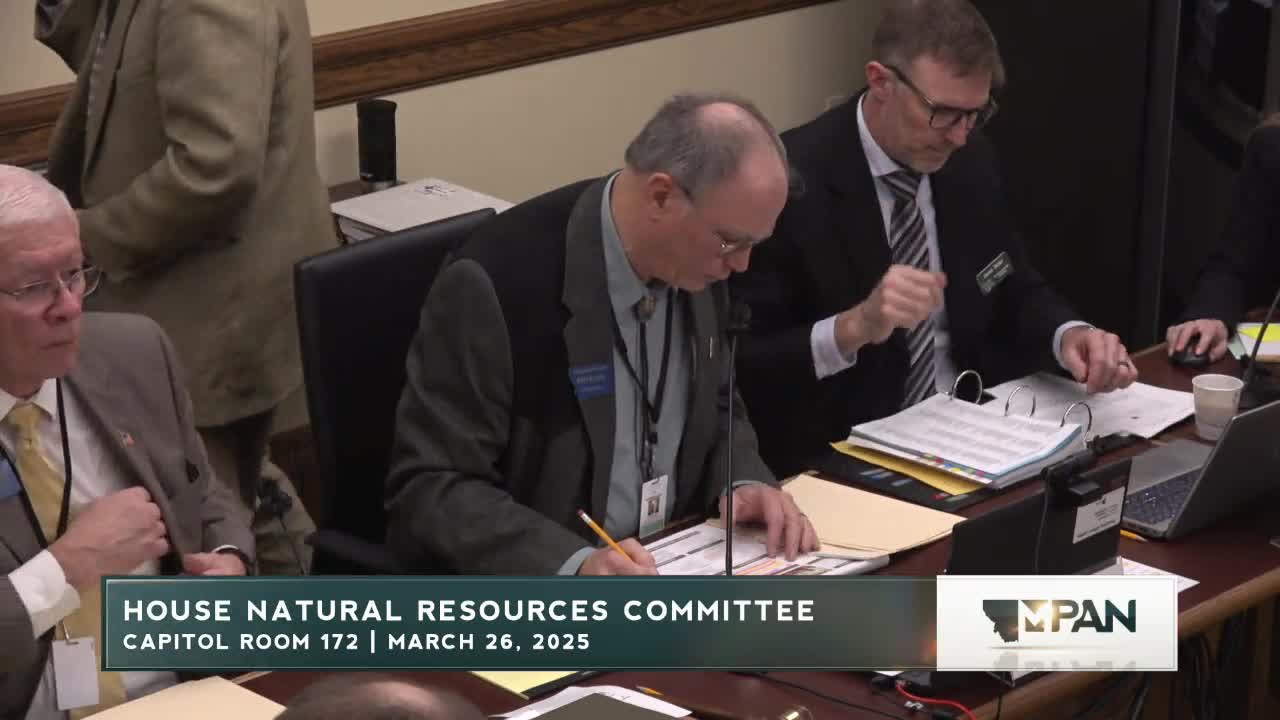
Senator Becky Beard, sponsor of Senate Bill 263, told the House Natural Resources Committee the bill would ensure “a process of transparency and accountability when the state attempts to claim private water rights.” The bill would require the Land Board — the elected body that oversees state trust lands — to decide whether to direct state attorneys to pursue co-ownership or other claims before lawyers file in water court.
Beard, R-38, said the bill does not change who ultimately owns water rights but would add a step: notice to private water-rights owners and a chance to present to the Land Board before litigation. "This bill does not change who ultimately owns water rights. It simply requires the land board, not unelected state lawyers, to decide whether in each particular case it wants to direct its lawyers to claim the ownership," Beard said.
Nut graf: Supporters said the change restores a public, elected decision-maker to a process that, in some instances, left private owners unaware their rights were being challenged; opponents, including the lieutenant governor and multiple agricultural groups, said the measure could conflict with the state’s fiduciary obligations to school trust lands and could impose timing constraints that impair the Land Board’s ability to protect trust assets.
Proponents from ranching and landowner groups described cases where private wells or infrastructure developed entirely on private land later were associated with uses on state-leased grazing or school-trust parcels. John Metropoulos, a Helena attorney representing the Senior Ag Water Rights Alliance (SAWRA), said the bill creates a pre-litigation process that lets the land board and affected owners discuss facts before state attorneys act. "When they're dealing with the property of their citizens, it only seems right to me that the citizens ought to get notice and have a chance to discuss the matter with their elected representatives," Metropoulos said.
Multiple ranchers and local landowner groups testified in support, citing family ranches that have used private water sources in conjunction with state leases for decades and expressing concern the state could assert ownership without prior notice.
Opponents included Lieutenant Governor Kristin Juras, who appeared on behalf of Governor Gianforte, and representatives of the Montana Stockgrowers Association, the Montana Farm Bureau Federation and Advocates for School Trust Lands. Juras told the committee the Land Board has a fiduciary duty under the Enabling Act and Montana case law to preserve value for the school trust and that existing processes and a 2024 Land Board motion already require the Land Board’s approval before filing co-ownership objections in many circumstances.
Juras said: "The land board is required to preserve the value of the school trust lands. An interest in school trust lands, including water rights, cannot be alienated unless the trust receives adequate compensation." She cautioned the bill’s Section 1, which characterizes some water rights as "improvements," could conflict with Montana precedents (including Pettibone) and could allow lessees to walk away without compensation to the trust.
Committee members questioned witnesses about how water rights associated with wells, stock tanks and mixed private-and-state uses are handled during adjudication. The lieutenant governor and DNRC staff described a process under which DNRC examines decrees as they issue, researches files and brings matters to the Land Board; the Land Board may meet in executive session with counsel before deciding whether to pursue an objection in water court. Witnesses described a typical timeline: staff research following a decree can take 60–90 days, the Land Board has 180 days to assert an objection after a decree issues, and there is typically a 90‑day settlement period in adjudication before a contested hearing.
Several ranchers gave examples they said illustrated confusion caused by changing case law and the adjudication process. One witness said his father had a pre-1973 water right developed entirely on private land; DNRC at one point attempted to assert partial ownership after a later decree. Supporters said the bill would give landowners an opportunity to present facts to elected officials before the state’s lawyers moved to file claims.
Opponents urged caution. Rayleigh Honeycutt of the Montana Stockgrowers Association and other opponents said the bill reaches farther than the Land Board motion adopted in 2024, risks turning the Land Board into a quasi-judicial body and places rigid deadlines that could impair the Land Board’s ability to meet fiduciary duties.
Beard closed by asking the committee to adopt the bill for its transparency and to give landowners a chance to be heard before litigation. The committee took testimony and did not record a committee vote during the hearing.
Ending: The committee closed the hearing on SB 263 after extended testimony. Committee members asked for additional technical information during the hearing; witnesses indicated they would provide documents and examples to the committee record.