Get Full Government Meeting Transcripts, Videos, & Alerts Forever!
Get email alerts on the Mining Regulation topic
No spam. Unsubscribe anytime.
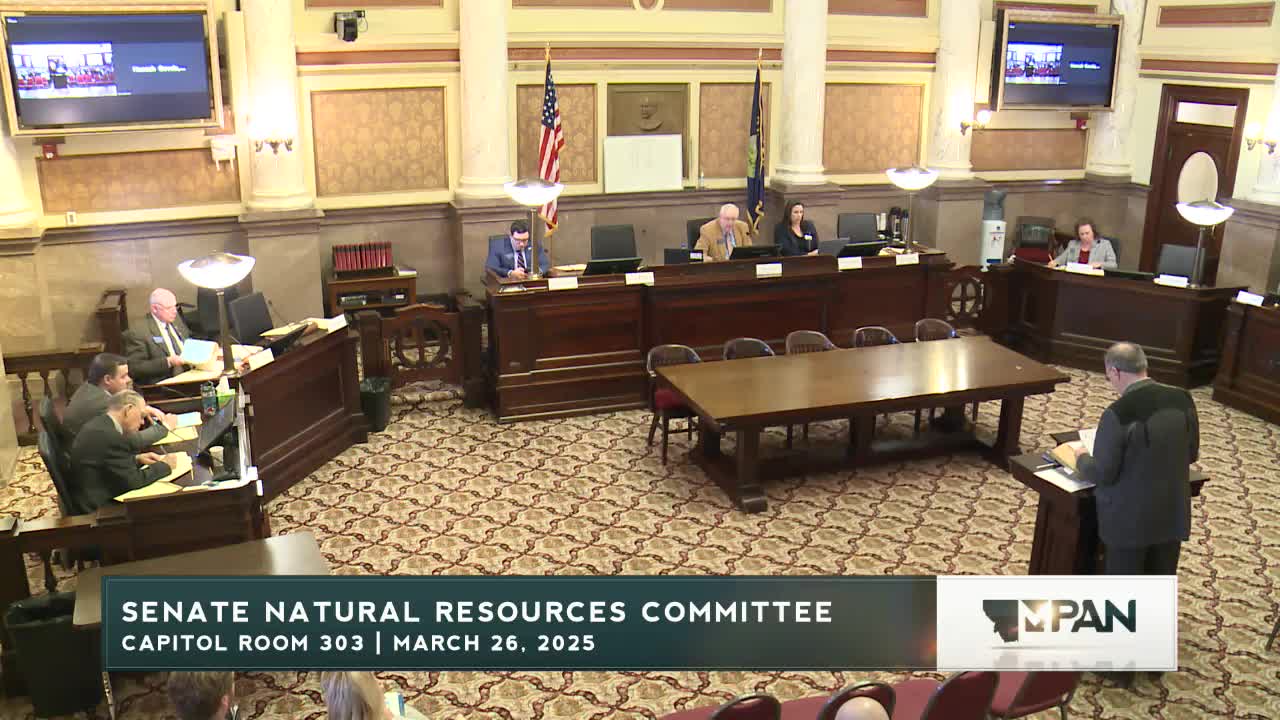
Committee hears bill to raise hard-rock mining fees, create permitting-account for reclamation work
Summary
Representative Steve Gist told the Senate Natural Resources Committee that House Bill 69 updates decades‑old hard‑rock mining fees and creates a new permitting program account so DEQ can use fee revenue to implement the Montana Metal Mine Reclamation Act.
Representative Steve Gist opened the hearing on House Bill 69 by saying the bill updates hard‑rock mining fees that have not kept pace with costs for several decades and creates a dedicated account to let the Department of Environmental Quality (DEQ) use collected fees to implement the Montana Metal Mine Reclamation Act.
DEQ testimony said HB 69 would add a third funding source for implementation of the act, relieve pressure on the general fund, and direct fees to a new hard rock permitting program account instead of the Environmental Rehabilitation and Response Account (except for fines, penalties and other unspecified monies). DEQ estimated the fees generated in year four after enactment would total about $189,000. DEQ staff said the bill establishes annual operating fees and permit application fees for exploration licenses and operating permits and that the department worked with industry stakeholders, including the Montana Mining Association and the Montana Wood Products Association, while drafting the bill.
Matt Vincent, executive director of the Montana Mining Association, testified in support and said the association and its affected members had been engaged in the bill development and view the fees as a reasonable modernization compared with other states. Amy Narison of Sabanye Stillwater also supported the bill on behalf of a major U.S. platinum-palladium producer. Julia Altimus (Montana Wood Products Association) testified online in support and said the department had balanced concerns with affected wood-product producers who sometimes are regulated under the Metal Mine Reclamation Act.
No opponents or informational witnesses appeared in the hearing record. Committee members asked technical questions about fee structure and impacts; the sponsor said DEQ would provide more details and thanked the stakeholders for their input. Representative Gist asked for a “due pass” (a favorable committee recommendation) at the close of testimony; the transcript records the hearing conclusion but no vote.
Because the bill would change how fees are used and create a new account for permitting activity, DEQ officials said passage would improve the department’s ability to produce legally defensible permits and maintain implementation capacity for reclamation work.