Get Full Government Meeting Transcripts, Videos, & Alerts Forever!
Get email alerts on the Home Visiting topic
No spam. Unsubscribe anytime.
Home visiting advocates urge $355k–$365k state match to preserve federal funds for Rhode Island families
Summary
Community health workers and program directors told the House Finance subcommittee that modest state funding would unlock significantly larger federal MIECHV awards that support home visiting programs for new parents and at-risk infants; witnesses gave specific match amounts and warned that programs were closing without state support.
Three witnesses representing home visiting and early-childhood programs asked the House Finance subcommittee to add state matching funds so Rhode Island can draw down federal Maternal, Infant, and Early Childhood Home Visiting (MIECHV) dollars.
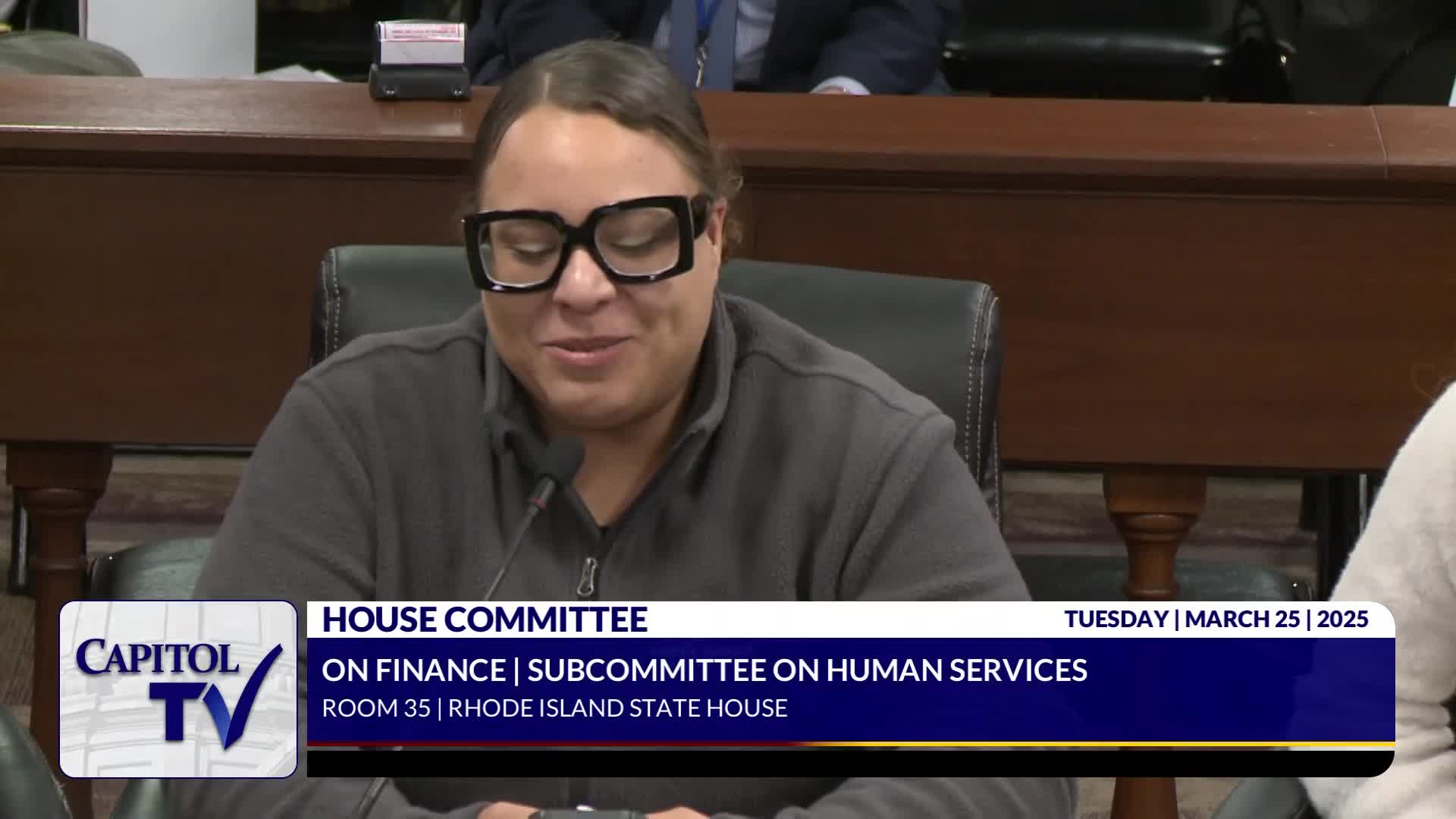
"If Rhode Island invests just $365,000 in the state funding, we can secure over a million dollars in total funding to support, and keep these essential programs running," Swanette Salazar, a community health worker with the First Connections program at Family Service Rhode Island, said in testimony.
Why it matters: witnesses said the requested state match would stabilize evidence-based programs that provide in‑home visits, developmental screening, parenting support and referrals for families with newborns and young children. One witness, Fiona (director of a Healthy Families America program at Family Service Rhode Island), asked the subcommittee to secure a $355,000 state match to draw down approximately $1.6 million in federal MIECHV funds for her program. Another witness, Michelle Sherman, nursing supervisor for First Connections, urged approval of roughly $356,000 cited in budget materials to sustain the program's staff and services.
Witnesses described concrete impacts: First Connections reported more than 4,000 referrals in 2024 and said the loss of state match funding would force program reductions or closures. Swanette said the nurse-family partnership program is closing at the end of the month because of lack of funding. Michelle Sherman told the committee that the program serves as a lifeline for families in crisis, connecting them to developmental screening, lead-mitigation education, pediatric care and behavioral-health referrals.
Program leaders asked the committee to include specific state-match amounts in the final budget so local agencies can keep staff and continue services. They framed the request as a high-return investment: modest state dollars would unlock multiple times that amount in federal funding and sustain services shown to reduce child abuse and improve birth outcomes.
Sources and evidence: testimony from Swanette Salazar (First Connections), Fiona (Healthy Families America director), and Michelle Sherman (First Connections nursing supervisor).