Get Full Government Meeting Transcripts, Videos, & Alerts Forever!
Get email alerts on the Doa Erp Capital Projects topic
No spam. Unsubscribe anytime.
DOA describes ERP delays and construction plan for Zambarano long‑term acute care facility; cost projections rise
Summary
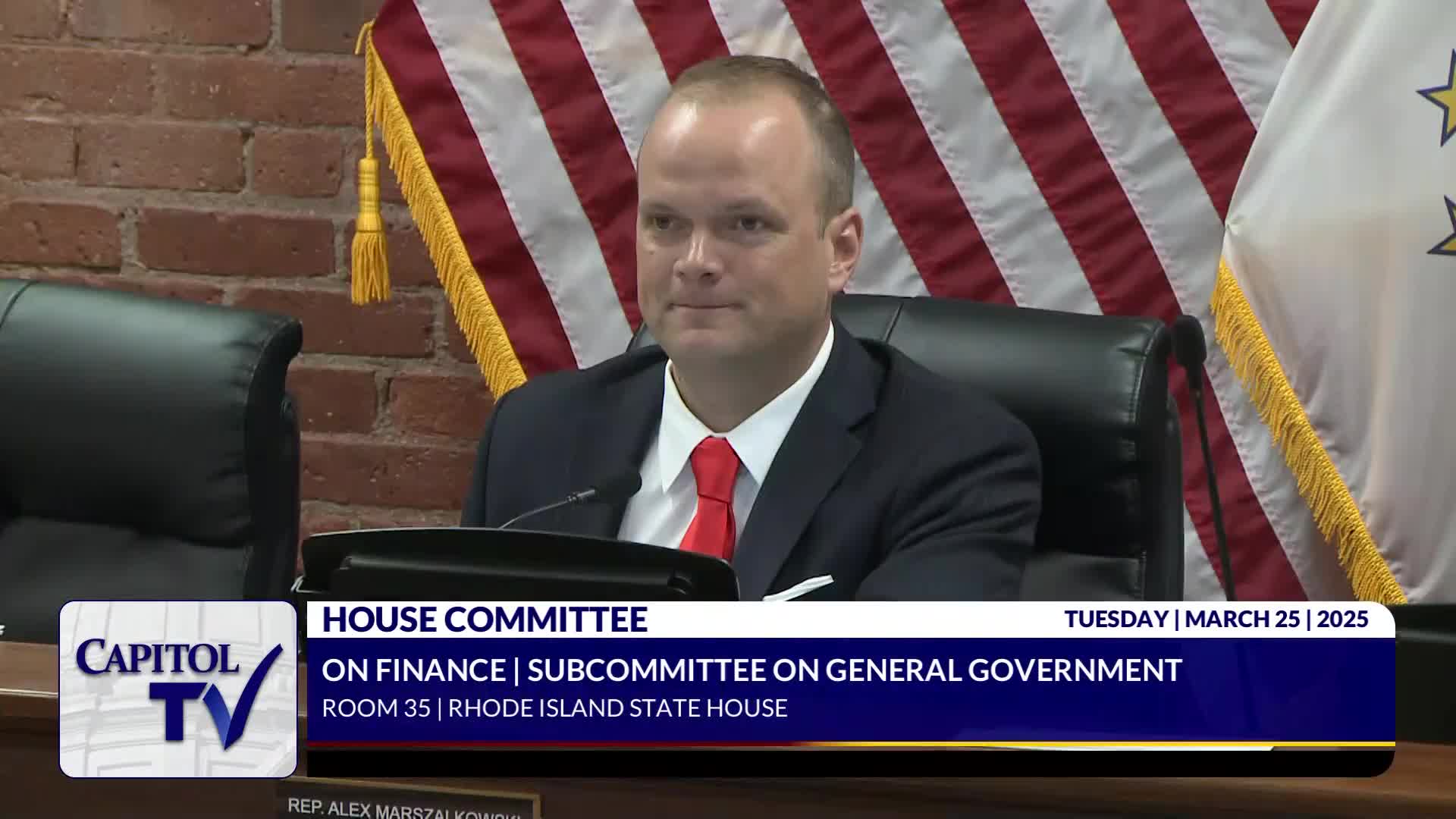
Department of Administration officials told the House Finance Subcommittee that the statewide ERP replacement is delayed and more costly than previously budgeted, and that the Zambarano campus project has shifted to a 100‑bed long‑term acute care facility with a preliminary estimated cost that has risen substantially.
Department of Administration leaders described two of the largest, ongoing initiatives in the proposed budget: a statewide enterprise resource planning replacement (ERP) for finance, human resources and payroll, and a long‑term acute care (LTAC) project on the Zambarano campus.
ERP program and schedule: Rebecca Weber (deputy) and Brian Tardiff (chief digital officer) briefed the committee on the ERP, which replaces legacy finance and payroll systems. DOA said the project’s estimated cost has risen from prior plan lines (an earlier $50 million planning figure was revised upward in subsequent budget proposals) and the administration submitted an amendment raising the project total further to about $84.5 million. DOA said recent schedule changes pushed the HR/payroll module’s go‑live from early 2025 to September 2025 in order to allow more extensive testing and to avoid simultaneous finance and payroll launches.
DOA cited the principal cause of the delay as the unexpected complexity of documenting and encoding more than 50 collective‑bargaining agreements, pay rules and HR exceptions into the system. Brian Tardiff said contractor work falls into two pools: system implementation and contractor support that augments state staff working business‑as‑usual while they also help implement the project. The department said the additional cost mostly reflects longer implementation time and more contractor hours to perform testing and documentation.
Zambarano LTAC project and timeline: DCAM (Division of Capital Asset Management) and DOA staff described the Zambarano campus plan, now envisioned as a 100‑bed long‑term acute care facility. Rebecca Weber said DCAM completed a facility‑needs study in 2023 that recommended an LTAC; the project is currently in schematic design. The administration’s current recommendation signals a total project cost of about $197 million in existing budget lines and anticipated future authorizations, up from an earlier $108 million figure that had been discussed for a different facility type. Weber said the larger number reflects the change in program type (from a skilled‑nursing model to an LTAC hospital) and general construction‑cost escalation. She said the project remains in schematic design, with design‑development and construction‑document phases to follow; DOA currently projects a potential occupancy in spring 2028 but emphasized that schedule and cost estimates depend on design and market conditions.
Capital projects and Pastore campus shifts: DOA also described recent amendments that shifted capital allocations to prioritize immediate needs: demolition and wastewater‑treatment upgrades at the Zambarano campus (the wastewater work is required by DEM to continue operating the campus) and utility/infrastructure upgrades at the Pastore campus. Weber said the department shifted funds from projects whose design or solicitations have not yet advanced and that several projects were delayed a year to better align with timelines and to free capital for urgent site work.
Why it matters: Both projects are large, high‑risk items in the five‑year capital plan. Lawmakers pressed DOA on cost drivers, whether projects could be delayed without programmatic harm, and whether additional appropriations will be requested. DOA said it will return with more detailed cost breakdowns as schematic and design documents mature.
Ending: Committee members asked DOA for a clear line of responsibility for follow‑up questions and for updated cost/schedule reports; DOA agreed to provide more detailed project timelines, contingency assumptions and procurement plans in future briefings.