Get Full Government Meeting Transcripts, Videos, & Alerts Forever!
Get email alerts on the Lead Registry topic
No spam. Unsubscribe anytime.
Rollout of Rhode Island lead registry draws criticism over accuracy, inspector capacity
Summary
Lawmakers and the Department of Health discussed rollout problems with the new statewide lead-rental registry: incomplete source data led to false landlord listings, the state is notifying suspected landlords by letter, inspectors have been added but wait times and costs remain a concern.
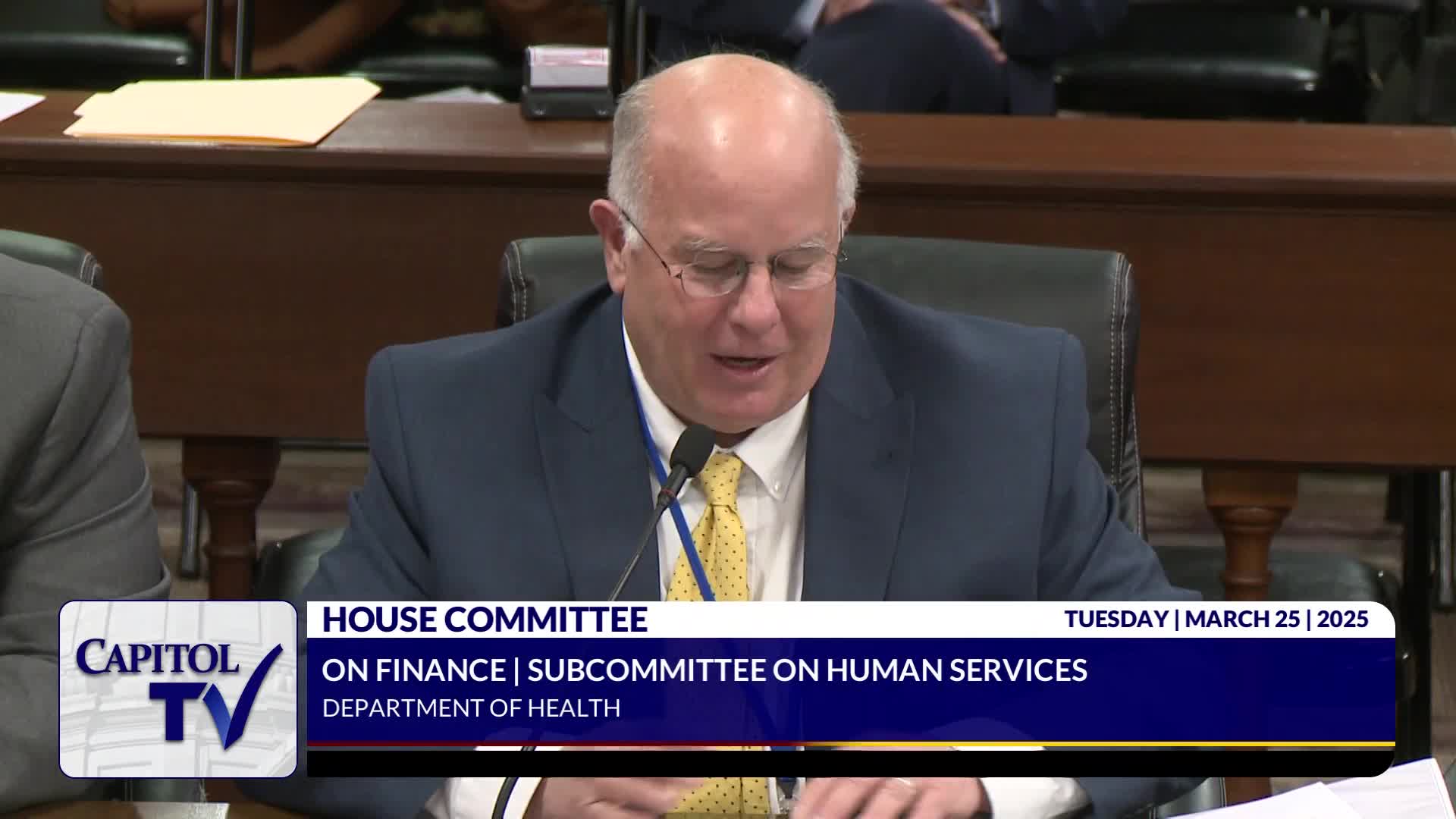
State health officials told the House Finance Subcommittee that the lead-rental registry launched in October after funding became available July 1 and that early iterations pulled publicly available property and tax records to identify potential rental units — a method that inadvertently listed some properties whose owners are not landlords.
"When we built that database, you need it you need to make it rather comprehensive. So it needs to be more sensitive. It needs to pull in everybody that could potentially, and that was sort of where the rub was," the department director said, describing why the registry initially identified many properties that then had to be corrected.
Why it matters: the 2023 law requires landlords of pre-1978 housing to register and to hold a lead-safe or lead-free certificate. Department officials told lawmakers the registry must be publicly facing under that law, so property listings that are not corrected by owners will be published unless owners update the registry. Officials said they plan targeted outreach by letter and public communications to notify suspected landlords; letters will tell recipients how to correct false listings and warn that landlords who do not register may face fines.
Officials described the implementation timeline and technical constraints. The registry went online in October after rapid development; the department paused public listing when it realized false positives were being identified and notified stakeholders while building a more sophisticated "phase 2" registry. The director said there is no single public database of renters or a centralized city–town tax-assessor feed that cleanly identifies rental property status and construction year, so the team used multiple public sources (tax records, real-estate transaction records) to assemble an initial denominator.
Inspector capacity, costs and timelines drew sustained questions from lawmakers. The department said it has certified 32 additional inspectors — many already licensed in Massachusetts — increasing the pool so that, when last checked during the hearing, there are 74 licensed lead inspectors available statewide. Wait times vary by inspector; some were booked for months while others had availability within two to four weeks. Department staff reported typical inspection fees of roughly $200 to $450.
On enforcement and remediation: the law requires pre-1978 rental units to obtain either a lead-free certificate (permanent) or a lead-safe certificate (maintained after remediation). The director explained that landlords must obtain the appropriate certificate before completing registry steps and that, if lead is found, remediation may require licensed remediation work and a follow-up inspection to verify compliance. The department also warned that landlords who attempt to evict tenants for nonpayment while lacking an appropriate certificate may face legal limits: the law prevents eviction for nonpayment where valid lead certification is not in place.
Lawmakers raised equity concerns: representatives asked the department to ensure multilingual outreach and to consider financial supports for landlords who cannot afford mitigation. The department said limited mitigation funds exist at municipal levels and through Rhode Island Housing on an income-based basis and that building a comprehensive property database with high confidence would be costly (hundreds of thousands to millions of dollars).
Officials urged landlords who believe they have been incorrectly identified to use the registry correction process, and urged tenants and community members to understand that the registry is intended as a public-protection tool for families and renters.
Sources and evidence: hearing testimony by the Department of Health, including the director and budget staff, and legislators Representative Finkelman, Representative Diaz and Representative Nardone.