Get Full Government Meeting Transcripts, Videos, & Alerts Forever!
Get email alerts on the Food Access topic
No spam. Unsubscribe anytime.
Lieutenant governor, advocates back bill to ban long restrictive covenants that can create food deserts
Summary
Witnesses including the lieutenant governor and staff described House Bill 5902, part of a fair grocery package, that would prohibit restrictive covenants used by large grocery chains to block new grocers and limit competition; supporters pointed to examples in other cities and local storefront vacancies tied to covenants.
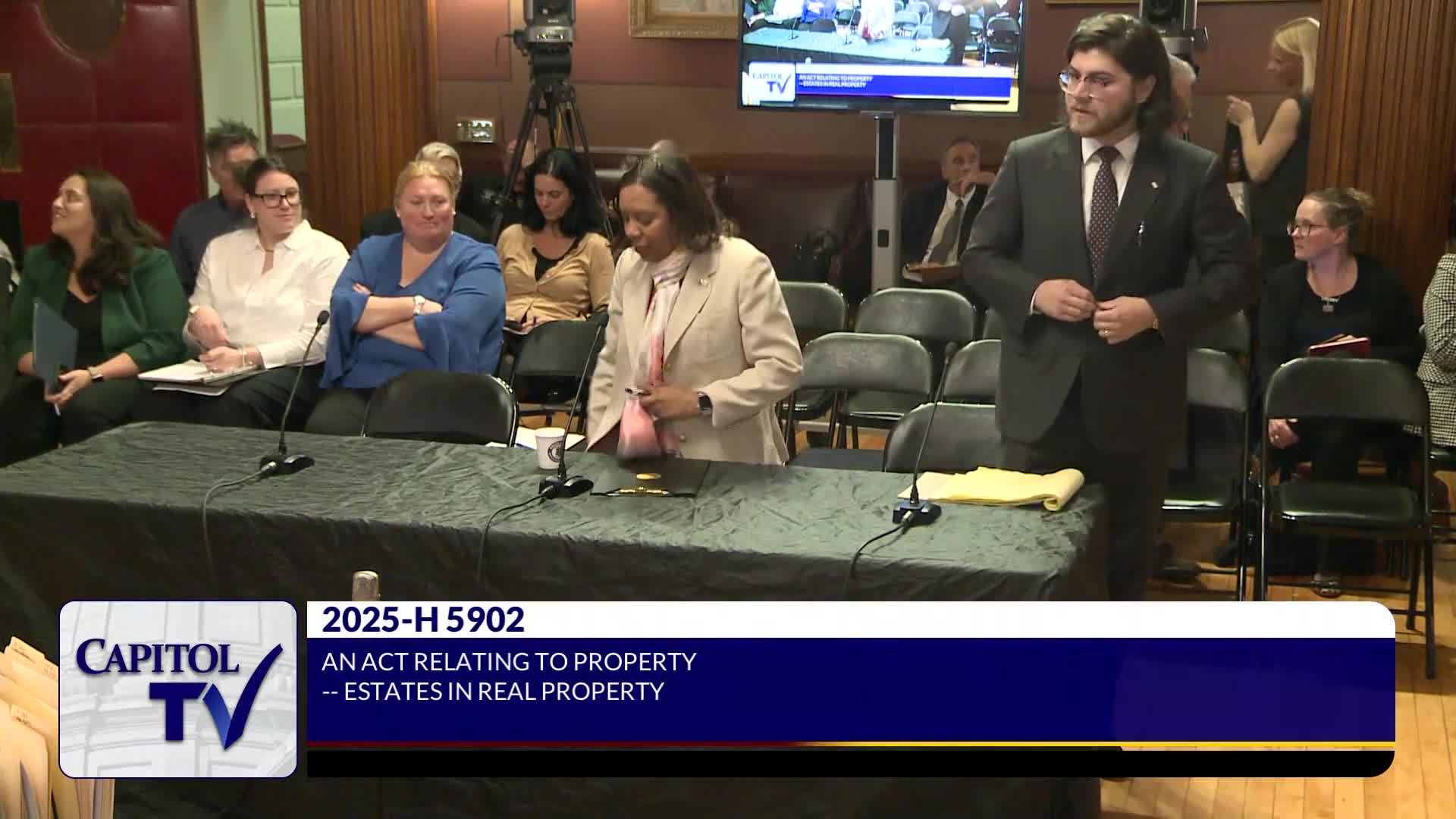
The House Judiciary Committee on March 25 heard House Bill 5902, part of a proposed fair groceries package, which would restrict or prohibit long-term restrictive covenants that prevent other grocers from using former supermarket properties. The lieutenant governor and staff said the measure addresses practices that limit competition and can contribute to food deserts in vulnerable communities.
Lt. Governor (testifying) said large chains sometimes sell properties and impose covenants preventing other grocers from occupying the site for decades; she and Deputy David Focarelli cited municipal examples from Chicago, Washington, D.C., and Bellingham, Wash., where local prohibitions on such covenants were followed by new grocery openings.
Witnesses and local residents described East Side Marketplace’s conversion from a locally owned grocery to a chain supermarket and then a closure; testimony said a restrictive covenant prevented a different grocer from taking over the vacant storefront, leaving a neighborhood without a functioning supermarket for months.
Supporters framed the bill as a consumer‑protection and competition measure aimed at preserving access to fresh food and making it easier for independent grocers to enter locations big chains had abandoned. The bill would mirror steps other jurisdictions used: prohibiting or limiting the enforceability of noncompetition-style covenants that extend long after a chain leaves a site.
Questions from committee members were limited; the testimony concluded with supporters asking the committee to advance the bill for further consideration. No committee vote was recorded during the hearing; the bill was held for study as part of the evening’s procedural motion to hold agenda items.
Why it matters: Witnesses argued that restrictive covenants are an avoidable contributor to food-access problems and that changing state law can help independent grocers and communities attract new food retailers.