Get Full Government Meeting Transcripts, Videos, & Alerts Forever!
Get email alerts on the Shellfish Restoration And Wastewater Fee topic
No spam. Unsubscribe anytime.
Committee hears linked proposals to add wastewater disposal fee and create shellfish hatchery program
Summary
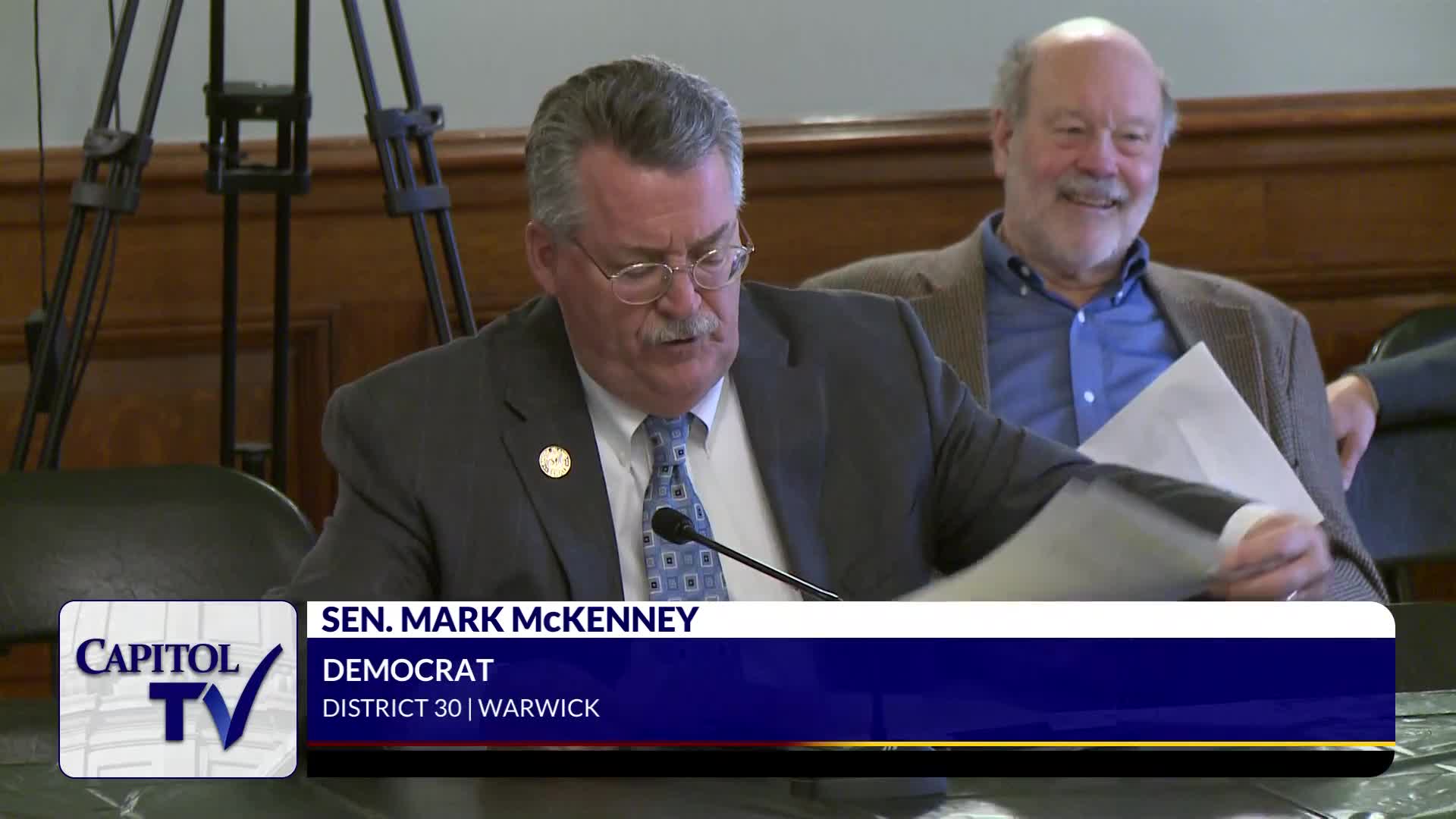
Senator McKinney introduced two linked bills: S-642 would add a fee on wastewater effluent disposal to fund DEM programs including a shellfish restoration account; S-643 would authorize a nonprofit-administered shellfish hatchery program under DEM oversight and require monitoring of nitrogen in shellfish harvest areas.
Senator McKinney introduced two related bills intended to support shellfish restoration and related monitoring: S-642 would add a fee to wastewater effluent disposal to create a restricted-receipt account for DEM’s bays, rivers and watersheds fund, with revenue earmarked in part for a Rhode Island shellfish management program and shellfish transplants; S-643 would authorize creation of a more robust shellfish hatchery program administered by a nonprofit selected by DEM and require DEM to monitor and report nitrogen levels for shellfish harvest areas.
Senator Rogers raised concerns about S-642’s impact on rural homeowners who pump septic systems, noting the potential for ongoing fee increases and that additional costs could discourage required septic pumping. Rogers told the committee constituents in rural areas already face high costs for septic systems and that even a small per-disposal fee could add recurring expense.
Mark Johnson, identified in testimony as a shellfisherman, and other industry witnesses supported S-643 and stressed the long-term decline in shellfish harvests; Johnson and others argued a hatchery would support seed production and restoration, but they also cautioned that restoration and seed production cannot succeed alone if underlying water-column productivity is impaired. Witnesses described a multi-decade decline in quahog harvests and cited past state recommendations and the Rhode Island Shellfish Management Plan recommending seed production and restoration as policy goals.
Testimony also addressed water-quality interactions. Witnesses and committee members discussed nitrogen controls at sewage-treatment plants, long-term phytoplankton trends and whether reduced nitrogen discharges have inadvertently reduced food for shellfish. Mark Johnson asked DEM to perform consistent monitoring (including Redfield-ratio metrics) in shellfish harvest areas and requested that DEM control sampling, analysis and publication of findings.
The Rhode Island Farm Bureau submitted a written opposition for S-643; Jennifer Harrington appeared in person for S-642 as an opposing witness (written testimony noted). The committee took motions to hold both bills for further study. A motion to hold S-642 was made by Senator Erso and seconded by Senator Rogers; a motion to hold S-643 was made by Senator Bridal and seconded by Senator Rogers. Both motions carried on voice votes.
Committee members and witnesses noted that even if legislation directed DEM to establish a hatchery, funding and implementation are separate issues: a hatchery would take years to produce seed and program benefits, and multiple witnesses warned the industry lacks that multi-year runway without parallel water-quality and funding actions.