Get Full Government Meeting Transcripts, Videos, & Alerts Forever!
Get email alerts on the Privacy And Ai topic
No spam. Unsubscribe anytime.
Parents and victim testify for AI-image penalties; ACLU warns bill risks First Amendment overbreadth
Summary
Senate Bill 136 would add AI-generated sexual images to Rhode Island’s revenge-privacy statute; a father and victims testified in support while the ACLU urged caution over free-speech implications. The committee held the bill for further study.
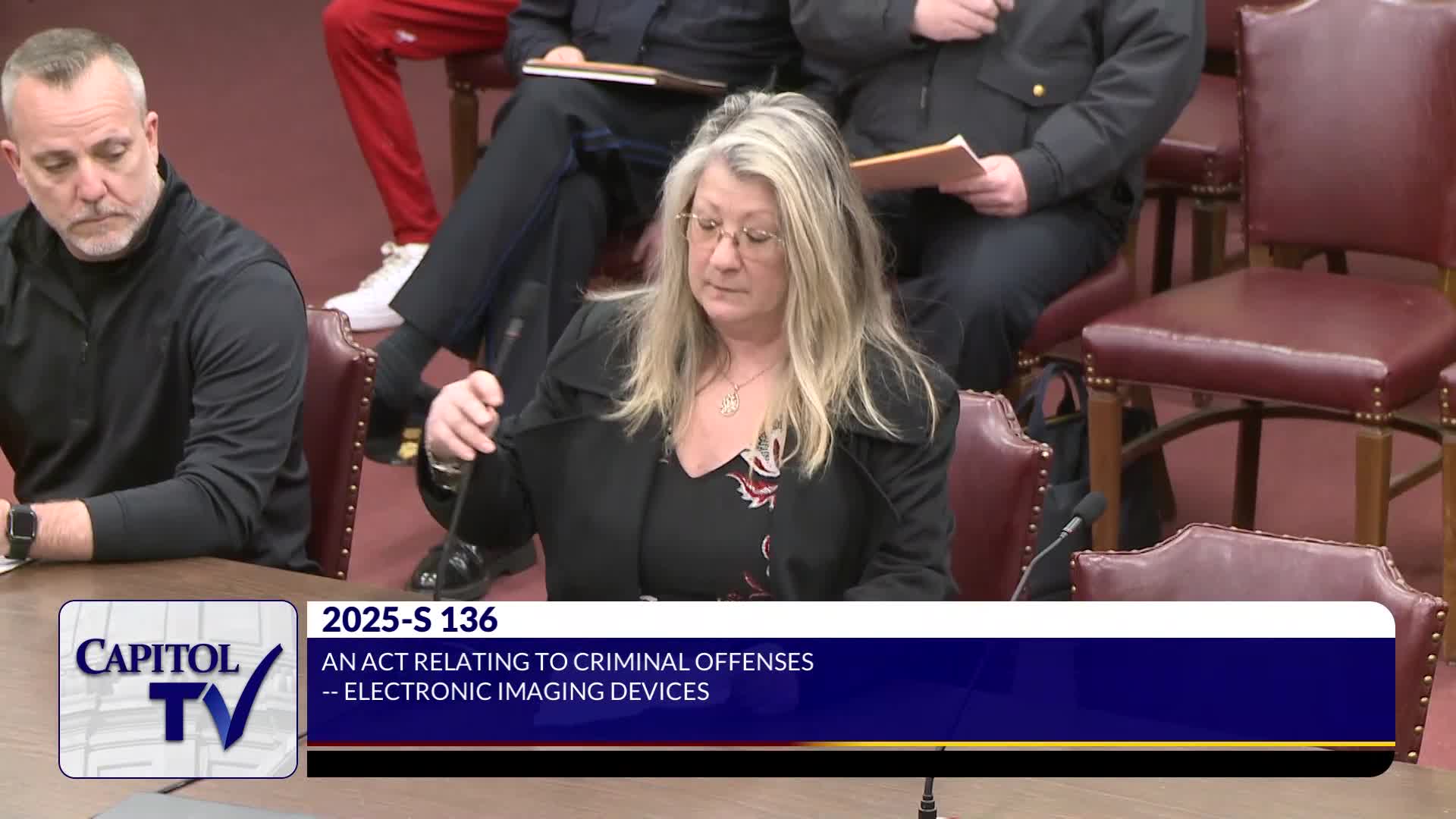
Senate Bill 136, introduced to extend Rhode Island’s revenge-porn statute to cover images produced by artificial intelligence, was the subject of emotional testimony March 25 before the Senate Judiciary Committee.
Sponsor Senator Morgan framed the bill as updating existing criminal law to reflect technological advances. Justin Hoffman, whose daughter’s face was placed onto AI-generated sexual images by classmates, told the committee that police and the attorney general’s office declined criminal charges after concluding existing law did not cover AI-generated images. “It was outrageous conduct, and it needs to be punished under the law,” Hoffman said, and he urged passage so other victims would not face the same outcome.
Stephen Brown of the ACLU of Rhode Island opposed the bill as drafted. Brown said the existing revenge-porn statute — which he said lacks an intent-to-harm element — already raises constitutional concerns and that extending the law to AI-generated images risks sweeping in protected speech, parody or political expression. He cited examples of widely circulated spoof AI images of public figures and warned the bill could criminalize juvenile, consensual and satirical activity.
The committee recorded written testimony in opposition from several groups and took no immediate vote; senators voted to hold the measure for further study.
Why it matters: Advances in AI have created realistic but fabricated images that can cause significant harm to private individuals. Lawmakers must balance criminal remedies for exploitation against constitutional protections for speech and satire.
Outcome: Senate Bill 136 held for further study; sponsors said they would continue to refine language.