Get Full Government Meeting Transcripts, Videos, & Alerts Forever!
Get email alerts on the Council Composition topic
No spam. Unsubscribe anytime.
Bill to give teacher‑of‑the‑year and student advisory chair voting seats on state education council held by committee
Summary
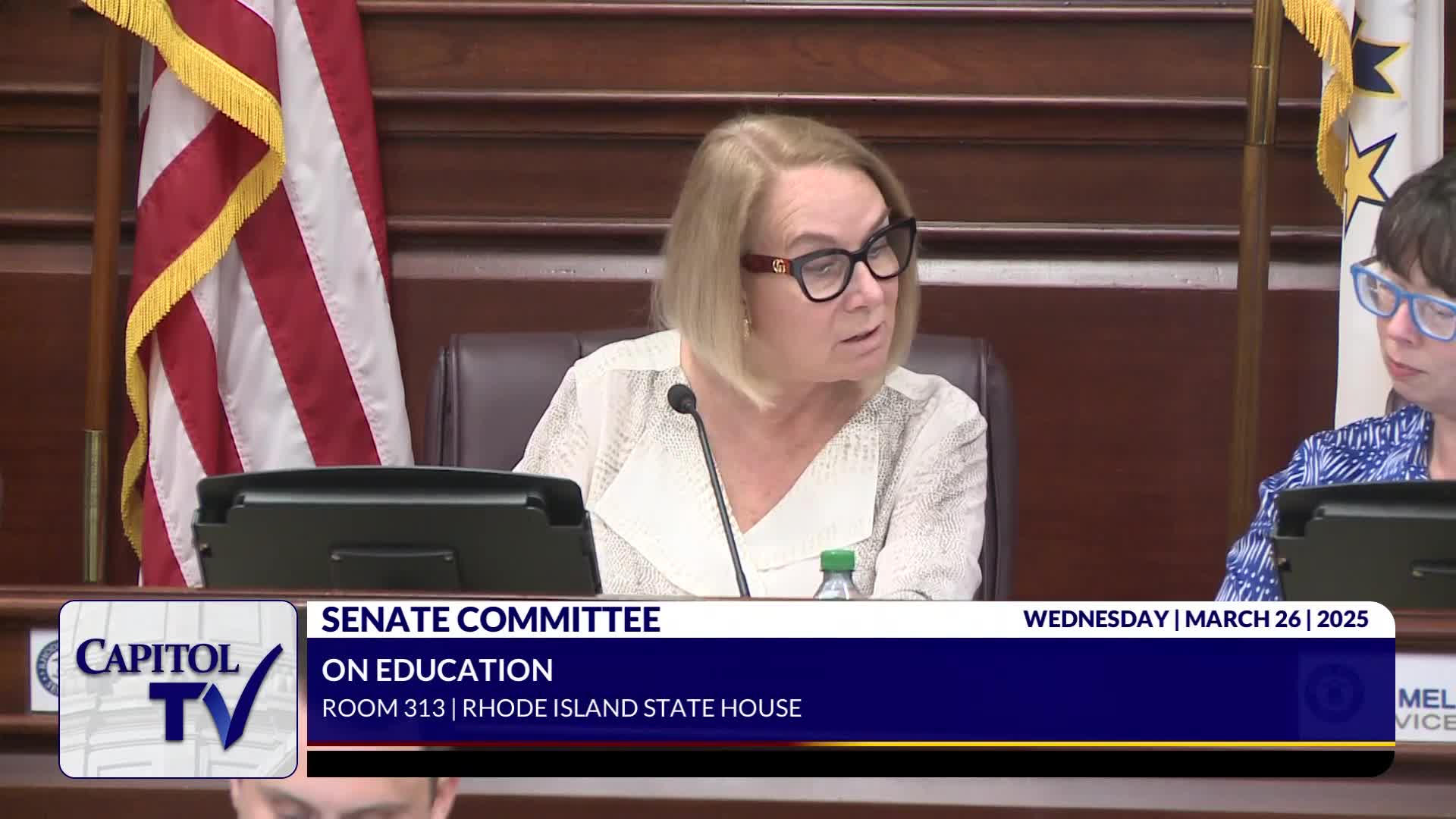
Senator DeMario told the Senate Education Committee that S 774 would expand the Council on Elementary and Secondary Education to add two voting seats: the Rhode Island Teacher of the Year (in the year following their award) and the chair of the Student Advisory Council.
Senator DeMario told the Senate Education Committee that S 774 would expand the Council on Elementary and Secondary Education to add two voting seats: the Rhode Island Teacher of the Year (in the year following their award) and the chair of the Student Advisory Council.
DeMario said the measure combines earlier separate bills that previously made those seats nonvoting, with the goal of ensuring current teacher and student perspectives have a formal vote on the state education council. He cited Article 12, Section 1 of the Rhode Island Constitution to note the General Assembly’s authority to enact education policy.
The Rhode Island Department of Education, represented by Andy Andrade, opposed making the student and teacher seats voting positions. Andrade said student members already participate, but voting could be burdensome: student members have attendance challenges and the council deliberates on matters including personnel, regulations, collective bargaining and budgeting priorities. He also said many student members told RIDE they did not want voting authority.
Supporters, including Jessica Vega of Rhode Island KIDS COUNT and Jordan Jace of the Providence Student Union, argued students and teachers should have real decision‑making power. Vega cited a 2022 Annenberg Institute review showing several states include student voting members at the state level, and she said bylaws protect students and teachers from liability exposure. Jordan Jace said the student representative currently has “symbolic power” and deserves “actual power.”
Committee members discussed attendance, the workload for student members and whether a delayed effective date could ease transitions. After discussion, the committee voted to hold S 774 for further work.
The bill was not advanced; the committee asked for additional information including historical attendance records for student and teacher members and any draft bylaw language addressing student participation and protections.