Get Full Government Meeting Transcripts, Videos, & Alerts Forever!
Get email alerts on the Public Works Standards topic
No spam. Unsubscribe anytime.
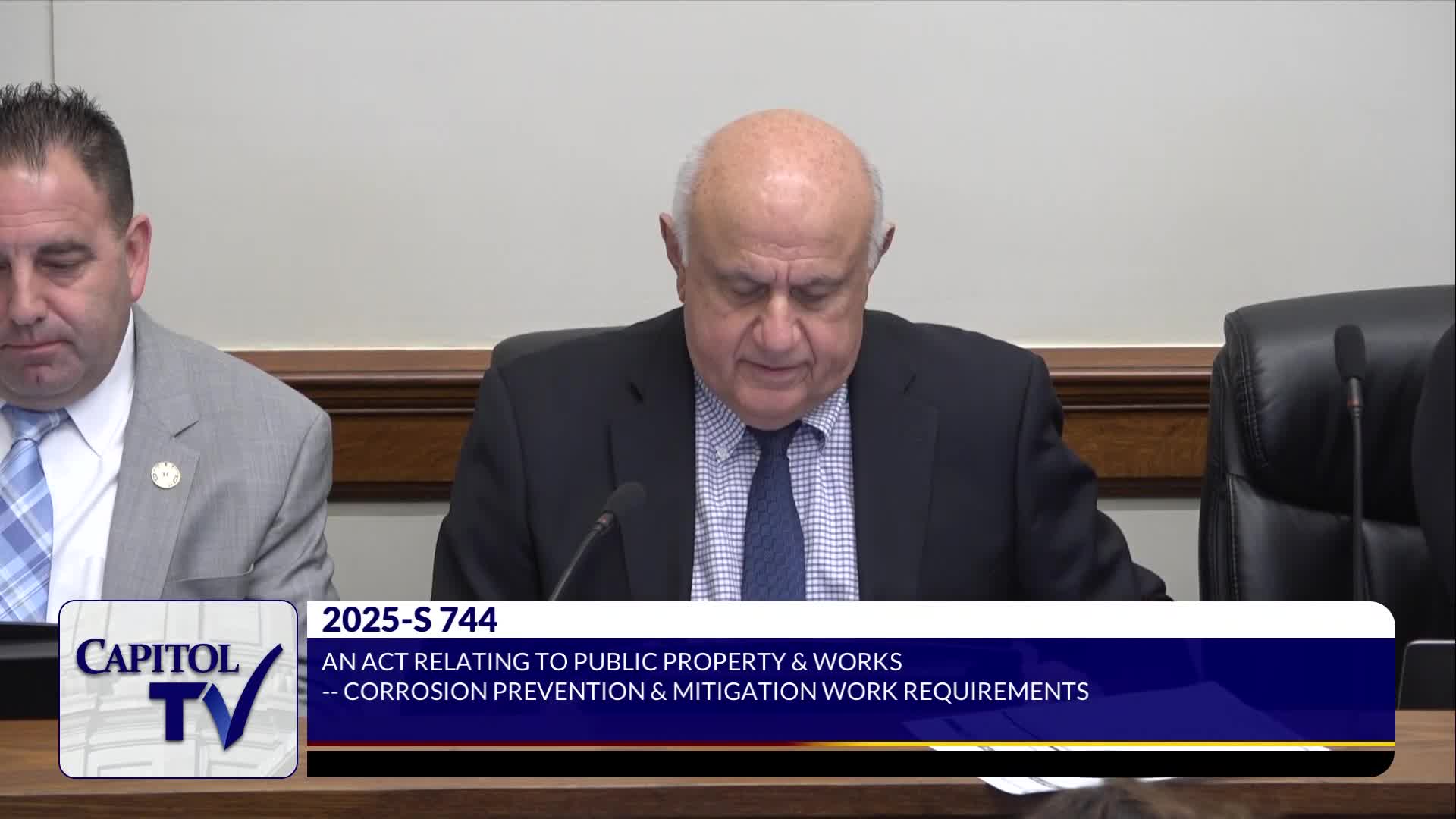
Committee considers bill to tighten corrosion-prevention standards on state-funded projects
Summary
Lawmakers heard from unions, labor and environmental advocates and a sponsor who said the bill would require certification and create enforcement tools to prevent premature coating failures on bridges, tanks and other public infrastructure; committee voted to hold the bill.
Senators considered legislation that would require certified personnel, apprenticeship approvals and stronger enforcement for corrosion prevention and mitigation work on projects funded with state resources.
Senator Dawn E. Thompson told the Senate Labor and Gaming Committee the bill would amend R.I. General Laws chapter 37-25 to clarify standards such as the NACE/AMPP specification and require journey-level painters to be certified and for contractors on state-funded work to comply. The bill also would authorize the Department of Labor and Training, in consultation with the Department of Environmental Management, to adopt regulations and enforce penalties for violations.
Justin Kelly, business representative for International Union of Painters and Allied Trades Local 195, and Erica Hammond, legislative director for the Rhode Island AFL-CIO, testified in support. Kelly described industry cases where improper surface preparation and application produced premature coating failures and cited safety and environmental harms from improper handling of hazardous materials. “This piece of legislation will ensure that those things don't happen,” Kelly said, arguing enforcement language is needed to protect infrastructure and workers.
Erica Hammond told the committee the bill creates “teeth” for standards already in state law by establishing enforcement mechanisms that protect public infrastructure and trained tradespeople. After testimony the committee voted to hold the bill to allow further consideration; Senator Thompson moved to hold and the motion passed by voice vote.
The measure remains in committee for drafting of enforcement language and regulatory coordination with state agencies.