Get Full Government Meeting Transcripts, Videos, & Alerts Forever!
Get email alerts on the Housing And Homelessness topic
No spam. Unsubscribe anytime.
Oregon housing agency asks lawmakers to preserve shelter beds, expand rental aid in HB 5011 briefing
Summary
Andrea Bell, executive director of Oregon Housing and Community Services, told the Transportation and Economic Development Subcommittee on March 26 that the governor—s recommended budget includes funding to preserve roughly 4,800 shelter beds and expand rental-assistance and eviction-prevention programs so the state does not "lose ground" on recent gains made with one-time resources.
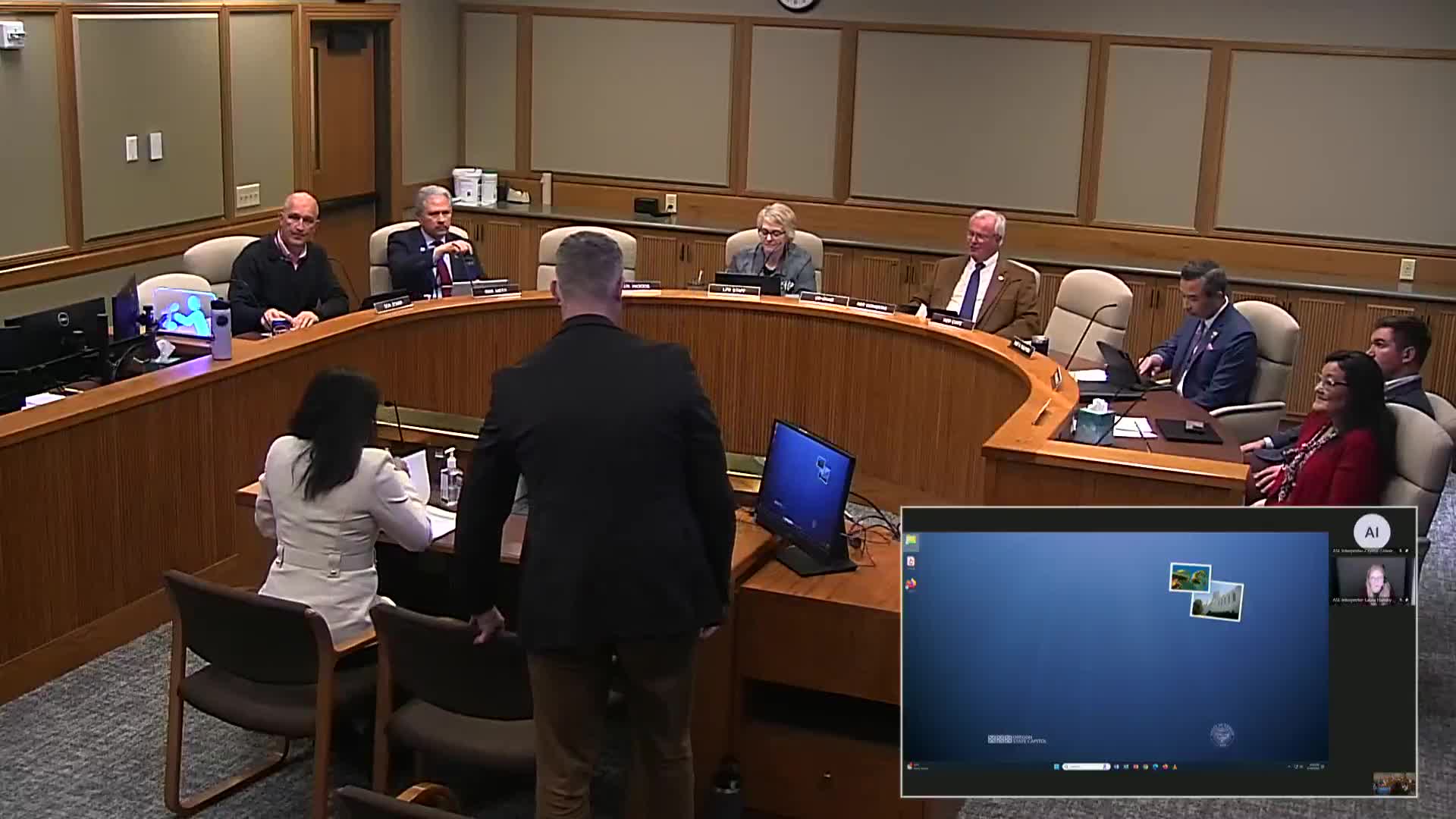
March 26 — Oregon Housing and Community Services (OHCS) told the Transportation and Economic Development Subcommittee of the House Ways and Means Committee on March 26 that the governor—s recommended budget seeks to preserve shelter capacity and scale up rental-assistance programs to avoid losing progress achieved with one-time funds.
Andrea Bell, executive director of Oregon Housing and Community Services, said the governor—s package includes multiple policy option packages that together would maintain about 4,800 shelter beds statewide and expand rehousing and long-term rental assistance. "The bulk of that progress. This biennium was funded with 1 time resources," Bell told the committee, arguing the state must now fund ongoing operations to avoid backsliding.
The package described by Bell includes: POP 501 to continue operating roughly 4,800 shelter beds (about $218 million for the biennium, as presented to the committee), POP 502 to expand local rehousing efforts (roughly $188 million to rehouse about 2,800 additional Oregonians), and POP 503 to establish and sustain a long-term tenant-based rental assistance program (about $105 million to serve an estimated 2,069 households in the first biennium). Bell said the rehousing intervention typically moves people into permanent housing in an average of about 56 days.
Why it matters
OHCS officials told legislators the recent expansion in shelter supply and eviction-prevention work was driven largely by one-time resources and emergency programs, and that continuing the services will require ongoing funding and oversight. Bell said shelter is "one of our most expensive interventions," and that maintaining the shelter system while financing transitions to permanent housing are central goals of the budget proposal.
Budget details and program descriptions
- Shelter (POP 501): The governor—s recommended budget would fund existing shelters that were created under the governor—s executive order on homelessness, navigation centers, Project Turnkey sites and other state-funded shelters. Bell said the agency conducted a statewide analysis during summer 2024, with responses from roughly 90% of providers, to estimate operational and financial needs for shelter models (congregate shelters, motel conversions, pod villages, etc.). The presentation included a proposal to commission an updated statewide shelter study (the prior statewide study dated to 2019).
- Rehousing (POP 502): OHCS described rehousing as the locally driven intervention that identifies people experiencing homelessness, assesses need, and connects them to permanent housing; the agency—s internal average from rehousing entry to housing placement is about 56 days.
- Long-term rental assistance (POP 503): The proposed state long-term rental assistance is tenant-based (not project-based) and would not have a fixed time limit; the agency estimated the proposal would serve at least 2,069 households in the first biennium. Bell contrasted this with the shorter rehousing rental assistance, which can go up to 24 months.
- Eviction prevention (POPs 504/505): The package continues the eviction-prevention work that began in the 2023–25 biennium and is delivered through culturally specific organizations, community action agencies and other local partners. OHCS said the Oregon Eviction Diversion and Prevention effort (ORDAP) is expected to serve about 17,000 households under the proposal; the two-package structure separates rent payments from program-delivery and overhead costs.
- Tribal housing and other programs (POP 506 and POP 90): OHCS would continue contracting with Oregon—s nine federally recognized tribes through the tribal housing grant fund. The agency also noted it will administer $3.5 million associated with the Meek/Bowman settlement (Oregon Health Authority actions) to support transitions to housing for people subject to certain court-ordered treatment pathways. OHCS also plans to continue the Housing Choice landlord guarantee program to encourage landlord participation in rental-assistance programs.
- Energy services and weatherization: OHCS described programs funded largely by the public purpose charge and federal funds: bill-payment assistance that the agency said served about 437,000 people over two years; a weatherization program that helped roughly 1,900 households with an average investment of about $13,000 per household and estimated annual energy-bill savings of about $850 per household; and multifamily energy investments in 42 projects covering roughly 3,100 units.
Lawmakers— questions and agency responses
Several lawmakers pressed OHCS officials on cost, efficiency and capacity to spend the requested funds. Senator Starr criticized the shelter cost estimates, saying, "It's that's a I mean, that's a a lot of money, for a bed," adding concerns about using general fund dollars to maintain shelter operations. Bell responded that many people using shelters are Oregonians who work and that the data show a widening gap between incomes and rents; she reiterated that shelter is expensive and that the governor—s package aims to both preserve beds and fund transitions to permanent housing.
Asked whether the state has the capacity to spend the roughly $700 million represented by the first five policy option packages, Bell said the agency and local partners have built a larger provider network over the last biennium. "Over this last couple of years ... we have brought on hundreds of new providers across the board to be able to deliver the work across the state," she said, adding that the system has been stress-tested and that the state is offering technical assistance to communities that become stuck.
Lawmakers also probed administrative costs. OHCS said it structured the eviction-prevention packages so one POP covers rent payments and the other covers program-delivery costs. The agency said overhead rates align with federal guidance and that a 15% maximum overhead rate is used for program partners where applicable.
Performance measures and program outcomes
Bell reviewed 10 key performance measures (KPMs) OHCS tracks. Highlights included that the agency exceeded the target for people remaining in permanent housing six months after placement (94% in FY23 and 91% in FY24, against an 80% goal). By contrast, customer-service satisfaction fell to 43% in 2024, down from 56% in 2022 and well below the 80% target; OHCS officials attributed the decline in part to a shift from organizational respondents to individual consumers in the survey pool and said they will explore better ways to collect and disaggregate consumer feedback.
OHCS also described a longstanding KPM showing construction and preservation costs in Oregon exceed a national benchmark (RSMeans). Bell said several factors explain higher costs in Oregon, including prevailing-wage requirements, higher energy-efficiency standards and the capital needs in preservation projects (major system replacements). The agency proposed adding a predictive cost model KPM to make more apples-to-apples cost comparisons.
No committee action recorded
The hearing was informational. Lawmakers asked the agency for additional information, including a request from one committee member that OHCS provide a ranked recommendation of the policy option packages to help legislators prioritize constrained funding.
Next steps
Bell said OHCS will follow up with requested details (for example, the number of landlords who would be covered by the landlord guarantee and the total program-dollar picture accounting for carryover funds). The committee also had a public hearing scheduled the following day; at the close of the session the chair said the information hearing was adjourned.
Sources: Testimony and Q&A at the March 26 informational hearing on House Bill 5011 before the Transportation and Economic Development Subcommittee of the Ways and Means Committee; presentation slides and OHCS remarks as recorded in the meeting transcript.