Get Full Government Meeting Transcripts, Videos, & Alerts Forever!
Get email alerts on the Natural Resources topic
No spam. Unsubscribe anytime.
Stakeholders urge full funding for Oregon Department of Agriculture at SB 5502/5503 hearing
Summary
Producers, trade groups, unions and conservationists testified March 26 before a legislative subcommittee supporting the Oregon Department of Agriculture's budget request and warning that proposed cuts to pest, wildlife and market programs would harm producers and rural counties.
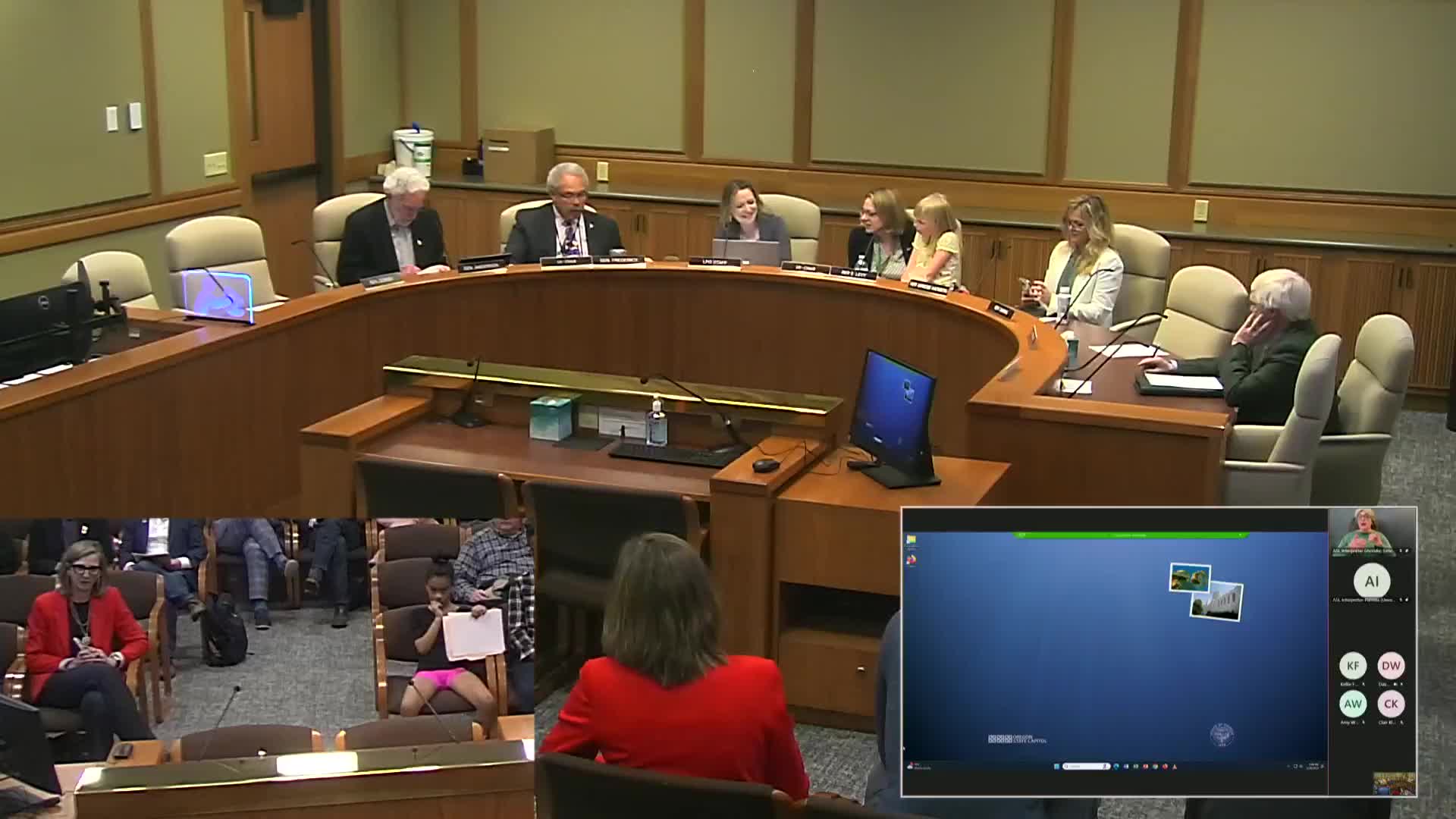
Salem — Lawmakers heard more than a dozen witnesses on Wednesday during a public hearing on Senate Bill 5502, the Oregon Department of Agriculture (ODA) budget bill, and its companion fee bill, Senate Bill 5503. Testimony, delivered in person and remotely to the subcommittee chaired by Cochair Frederick and Cochair Levy, largely urged continued or increased funding for pest eradication, market access, food-safety work and programs that support small and mid-size producers.
Many speakers stressed that proposed staffing reductions and cuts to targeted programs would increase long-term costs for producers and counties. "Please do not gut Oregonian agriculture protection under the guise of phased out investments," said Max Ragazzino, an invasive species entomologist and union sublocal president, summarizing concerns about proposed reductions that would remove 41 ODA positions from current service level staffing.
The hearing assembled representatives of agricultural trade groups, labor, food processors, conservationists and local government. Reba Daniel, a board member of the Oregon Farm to School Network and a farmer, testified in favor of the Farm to School equipment and infrastructure grant included in ODA's budget, saying Oregon's program is "one of the longest standing programs in the nation" and asking the committee to increase the grant allocation to $1,000,000 for the biennium. Daniel said the program has paid out $950,000 to 24 small and mid-scale producers against more than $4,000,000 in requests.
Industry groups sought continued funding for market development and biosecurity. Jeff Stone, executive director of the Oregon Association of Nurseries, told the committee the nursery industry relies on ODA for pest response and market access. Stone thanked Senator Frederick for introducing Senate Bill 576, which he said would allocate $2,000,000 for Japanese beetle eradication, and urged support for a $3,000,000 allocation for sudden oak death to the Oregon Department of Forestry.
Multiple witnesses urged the Legislature to maintain or expand funding for invasive-species and pest-response work. Ragazzino, who focuses on invasive insect response, opposed cuts to market access and eradication programs, saying early detection and rapid response prevent much larger future losses. "Every dollar spent on these programs saves Oregonians in the long term," he said.
Speakers also raised concerns about proposals that would shift costs to counties or private landowners. Brandon Persinger, natural resources lobbyist for the Association of Oregon Counties, urged the committee to fund the Wolf Depredation Compensation and Financial Assistance Grant Program at $2,000,000 for the biennium and to restore state support for USDA APHIS Wildlife Services. Persinger said counties already bear much of the cost and that inadequate state funding would reduce responsiveness and force counties to cut services.
Labor representatives and agency staff supporters called for investments in ODA operations. Mike Powers of SEIU Local 503 said the governor's recommended budget includes important items such as IT modernization and an agency safety officer but omits resources for responses to the vine mealy bug, grasshopper suppression and the Japanese beetle eradication. Food Northwest, the Oregon Seed Council and the Oregon Organic Coalition similarly testified in support of the department's core functions — particularly food safety, market access and specialty crop programs — and requested more general fund support and restoration of one-time investments such as meat infrastructure grants and agricultural workforce housing funding.
Seafood industry witnesses described market work the state facilitates for coastal processors and harvesters. Dave Wright, a fourth-generation seafood industry representative from Newport, praised ODA marketing efforts that opened foreign markets and said European and Asian markets remain important for Oregon seafood producers. Deputy Director Lindsay Ang of ODA noted that live markets command the highest prices and that disruptions in export channels can significantly affect coastal producers.
Some witnesses warned about fee increases proposed in the companion bill. Lauren Kenzie of the Oregon Farm Bureau and others said raising pesticide registration caps and weights-and-measures fees risks burdening producers, particularly when grant programs and predator-control supports are being reduced. Several testifiers requested that general funds rather than fee increases back core programs.
No formal committee action or vote occurred during the public hearing. The subcommittee closed the record after hearing from 13 registered witnesses, including five remote participants, and indicated it will next convene to consider the Department of Fish and Wildlife budget. Committee members did not make any formal directions on the record during the March 26 hearing.
The testimony cataloged multiple pending and referenced legislative measures, including Senate Bill 576 (Japanese beetle eradication), SB 352 (gorse/reed eradication references), SB 356 (invasive species council support), a Senate bill referenced as 985 in relation to wolf funding, and House Bill 5009 (Department of Fish and Wildlife budget) announced as the subcommittee's next agenda item. Several witnesses also pointed to federal partnerships and USDA grant programs as part of program funding mixes.
The public hearing record will remain open to the subcommittee; witnesses asked lawmakers to restore or increase funding for pest eradication, wildlife services and market-access work and to avoid or offset proposals that would shift costs to counties and producers.