Get Full Government Meeting Transcripts, Videos, & Alerts Forever!
Get email alerts on the Individual Development Accounts Funding topic
No spam. Unsubscribe anytime.
House committee hears bipartisan plan to shore up funding for Individual Development Accounts
Summary
Lawmakers and providers urged the House Committee on Housing and Homelessness to pass HB 2735 with a dash-2 amendment to remove an annual cap on IDA matching funds, add a lifetime cap, index the program to inflation and raise the tax-credit cap to $16.5 million to sustain a proven matched-savings program.
The House Committee on Housing and Homelessness on March 26 heard testimony supporting House Bill 2735 (dash-2), a bill that sponsors and program administrators say will stabilize funding for Oregon’s Individual Development Account (IDA) program.
Committee staff summarized the dash-2 amendment as removing the annual cap on matching funds, establishing a state-directed total amount deposited as matching funds into individual development accounts and increasing the annual tax-credit cap for donations to fiduciary organizations that support IDAs to $16,500,000.
Sen. Suzanne Weber, who said she represents District 16 in the Oregon Senate, described the bill as a bipartisan effort to “make important changes” to the IDA program. “IDAs are so important to every part of Oregon,” Weber said, adding that inflation has eroded the spending power of funds set when the program began.
Omar Sandoval, speaking on behalf of Rep. Ricky Ruiz, urged committee support and said the dash-2 “removes [the] unnecessary barrier by eliminating the annual cap on matching funds while establishing a reasonable lifetime cap” and includes an inflation adjustment to keep the program effective.
Luke Bonham, IDA program manager at Neighborhood Partnerships, said IDAs are matched savings accounts administered in partnership with Oregon Housing and Community Services and the Department of Revenue. He told the committee the request is to raise the annual tax-credit cap from $7.5 million to $16.5 million. Bonham said the program has served more than 19,000 Oregonians and that about 2,200 people are currently saving in IDAs statewide.
Laura Bauer, homeownership program director for Portland Housing Center, said the last permanent funding increase occurred more than 15 years ago and that, without legislative action, “the program will shrink this time by 50% and will enroll fewer than 500 people each year going forward.” Bauer said providers have been forced to place prospective participants on waiting lists as demand outpaces available funds.
IDA participants and providers described how the program works and the outcomes they see. Ginny (Ginny) Carlson, identified as a Habitat homeowner and IDA saver from Columbia County, said the program “forever altered the course of my family” by enabling homeownership, stable housing and financial education. Andrew Goecki of Portland Community Reinvestment Initiatives cited program success rates, saying most IDA-supported homebuyers make mortgage payments on time and many IDA-supported businesses continue operating a year after completion.
Shannon Vilhauer, executive director of Habitat for Humanity of Oregon, and Rebecca Bassett of CASA of Oregon described how IDAs are used for closing costs and repair needs and noted broad geographic reach through local fiduciary organizations.
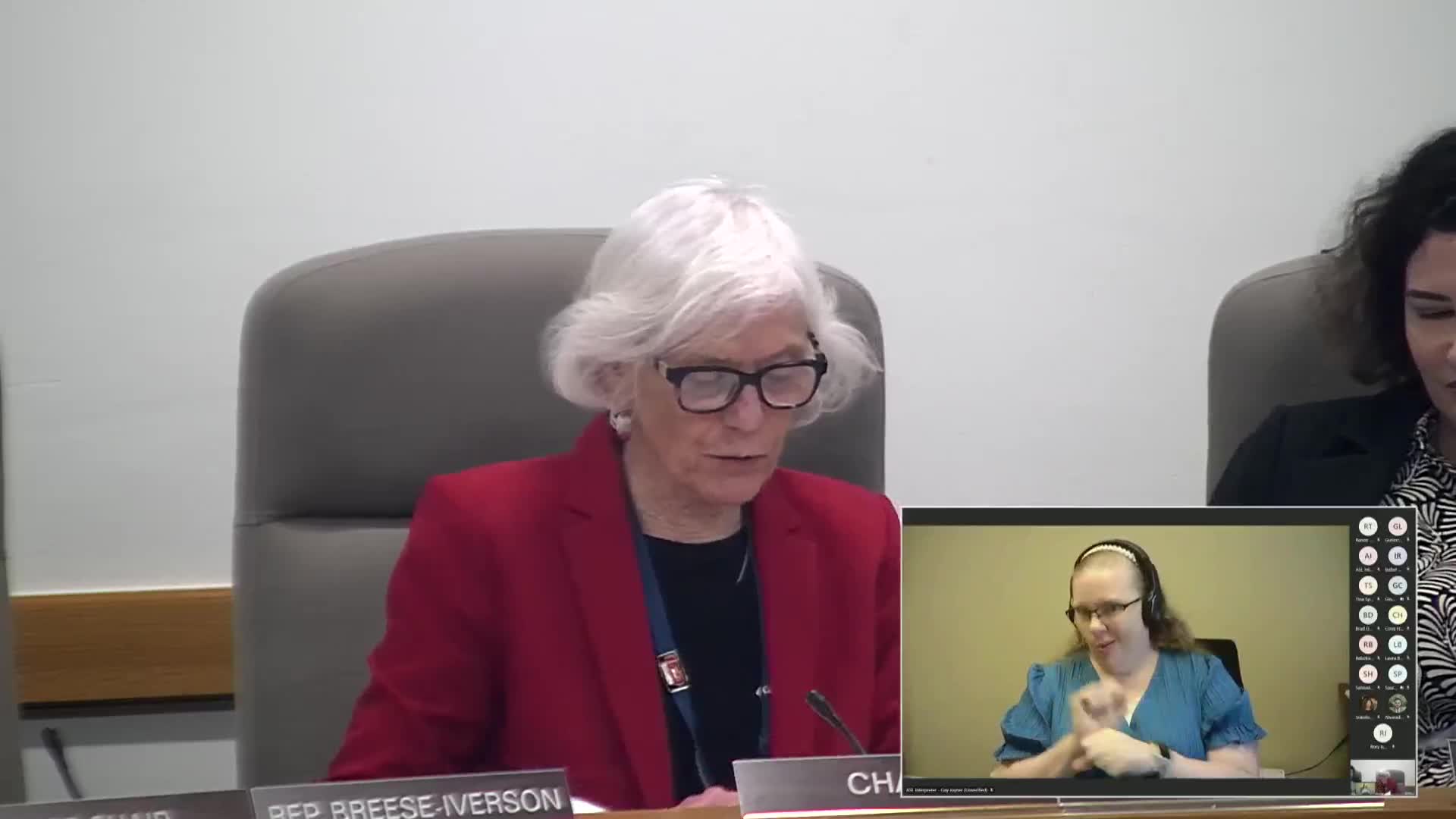
Chair Marsh told the committee that, if the bill is approved by the committee, it will go next to the House Revenue Committee for consideration of changes to tax credits. The committee closed the public hearing on HB 2735 and proceeded to the next item on the agenda.
No formal votes were recorded during the public hearing; testimony was oral and on the record.