Get Full Government Meeting Transcripts, Videos, & Alerts Forever!
Get email alerts on the School Meals Farm To School topic
No spam. Unsubscribe anytime.
Child‑nutrition and Farm‑to‑School advocates ask Legislature to expand reimbursements and fund Farm to School grants
Summary
Child‑nutrition coordinators, in‑home providers and Farm to School advocates told the committee that rising food and labor costs require higher CACFP reimbursements, a 10¢ snack rate, and $12 million for the state Farm to School grant program.
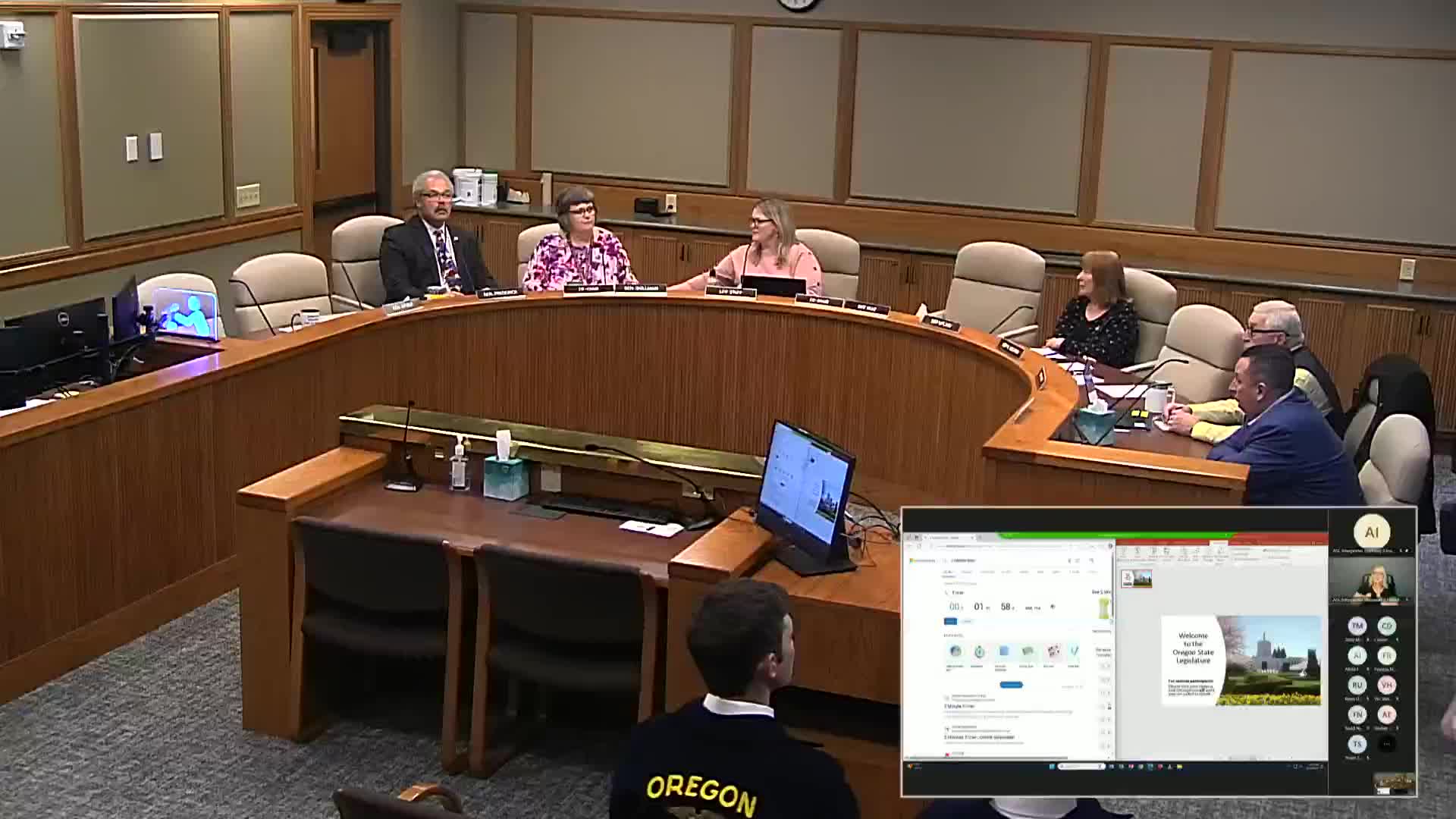
At a March 26 public hearing on Senate Bill 5515, child‑nutrition professionals, family child‑care providers and Farm to School advocates pressed the Legislature to increase reimbursements and expand grant funding.
Francia Guerra (also identified as Francie Herrera), Child Nutrition Coordinator for Adelante Mujeres, said the group supports increasing CACFP reimbursement rates, adding a 10‑cent per meal snack reimbursement, bringing tier‑2 home‑based providers to tier‑1 levels, and a one‑time $250,000 appropriation to Oregon State University Extension Service to develop culture‑specific USDA‑aligned menus. “These improvements would make a real difference in our ability to serve nutritious, culturally meaningful meals,” she said.
Dusty Stroud, a licensed director and lead teacher of an in‑home day care in Redmond enrolled in CACFP, described the gap between reimbursements and actual food costs: “I might receive $157 in reimbursement for a month but spend about $300 on food, which comes out of my personal finances.” She urged the committee to raise CACFP rates so providers serving low‑income families can offer healthier meals.
Witnesses also supported expanding Farm to School funding. Reba Daniel, a farm‑to‑school educator and board member of the Oregon Farm to School Network, described program growth over the past decade — school gardens increasing from 170 to 780 and local producers selling to schools increasing from 40 to 356 — and asked the committee to fund the Farm to School grant program at $12,000,000. Erin Madlow of Umpqua Valley Farm to School and Juniper Maidla (a third‑grade student who testified in favor of continuing Farm to School activities) described local procurement, student tastings and garden programs that connect children to Oregon producers.
David Wieland of Stronger Free Oregon and other advocates urged funding for school‑meals stability, noting that recent federal changes could reduce universal free meals and that House Bill 3435 (school meals for all) would give the state authority to respond. Wieland said school meals programs in Oregon now reach the majority of public schools and estimated family benefits of roughly $1,400 per student per year from free meals.
Speakers emphasized fiscal and programmatic details: a requested Farm to School appropriation of $12,000,000; a one‑time $250,000 OSU Extension allocation for culturally specific menus; and specific CACFP policy asks including the 10¢ snack and tier‑2 to tier‑1 parity. No committee votes occurred during the hearing; witnesses asked the subcommittee to include the funding requests in SB 5515 or related budget packages.