Get Full Government Meeting Transcripts, Videos, & Alerts Forever!
Get email alerts on the Rent Stabilization And Algorithms topic
No spam. Unsubscribe anytime.
Oregon hearing hears testimony for SB 722 on rent stabilization and ban on algorithmic rent‑setting
Summary
Supporters told the Senate Committee on Housing and Development that SB 722 would curb predatory rent spikes and ban AI-driven price‑setting tools; opponents warned the bill is vague, difficult to enforce and could chill investment. The committee held a carryover public hearing and closed it without a vote.
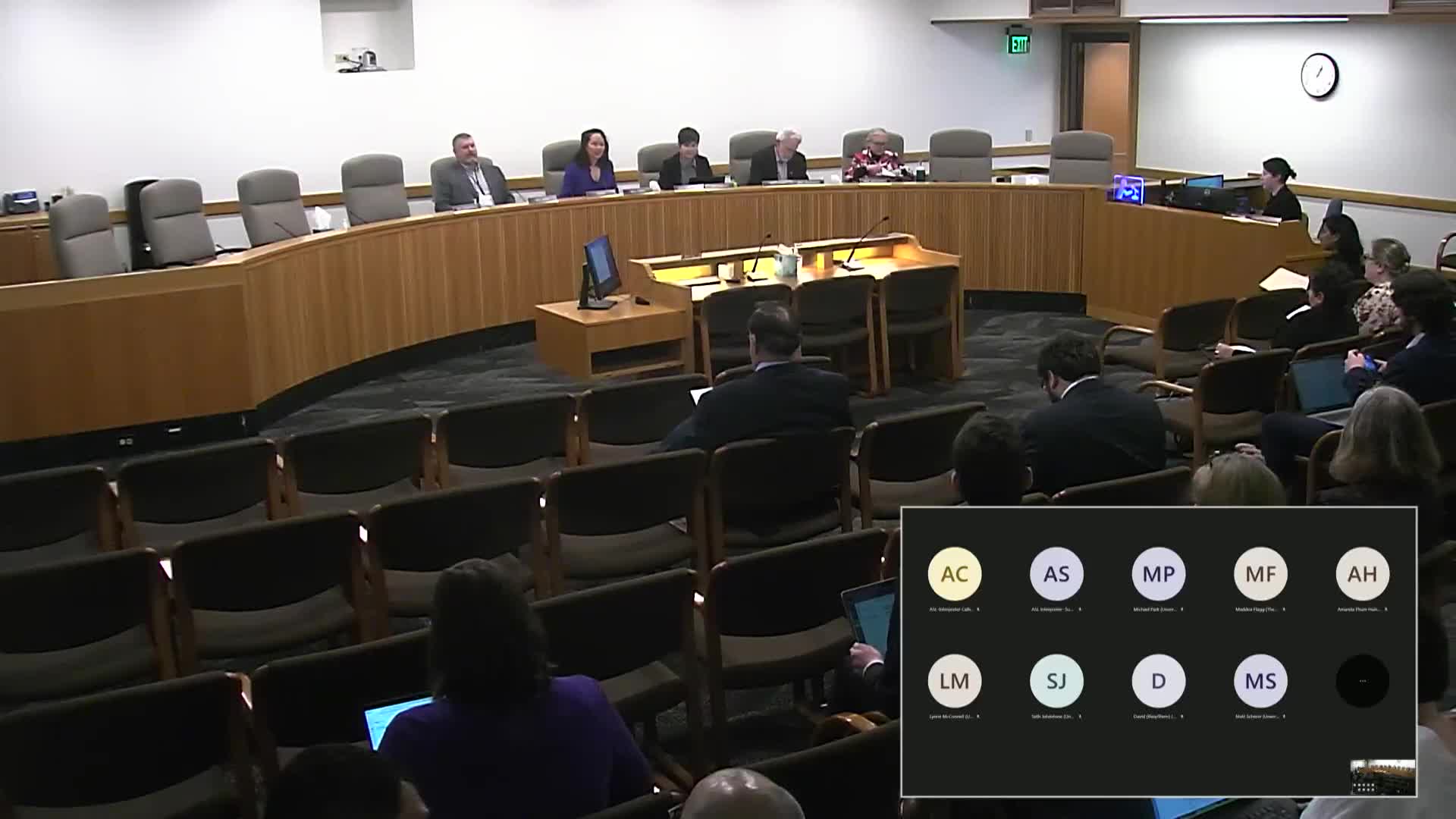
The Senate Committee on Housing and Development reopened a public hearing March 26 on Senate Bill 722, a measure that would reduce the new‑construction exemption in Oregon's rent stabilization law and ban the use of AI‑driven algorithmic software to set rents or leave units vacant.
Supporters from tenant and civil‑rights organizations urged senators to oppose amendments that would strip rent stabilization provisions. Kim McCarty, executive director of Community Alliance of Tenants, described multiple tenant accounts of "rent gouging" including single increases above 30 percent and repeated double‑digit raises that caused displacement. "These are the types of scenarios that are still happening," McCarty said.
The bill would shorten the current 15‑year exemption for new construction to seven years and would prohibit landlords from using third‑party algorithmic tools that rely on nonpublic data to set rents. Advocates including Rebecca Markely of the Oregon Housing Alliance, Lauren Armani of the Welcome Home Coalition and Michael Abrams of the ACLU of Oregon said those changes are needed to prevent large and sudden rent spikes that they said are driving displacement and homelessness.
Experts and opponents raised enforcement and legal concerns. Fawn Berry of the Oregon Liability Reform Coalition warned the bill's private right of action is overly broad and could expose landlords to litigation "without any damages to the tenant," including in cases where a unit was vacant for other reasons. A representative from the Oregon Law Center said enforcement would fall on tenants filing civil suits and acknowledged "myriad barriers" to tenants pursuing litigation, including evidence and discovery challenges.
Matthew Scherer of the Center for Democracy & Technology testified that investigative reporting and law‑enforcement actions show how some algorithmic platforms aggregate landlord data and recommend higher rents, creating a "rising tide" of prices. Scherer said tenants currently lack transparency into whether an algorithm affected their rent and called for disclosure and auditability of such systems.
Several tenant organizers and tenants spoke about lived experiences of displacement and unaffordable rents. David Carlson of Community Alliance of Tenants, River Scholl (a wheelchair user), Seth Johnstone of Basic Rights Oregon and others urged passage of the bill without the dash‑1 amendment. Jeremy Rogers of Oregon Realtors and other industry witnesses opposed the measure, arguing that the bill's definitions and enforcement mechanisms are unclear and could sweep in common public tools or expose small landlords to unexpected liability.
No committee vote occurred on SB 722 during the March 26 hearing. Chair Pham closed the public hearing after speakers' remarks; senators did not take a formal action on the bill that day.
The hearing record includes extensive back‑and‑forth about how tenants would prove use of algorithmic tools in court, whether agency oversight could be an alternative enforcement model, and whether the bill's language would reach companies that display public pricing estimates. Testimony cited national reporting and litigation involving third‑party rent‑setting platforms as evidence of algorithmic coordination in housing markets.
The committee's hearing transcript shows detailed accounts from tenants, tenant advocates, civil‑rights groups and housing providers on both the need for protections and the practical problems of enforcement; senators and witnesses repeatedly noted that discovery and transparency would be central to any civil claim alleging algorithmic price fixing.
Senators did not act on SB 722 on March 26; the hearing was closed to allow committee work on other bills.