Get Full Government Meeting Transcripts, Videos, & Alerts Forever!
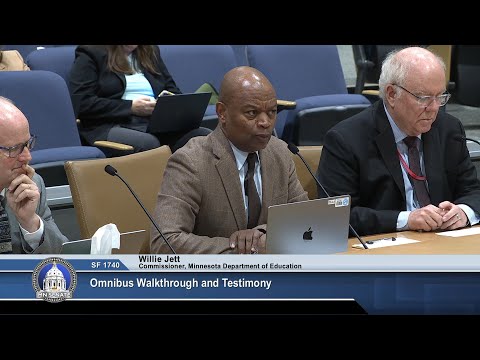
Senate Education Committee walks through "delete‑everything" education policy omnibus; debate spans algebra II, literacy (REED Act), charters, special education
Summary
Committee counsel and staff walked members, line by line, through the education policy omnibus "delete‑everything" amendment (SCS 1748‑2), covering attendance and PSEO changes, academic standards and graduation requirements, charter school oversight, literacy training under the REED Act, special education, school facilities and nutrition, and other agency changes.
The Minnesota Senate Education Policy Committee conducted a structured walkthrough of the delete‑everything amendment to the education policy bill (SCS 1748‑2), reviewing multiple articles that collectively revise PSEO eligibility, academic standards and benchmarks, charter school governance, special education processes, literacy training under the REED Act, school nutrition and facilities rules, and other statutory provisions.
Senate counsel and staff walked members through Article 1 (attendance and PSEO clarifications), Article 2 (education excellence, standards, and graduation requirements), Article 3 (charter school oversight and procurement), Article 4 (REED Act/literacy professional development), Article 5 (special education), Article 6 (school nutrition and facilities, including landfill proximity language), and Article 7 (agency and administrative provisions including catastrophic insurance for the Minnesota State High School League).
Major items highlighted during the walkthrough and subsequent public testimony included:
Algebra II and graduation requirements: Counsel noted language from a Senator Farnsworth provision that "algebra 2 must not be required as an academic standard" in the next standards cycle and that credit for algebra II or higher would not be required for graduation. Education advocates and teachers raised concerns that removing the algebra II requirement could track low‑income students, students of color, students with disabilities and English learners into lower‑level math pathways and could affect college admission eligibility. Matt Shaver of ED Allies…
Already have an account? Log in
Subscribe to keep reading
Unlock the rest of this article — and every article on Citizen Portal.
- Unlimited articles
- AI-powered breakdowns of topics, speakers, decisions, and budgets
- Instant alerts when your location has a new meeting
- Follow topics and more locations
- 1,000 AI Insights / month, plus AI Chat