Get Full Government Meeting Transcripts, Videos, & Alerts Forever!
Get email alerts on the Ev Surcharge 200 topic
No spam. Unsubscribe anytime.
Senate committee advances bill increasing EV surcharge to $200, adds surcharges for plug-in hybrids and motorcycles
Summary
Senate File 2688 would raise the electric vehicle surcharge to $200, impose a $100 surcharge for plug-in hybrids and set motorcycle surcharges; the Transportation Committee moved the bill without recommendation to the Taxes Committee after discussion about vehicle weight, fairness and tourism needs.
St. Paul — Senators moved Senate File 2688 out of the Transportation Committee to the Taxes Committee without recommendation. The bill would raise the surcharge on electric vehicles to $200, index the surcharge to inflation consistent with the gasoline tax, and add surcharges for plug-in hybrids and electric or plug-in motorcycles.
Sponsor Sen. Erin Johnson Stewart described the bill as similar to other surcharge proposals but with larger amounts: $200 annually for all-electric vehicles, $100 for plug-in hybrids, $40 for electric motorcycles and $20 for plug-in motorcycles. Johnson Stewart said revenue would be deposited in the Highway User Tax Distribution Fund.
Nut graf: Committee debate focused on fairness and what characteristics should determine user charges — weight, miles driven, towing needs, or fuel type. Several senators noted increasingly heavy electric vehicles and argued that heavier vehicles (including some EVs) cause more pavement damage and that some adjustments may be needed in future policymaking.
Testimony and discussion
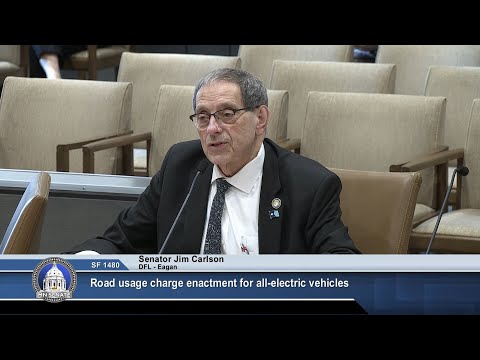
Sen. McKeown asked how the bill treats hybrids and whether it unfairly penalizes lighter, affordable hybrid models. Johnson Stewart said the intent was to capture revenue from plug-in hybrids because they use electricity for many miles and therefore contribute less to gasoline-tax revenue. Sen. Carlson, who has technical experience with EVs, observed that many plug-in hybrids operate primarily on battery power for routine trips and therefore contribute less in gasoline taxes than conventional vehicles.
Outcome
By voice vote the committee moved SF 2688 as amended to the Taxes Committee without recommendation. Members said the bill represented a practical, near-term step to address funding shortfalls and that further refinement will be required to address weight-based pavement impact or other differentiated approaches.
Ending: The bill now awaits a fiscal review and detailed revenue estimates in the Taxes Committee; senators said they expect continued discussion about how to allocate road costs fairly across different vehicle classes.