Get Full Government Meeting Transcripts, Videos, & Alerts Forever!
Get email alerts on the Restorative Practices topic
No spam. Unsubscribe anytime.
Committee hears survivor accounts as bill would protect confidentiality of restorative practices
Summary
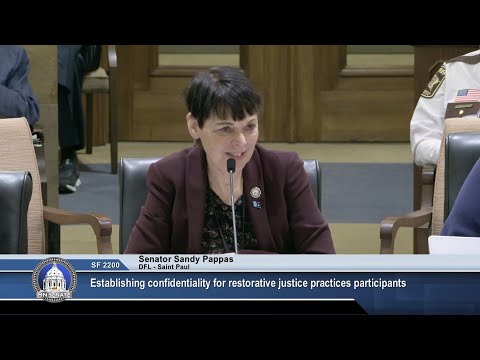
Senate File 2,200 would make statements made in restorative-practice settings inadmissible in court to promote confidentiality and candid dialogue. Survivors and practitioners testified in favor; the bill was laid over for further work and amendment.
Senate File 2,200, a bill to extend confidentiality protections to statements made in restorative-practice proceedings, drew extensive testimony from survivors, practitioners and county officials on March 26.
"One of the fundamental tenets of restorative practices is confidentiality," said Amanda Sealing, a longtime juvenile prosecutor from Yellow Medicine County who described her county's 25 years of experience using a practice called Circle. "During the circle process, people share extremely vulnerable stories, which is why it's so important that we make guidelines that what happens in circle stays in circle."
Survivors described the potential benefits of a confidential restorative option when the criminal justice system does not result in a conviction. Sarah Super, who said she was raped in 2015 and successfully prosecuted her attacker in Ramsey County, told the committee that many survivors do not pursue criminal charges and that restorative practices can provide an additional choice for healing. "Today's survivors are asking for the option of having a restorative practice," she said.
Supporters said the bill does not remove prosecutorial authority. Senator Pappas and testifiers said prosecutors would still be able to pursue charges independent of any restorative process and that restorative options are an additional, voluntary pathway for victims and respondents. Committee members focused discussion on confidentiality limits: whether paid facilitators or government employees should be exempt from confidentiality, mandated-reporter obligations and whether the statute should allow victims to speak about their own experiences outside the process.
The bill was laid over for potential amendment and return to committee on Friday; the author and testifiers said they were working on language to exempt government employees and paid facilitators from confidentiality protections while keeping community volunteer information protected.