Get Full Government Meeting Transcripts, Videos, & Alerts Forever!
Get email alerts on the Early Childhood Education topic
No spam. Unsubscribe anytime.
Lawmakers hear testimony seeking $15 million annual increase for Head Start
Summary
Representative Hicks asked the committee to add $15 million a year for Head Start; the program's advocates and local directors testified on services provided and concerns about federal funding volatility. The file was laid over for possible inclusion.
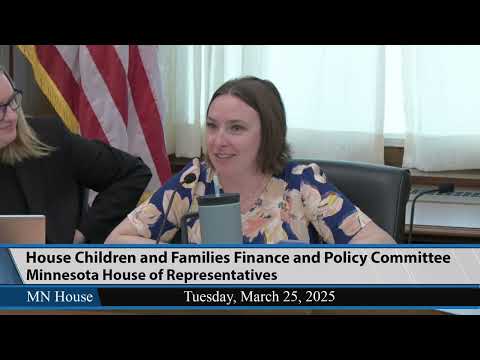
Representative Hicks presented House File 1002, which requests an increase in state funding for Head Start and Early Head Start. The bill seeks $15 million annually for the upcoming biennium to expand local program capacity and serve children on waiting lists; the committee laid the measure over for possible inclusion.
"Head Start is more than an early childhood program. For me, Head Start is a child welfare prevention program," Rep. Hicks said, describing Head Start's wraparound services that include preschool education, meals, health services and family supports such as home visits and referrals. The sponsor and testifiers emphasized Head Start's role in school readiness, family engagement and connecting families to housing, health care and other supports.
Sandy Symar, Head Start director for Freeborn and Olmsted counties, said programs now serve infants, toddlers, preschoolers and pregnant families and use child assessment data to tailor longer days, transportation and summer boost programs. Symar said her program currently serves 503 children across those services and that funding would allow the agency to admit children currently on wait lists.
Craig Grodke, executive director of the Minnesota Head Start Association, described federal funding uncertainty and administrative churn: in 2024 a proposed 6.25% reduction was prepared but did not occur; Head Start remained flat in the fiscal‑year 2025 continuing resolution, and Minnesota grantees face potential federal reductions in future years. Grodke said wraparound services (for example Medicaid‑connected services) coupled with federal uncertainty can shift costs to local programs.
Members asked about current base funding and how the requested $15 million would interact with federal funding. Nonpartisan staff reported state base funding for Head Start at $34,398,000 annually. Sponsors said the proposed increase is on top of that base and argued state investments can protect services if federal funds are reduced.
Representative Amanda Mata and local Head Start staff and parents provided testimony about child developmental gains and family supports. The committee laid House File 1002 over for possible inclusion in the omnibus bill; no roll‑call tally was recorded in the transcript.