Get Full Government Meeting Transcripts, Videos, & Alerts Forever!
Get email alerts on the Health Care Tax Refund topic
No spam. Unsubscribe anytime.
Committee hears bill to allow quarterly refunds of Minnesota CARE legend drug tax for specialty pharmacies
Summary
House File 1479 would let pharmacies request quarterly refunds of the 1.8% Minnesota CARE legend drug tax rather than the current single annual refund.
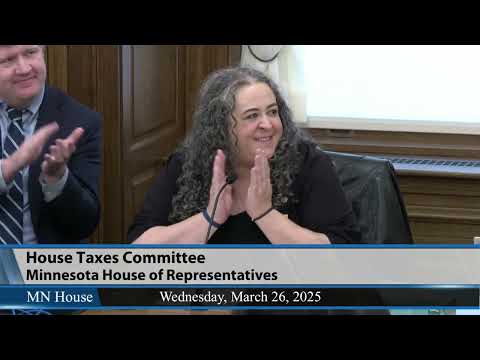
House File 1479, carried by Representative Verneig, would change the timing of refunds for the Minnesota CARE legend drug tax so pharmacies may claim refunds quarterly rather than only once a year.
The change targets specialty pharmacies that buy prescription drugs from wholesalers who itemize and remit the 1.8% Minnesota CARE tax on all sales. Under current practice, wholesalers collect the tax from pharmacy purchasers and remit it to the Department of Revenue; pharmacies that later determine some purchases were for out-of-state patients must request a refund once per year (March 15 process). Verneig told the Committee that the annual timing creates cash-flow pressure for pharmacies that ship a large share of prescriptions outside Minnesota and that the Department of Revenue told sponsors the timing change would have no net cost to the state.
“Sterling Specialty Pharmacy dispenses over 98% of its medications to patients outside of Minnesota,” Randy Schindelar, chief financial officer of Astrup Companies / Sterling Specialty Pharmacy, testified. Schindelar said his company had $1,510,000 withheld in 2024 while its net tax obligation was $42,000; the $1,470,000 difference was refunded after the annual filing. He said that requirement forced the company to use a credit facility and increased operating costs, and that a quarterly refund schedule would ease cash-flow burdens without reducing state revenues.
Representative Verneig described the bill as a “common-sense solution” developed with input from the Department of Revenue and urged committee support. Committee chairs moved to lay the bill over for possible inclusion in the 2025 omnibus tax bill; the motion was carried by voice vote.
The Committee did not take a recorded roll-call vote. The bill will be considered further in the omnibus process.