Get Full Government Meeting Transcripts, Videos, & Alerts Forever!
Get email alerts on the Deepfakes topic
No spam. Unsubscribe anytime.
Committee hears bill to criminalize nonconsensual AI-generated explicit images and add civil remedies
Summary
Senate Bill 360 would expand Marylandlaw to cover computer-generated explicit imagery that depicts an identifiable person without consent. Supporters said the measure closes a prosecution gap; the public defender warned the language could be vague and risk due-process problems.
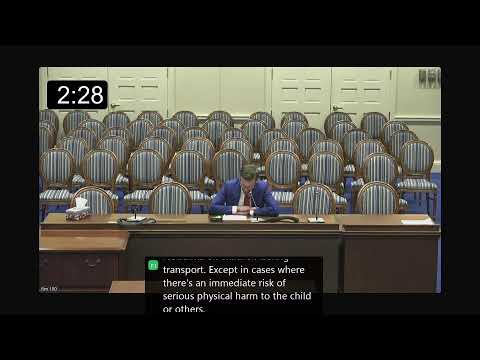
At a March 26 House Judiciary Committee hearing supporters urged passage of Senate Bill 360, which would criminalize distribution of sexually explicit visual representations of an identifiable person created or altered without consent and create a private civil remedy for victims.
Sponsor testimony and advocacy groups
Senator Hester framed the bill as a response to growing use of websites and apps that produce explicit "deepfake" images. The bill would amend Marylandcriminal and civil law to make it a misdemeanor to distribute such material when the distributor intends to harass or harm the depicted person; it also permits injured parties to seek injunctive relief and damages.
Advocates including the Womens Law Center and the Maryland Coalition Against Sexual Assault supported the measure and recommended a technical change to the billlanguage so prosecutors could charge a single offense whether the image was an actual photograph or computer-generated. Lisa Jordan of MCASA suggested a unified definition of "visual representation" so enforcement and charging would not hinge on how an image was produced.
Public defender concerns
Jeremy Zacker of the Office of the Public Defender testified in opposition. He told the committee the bill's definition of "computer generated" might be overly broad and vague because many ordinary photo edits or digital manipulations could arguably fall within the definition. He warned that a vague criminal definition could create due-process problems and urged caution before adding a new criminal offense.
Prosecution and proof questions
Committee members and witnesses discussed evidentiary and charging challenges: how a prosecutor would prove an image is computer-generated, what standard an "ordinary person" would use to deem a depiction "indistinguishable" from a real person, and whether civil remedies might be a more appropriate first step. Supporters noted other states have adopted similar measures and argued that criminal and civil tools are both needed to deter misuse and provide victims a path for relief.
Next steps
Witnesses asked the committee to adopt a streamlined definition that covers imagery produced by any means but leaves courts and prosecutors with clear guidance. No committee vote was recorded at the hearing.