
Senate bill would let local school systems use a statewide clearinghouse to vet teacher hiring after AI impersonation case
Get AI-powered insights, summaries, and transcripts
Subscribe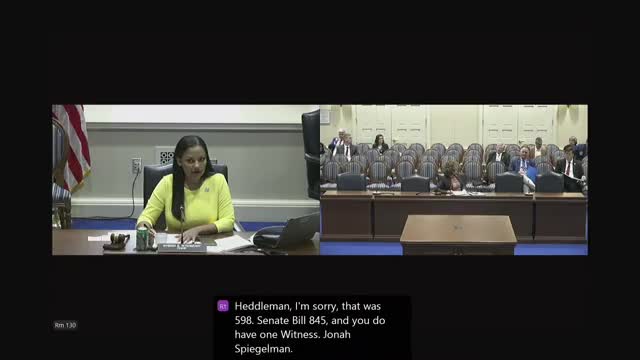
Summary
Sen. Shelly Hettleman introduced Senate Bill 845 to let the Maryland State Department of Education join a national clearinghouse that would allow local school systems to screen prospective hires for prior administrative actions before offering employment.
Sen. Shelly Hettleman, sponsor of Senate Bill 845, told the Ways and Means Committee that the bill would enable the Maryland State Department of Education (MSDE) to become a member of a national clearinghouse so local education agencies (LEAs) can screen prospective hires for prior administrative actions before extending job offers.
The bill grew out of a January 2024 incident at Pikesville High School in Baltimore County where an athletic director used artificial intelligence to impersonate the principal and produce a recording of racist and antisemitic remarks. Senator Hettleman said some background information on the athletic director existed in other jurisdictions and might have been discovered earlier through a cross‑jurisdictional administrative screening service.
“[T]his small investment can enable local jurisdictions to do so at the front end of the process,” Hettleman said, describing a membership fee in the range “just over $23,000” that would allow LEAs to query the clearinghouse before hiring. Hettleman emphasized the proposal is not an automatic ban: the clearinghouse would flag records for further inquiry rather than veto a hire.
Jonah Spiegelman, a Pikesville High senior who testified in support, recounted the January 2024 episode and its aftermath. “The principal was removed,” Spiegelman said, and later noted the athletic director “was arrested.” Spiegelman told the committee he learned the athletic director had “lied on his job application about past experiences,” and said, “He should never have been hired in the first place.” His testimony argued that earlier access to an administrative‑record clearinghouse could have prompted additional vetting.
Delegate Behr asked what kinds of records the clearinghouse would surface beyond criminal background checks. Hettleman and witnesses explained that the clearinghouse is intended to surface administrative actions—noncriminal personnel records, resignations tied to misconduct allegations, or hiring‑ineligibility determinations—from other districts that standard criminal background checks do not capture. Delegate Behr and other committee members pressed for clarity on how administrative findings would be used and whether they would respect due process.
Supporters including Baltimore County officials and MSDE staff said the service would add a layer of information to help local hiring teams identify red flags and request additional documentation when needed. Opponents were not recorded in testimony at the hearing; Hettleman said she had worked with stakeholders and drafted bill language to focus on the nature of the services rather than naming a specific vendor.
If enacted, the bill would authorize MSDE to join a national clearinghouse and make that membership available to LEAs; it does not require LEAs to use the service or automatically disqualify applicants on the basis of clearinghouse records.
Looking ahead, proponents urged the committee to report the bill favorably and to preserve the bill’s focus on front‑end screening and case‑by‑case investigation rather than automatic exclusion.
Speakers quoted in this article spoke during the committee’s March 26 hearing and are listed in the article’s speaker roster below.