Get Full Government Meeting Transcripts, Videos, & Alerts Forever!
Get email alerts on the Cybersecurity Water Systems topic
No spam. Unsubscribe anytime.
Bill to require cybersecurity plans for larger community water systems narrows scope; sponsors say federal partnerships lower costs
Summary
Senate Bill 871 would require risk assessments, cybersecurity plans and incident reporting for community water systems serving more than 3,300 customers, designate the Maryland Department of the Environment as the lead agency, and require incident notifications to the State Operations Security Center.
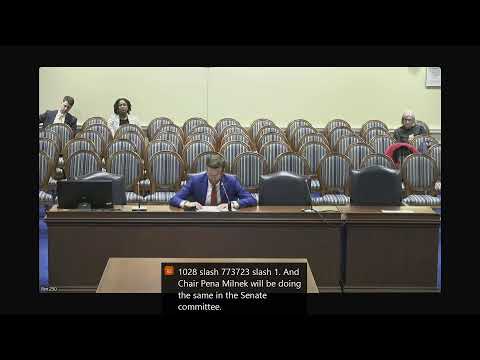
Senator Katie Fry Hester asked the House Environment and Transportation Committee on March 26 to report favorably on Senate Bill 871, legislation she described as strengthening cybersecurity oversight for community water and sewer systems.
As amended, Hester said, the bill designates the Maryland Department of the Environment (MDE) as the lead state agency, requires cybersecurity incident reporting to the State Operations Security Center, mandates risk assessments and cybersecurity plans for covered community water systems, and narrows covered systems to those serving more than 3,300 customers. The sponsor also said amendments clarified roles for the Department of Information Technology (DoIT) and the Department of Emergency Management as well as a realistic approach to “zero trust” migration: “a journey” rather than an immediate standard.
Hester told the committee the amendments reduced the bill’s fiscal impact to a single new DoIT position; Deputy questions from the committee sought confirmation of that reduction. Hester said she had not seen the house fiscal note but understood the current plan called for one DoIT “pin” (position) and that Budget and Tax had agreed to include it.
Hester said federal partners, including the Department of Defense, have offered workshops, training and subject‑matter experts that have helped lower the state fiscal impact. She referenced John Garska of the DoD (cyber warfare director) as an interested federal partner who has committed resources for workshops and support.
The committee asked clarifying questions about the fiscal note and responsibilities between agencies. Hester said the bill directs MDE to work with federal entities to identify available resources and that the changes aim to protect water systems (including those serving military installations) from cyber threats. No formal committee vote is recorded in the transcript; the sponsor asked for a favorable report and stayed to take questions.