Get Full Government Meeting Transcripts, Videos, & Alerts Forever!
Get email alerts on the Higher Education Governance topic
No spam. Unsubscribe anytime.
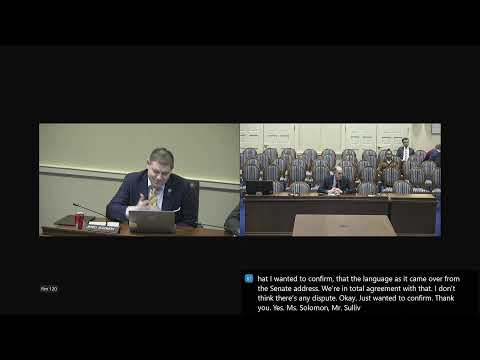
Howard Community College governance bill draws wide faculty and community testimony
Summary
Senate Bill 813 would add two trustees to Howard Community College's board and mandate transparency measures; faculty and others testified they support amendments to restore shared governance and public comment access.
Delegate Delia Watson presented Senate Bill 813 to the Appropriations Committee on behalf of the Howard County delegation, saying the bill "adds two members to the board and implements various measures to ensure transparency for the public." The sponsor said the final version reflects extensive negotiation among the delegation, the college board, administration and faculty.
Multiple Howard Community College faculty and community witnesses testified in favor of the bill with amendments. Professor Mari Weprecht told the committee she supported SB 813 because she believes it is "a crucial step towards restoring transparency, accountability, and shared governance" at the college. "Shared governance once thrived at HCC, but today it's almost nonexistent," Weprecht said.
Assistant Professor Ahmed Benkalte detailed several operational changes faculty say were implemented without input, including elimination of a finals-week schedule, conversion to a seven-week term structure for some courses and months-long delays in adjunct pay. "Adjunct faculty went unpaid for months, and instead of fixing the issue, the administration outsourced human resources to a third party," Benkalte said, adding that he and other faculty feel excluded from trustee deliberations.
Rev. Robert Turner, who testified representing a congregation, supported several of the bill's amendments but asked the committee to consider whether required public comment at every meeting "will lead to disruptions, delay decision-making, or politicize board discussions" and suggested structured forums as an alternative. Several witnesses, including a virtual witness identified as Bridal (Bridal) Diamond, asked that the bill require video recordings of meetings, governance training and structured avenues for faculty input.
Committee members asked several clarifying questions about the bill's training requirements and other specifics. One committee member said similar governance concerns arose previously in other community college systems and that training for boards could help.
Throughout the hearing, faculty witnesses emphasized restoration of shared governance and transparency; the bill's sponsor described the measure as the product of extensive local negotiation and urged a favorable report.
Ending — The committee closed the hearing on SB 813 after panels of faculty, clergy and association witnesses provided largely favorable testimony with suggested amendments. No formal committee vote was taken during the hearing.