Get Full Government Meeting Transcripts, Videos, & Alerts Forever!
Get email alerts on the Register Of Deeds topic
No spam. Unsubscribe anytime.
Register of deeds describes digitization, e-recording and archival responsibilities
Summary
Register of Deeds Kent Brown said Douglas County has digitized its land records back to the 1850s, achieved 91% e-recording by volume last year, and is focusing on data-entry backlogs, security and preserving historical documents while maintaining public access.
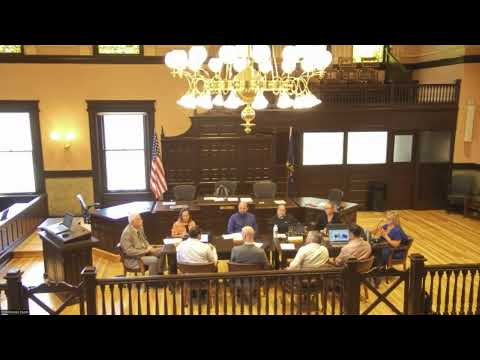
Kent Brown, Douglas County register of deeds, told commissioners the office is the county—s local authority for land records and is responsible for recording, indexing and preserving documents.
Brown said the register—s office has digitized records back to book 1 (1855) and that last year 91% of recordings were e-recorded by volume. "In late 2016, we debuted a new website... Now it's open to anybody," Brown said, adding that e-recording allowed the office to maintain about 95% of normal services during the pandemic.
He described the recording workflow: verify a document meets state statute requirements, collect payment (Kansas requires payment prior to recording), scan or accept an e-submission, perform data entry and indexing, and give a unique book-and-page identifier to each page. Brown said that while images are available online, about 200,000 images lack full data entry and thus are not searchable by indexed fields.
Brown said the office provides some public services, including certified copies and free recording of DD-214 military discharge papers for veterans. He said the office uses proceeds from a technology fee to fund software and hardware.
Brown identified the current operational challenge as data-entry backlog and described internal verification of previously outsourced data. He also highlighted data-protection and disaster-recovery improvements and said staff met with IT to plan a move toward off-premises solutions.
He noted the register of deeds supports other county functions (clerk's office, appraiser, title companies) by providing an authoritative repository of recorded documents. Brown recommended that policy measures that add unique, parcel-level obligations (for example, special assessments or deed annotations) be recorded on separate documents to aid future searchability rather than embedded in deeds.
Brown concluded by noting revenue trends tied to page counts and mortgage activity and reiterated that recording fees are set by the state.