Get Full Government Meeting Transcripts, Videos, & Alerts Forever!
Get email alerts on the Treasurer Operations topic
No spam. Unsubscribe anytime.
Douglas County treasurer outlines tax collection, investments and motor-vehicle operations
Summary
Treasurer Adam Raines described the county treasurer—s responsibilities—including tax collection and distribution, investment strategy and motor-vehicle services—highlighting $270 million in annual collections and $140 million in investments, and noted operational challenges such as space and staffing at the downtown motor-vehicle office.
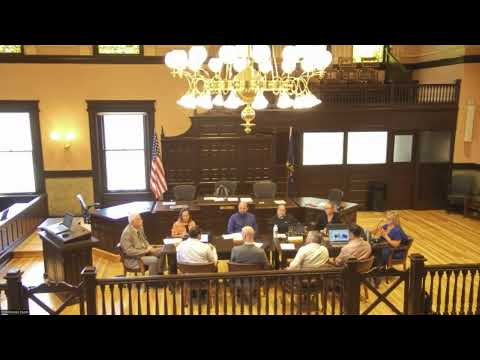
Adam Raines, Douglas County treasurer, told the county commission at a work session that the treasurer—s office handles collection and distribution of major county revenues, day-to-day banking and county investments, and motor-vehicle services.
Raines said the office collects about $270,000,000 annually and distributes roughly $175,000,000 to townships, cities and school districts. "Collection of taxes, we're looking at real estate, personal property, and motor vehicles," he said. He described the county—s five major distribution dates and said January is the largest distribution month because of December collections.
On investments, Raines said the county holds about $140,000,000 in investments: "70% is in your CDs, 22% is in treasury bonds, and 8% is in money market or savings for liquid cash." He described a laddered maturity strategy to ensure monthly access to liquidity and said all investments originate with Douglas County banks. He explained the county uses reciprocal deposits through IntraFi and requires that funds be secured by FDIC, federal home loan, or letters of credit.
Raines also described motor-vehicle operations, which he said are run as agents of the state Department of Revenue but are not fully self-funded by fees. "The fees that we collect for motor vehicles should pay for motor vehicle operations. That does not happen," he said, adding that motor-vehicle collections were about $28,000,000 last year and the office retained about $820,000 for operations. He said motor-vehicle processing totaled about 30,000 transactions in 2023.
Raines outlined customer-service metrics: Sixth Street average wait time about 18 minutes and service time about 6.5 minutes; downtown average wait about 10 minutes and service time about 12 minutes. He said downtown customer space is crowded at month-end and recommended considering remodel or additional staffing.
On payments and vendors, Raines described Paymentus, a third‑party processor that lets customers pay through retail outlets or online. He said it is fee-based: "It is a fee based service. So, I believe the fee for it is 2.35%." A commissioner reminded listeners that state law requires those fees be passed on to payors.
Raines said the office has moved from spreadsheets to software to better forecast interest income and is working with the county purchasing department to broaden solicitation of local banks for investment bids. He identified proposed state legislation that could change investment reporting and distribution rules and noted a separate bill that would add revenue to county treasurers but would not fully close the funding gap for motor-vehicle operations.
The presentation closed with Raines inviting questions about the treasurer—s operations and services.